
How to Identify the Merovingian Gold Tremissis
An early medieval Frankish gold coin, one-third the weight of a solidus, often imitating Byzantine designs with crude, blundered Latin legends naming a moneyer and mint.
Read the full Merovingian Gold Tremissis encyclopedia entry →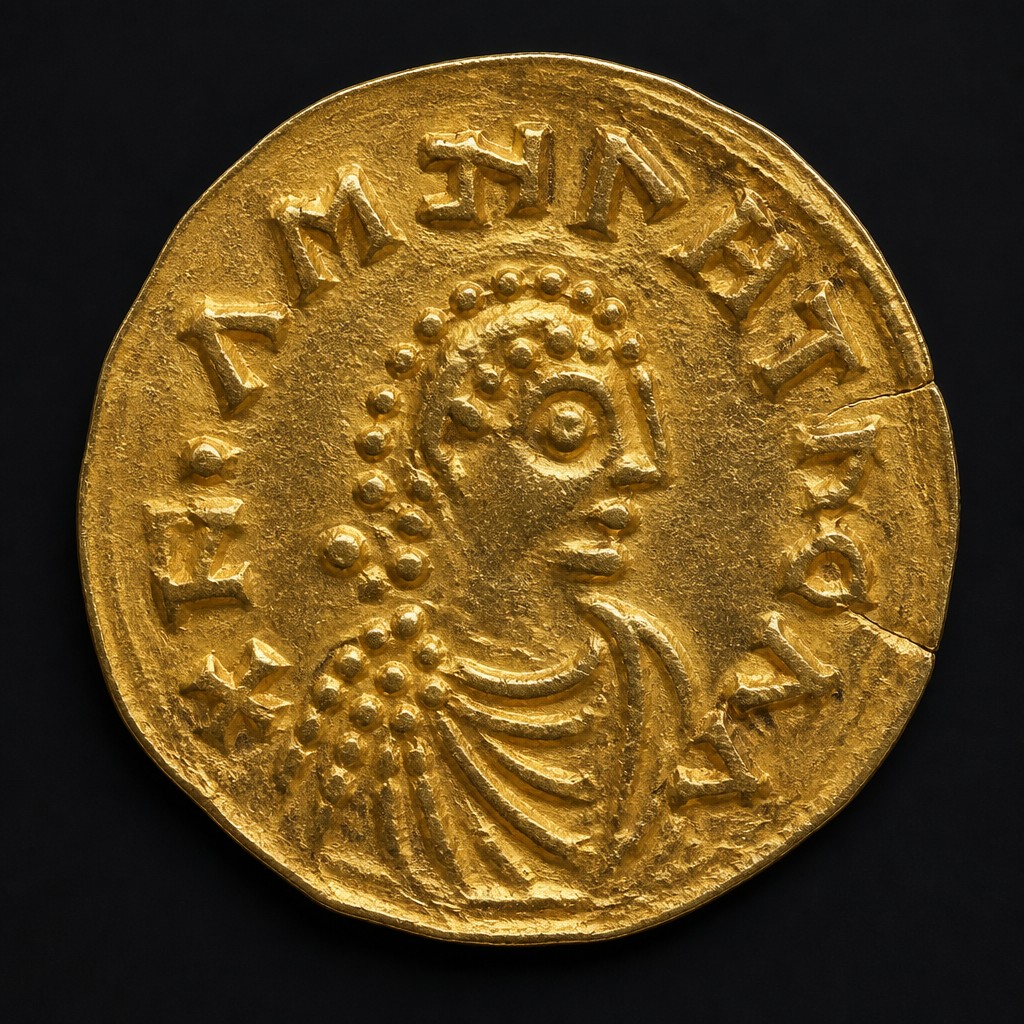
What the Coin Is
The gold tremissis, from the Latin for "one-third," was the primary gold coin struck by the Merovingian dynasty, which ruled the Frankish kingdoms across much of Gaul from the late 5th through mid-8th centuries. It represents one-third the weight of the late Roman and Byzantine gold solidus, continuing that earlier imperial monetary standard into the early medieval period.
Obverse Design & Inscription
The obverse typically shows a stylized bust in profile, often diademed or helmeted, closely imitating earlier Roman or contemporary Byzantine imperial portrait types, though rendered with increasingly simplified, sometimes crude linework as Merovingian die-cutting diverged from its classical models. A legend runs around the border, frequently blundered or partially unreadable Latin, sometimes naming a Byzantine emperor's title in name only, or later, increasingly naming a local moneyer or issuing authority instead.
Reverse Design & Inscription
The reverse commonly features a cross, whether plain, on steps, or on a globe, or a stylized victory figure descended from Roman and Byzantine reverse types, again with a surrounding legend. On many Merovingian issues, particularly later ones, this legend names both the local mint place-name and the moneyer responsible for striking the coin, a distinctive feature of the decentralized Merovingian minting system in which many local moneyers across hundreds of mint sites struck coinage in the king's name or sometimes in their own name.
Size, Weight, Metal, Edge
The tremissis is struck in gold, with weight generally around 1.3 to 1.5 grams, and a diameter of roughly 12-14 mm, reflecting its status as a fractional gold denomination rather than a full solidus. The edge is plain and irregular, typical of hand-struck early medieval coinage, and the gold purity and color can vary somewhat as the period progressed and gold sources became less standardized.
Mint Marks & Where to Find Them
Unlike coinages with a distinct symbol-based mint mark system, Merovingian tremisses generally spell out both the mint place-name and the moneyer's name directly within the legends, though frequently in abbreviated, blundered, or locally spelled Latin that can be difficult to parse. Careful comparison of legend fragments against known Merovingian mint and moneyer name lists is often necessary to pin down a specific issue.
Telling It Apart from Similar Coins
Compared to genuine Byzantine solidi and tremisses, Merovingian issues generally show cruder, more simplified portrait style and legends that are blundered or substitute local names rather than presenting a coherent, correct imperial title. Distinguishing between the hundreds of different Merovingian mint and moneyer combinations relies almost entirely on careful legend reading, since the overall obverse and reverse design types repeat across many different local issues.
Judging Condition & Authenticity
Look for legible legend fragments and reasonably clear central design elements, since heavily worn or poorly struck examples can make attribution to a specific mint and moneyer difficult or impossible. Be cautious of examples with a gold color or weight inconsistent with genuine tremisses, casting bubbles or seams suggesting a cast forgery, or legend combinations of mint and moneyer names that don't correspond to any documented genuine pairing, which can indicate either a fantasy piece or a modern reproduction.
Frequently asked questions
What does "tremissis" mean?
It comes from Latin for "one-third," reflecting that the coin was struck at one-third the weight of the late Roman/Byzantine gold solidus.
Why do the legends look garbled or hard to read?
Merovingian die engravers often copied earlier Roman/Byzantine legends without fully understanding the Latin, or later replaced them with local mint and moneyer names in non-standard spelling, resulting in legends that can look blundered to modern readers.
What information can the legend tell me?
On many issues it names the local mint (place) and the moneyer who struck the coin, key details used to attribute a specific example within the large Merovingian coinage system.
What should a genuine tremissis weigh?
Genuine examples typically weigh around 1.3-1.5 grams in gold, consistent with being one-third of a Roman/Byzantine solidus.
How is a Merovingian tremissis different from a genuine Byzantine one?
Byzantine issues generally show more refined, classically correct imperial portraits and coherent legends, while Merovingian tremisses tend toward simplified, cruder style and blundered or locally substituted legends.