
How to Identify the Medieval Halfgroat of Henry VII
Diagnostics for the Tudor twopence: crowned bust, long-cross-and-shield reverse, silver flan, mint marks, and hammered-coin cautions.
Read the full Medieval Halfgroat of Henry VII encyclopedia entry →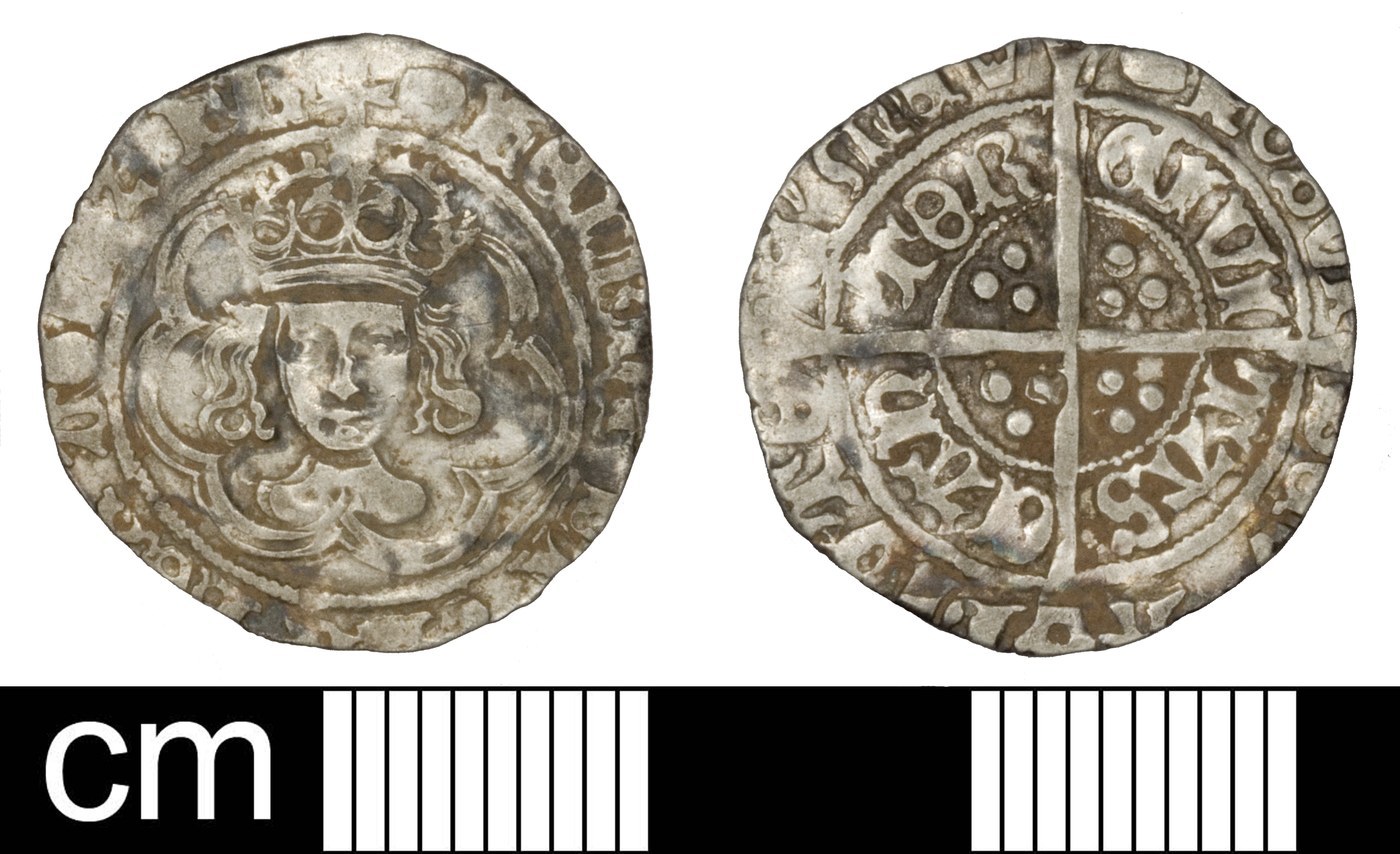
Start with the two faces together. A genuine Henry VII halfgroat pairs a crowned royal bust on the obverse with a long cross reaching the edge, three pellets in each of the four quarters, and a shield on the reverse. If either side is missing these elements, or if the reverse shows a design other than the long cross over a shield, you are probably not looking at this denomination.
Judge the denomination by scale and fabric. The halfgroat is a small, thin hammered silver coin, larger than a penny of the same reign but smaller than a groat. Because it was struck by hand, expect a slightly irregular, not-quite-round flan, some off-centre lettering, and areas of weak strike. These are normal and are not evidence of a counterfeit.
Read the legends and hunt for the marks. The obverse legend names Henry as king, while the reverse legend usually cites the mint town; a small initial (mint) mark at the start of the legend helps date the issue and identify the mint. Note the bust style too: earlier halfgroats keep the older open-crowned facing manner, while Henry's later reign introduced a more realistic profile portrait, so the portrait itself is a dating clue.
Separate it from look-alikes. The same cross-and-shield reverse appears on the penny (smaller, one pellet-cross pattern differences and lighter) and the groat (larger, worth fourpence), so size and weight are the quickest way to confirm the twopence. Halfgroats of neighbouring reigns such as Henry VI, Edward IV, or Henry VIII share the family design, so the ruler's name in the legend and the specific bust and mint mark must all agree before you settle on Henry VII.
Be cautious with authentication. Cast copies, tooled surfaces, and modern replicas exist for popular medieval types. Check for a granular or bubbly cast surface, seams on the edge, and lettering that looks soft or doubled in a way inconsistent with a struck coin. Because clipping and heavy wear are common, unusual thickness, a suspiciously perfect round shape, or a non-silver ring are all warning signs worth a specialist's second opinion.
Frequently asked questions
How do I distinguish a halfgroat from a groat or penny?
By size and weight. The halfgroat (twopence) is larger than the penny but smaller than the groat (fourpence), though all three share the crowned bust and long-cross-and-shield design.
Where is the mint mark on a Henry VII halfgroat?
Look for a small initial mark at the beginning of the legend, and read the reverse legend for the mint town. Canterbury and York ecclesiastical issues may add letters tied to the archbishop.
Should I be worried that my coin is off-centre and uneven?
No. Hammered coins were struck by hand onto hand-cut flans, so off-centre strikes, irregular shape, and weak areas are expected and normal for the type.
How can I spot a fake?
Watch for a grainy or bubbly cast surface, edge seams, soft or doubled lettering, a non-silver colour or ring, and unnaturally perfect roundness. For anything valuable, get a specialist in hammered English coinage to confirm it.