
How to Identify the Maximinus Thrax Denarius
An identification guide to the silver denarius of Maximinus Thrax (235-238 AD), the first Roman soldier-emperor, focused on his rugged portrait and common reverse types.
Read the full Maximinus Thrax Denarius encyclopedia entry →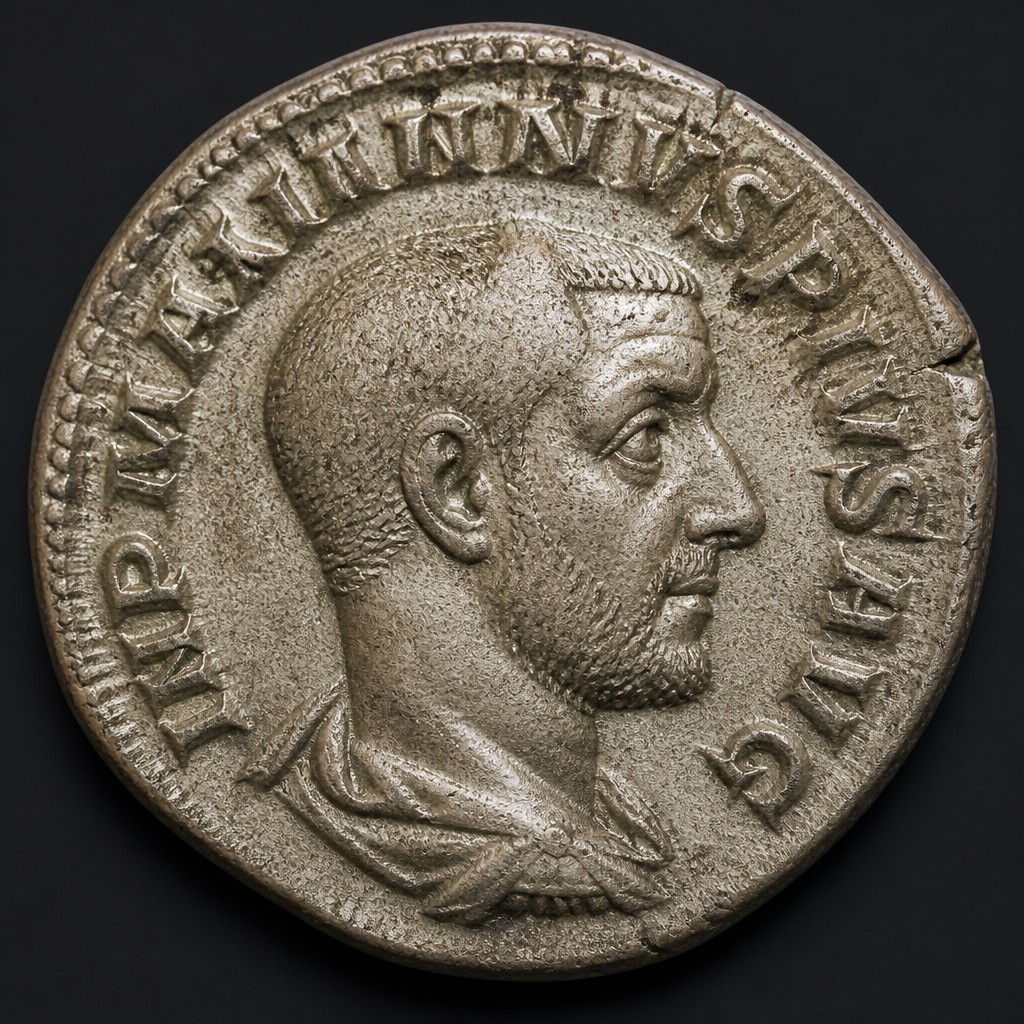
What Is the Maximinus Thrax Denarius?
Maximinus Thrax was a career soldier of humble background who seized power in 235 AD after the murder of Severus Alexander, becoming the first emperor to rule without ever visiting Rome. His three-year reign ended in his own assassination in 238, and his denarius, though still silver, is somewhat less common today than the coinage of longer-reigning predecessors.
Obverse Design and Inscriptions
The obverse shows a laureate bust right with a legend reading IMP MAXIMINVS PIVS AVG, or the fuller IMP C IVL VER MAXIMINVS PIVS AVG on some earlier strikes. The portrait style is distinctive and deliberately rugged: a heavy jaw, thick neck, and prominent nose, a sharp contrast to the smooth youthful busts of the preceding Severan emperors.
Reverse Design and Inscriptions
Common reverse figures include Fides Militum holding two military standards, Pax standing with branch and scepter, Salus feeding a serpent from a patera, Victoria advancing with wreath and palm, and Providentia pointing down at a globe.
Size, Weight, and Metal
The coin measures roughly 19-21mm across and weighs about 2.5-3.2 grams, struck in silver debased to around 40-45%, giving it a somewhat grayer cast than earlier third-century denarii.
Mint Marks and Where to Find Them
All known denarii were struck at Rome, so there are no exergue mint marks to check. Identification depends on the obverse legend and the distinctive portrait style rather than any mint abbreviation.
Telling It Apart from Similar Coins
His son and short-lived co-Caesar Maximus has his own denarius with a youthful, beardless bust and the legend IVL VERVS MAXIMVS CAES, clearly separate from his father's mature, rugged portrait. If a bust looks similarly weathered but the legend names a different emperor, compare closely against the very short reigns of Gordian I, Gordian II, Pupienus, or Balbinus, whose coins are rarer and carry their own distinct names.
Judging Condition at a Glance
Wear appears first on the cheek, jaw, and the ties of the laurel wreath at the back of the head. On the reverse, look at the raised drapery and the deity's outstretched hand or attribute, which flatten first with circulation.
Authenticity Red Flags
Because genuine coins of this short reign are moderately scarce, casting is a real concern; check for a seam line around the edge, a porous surface, and correct weight. The portrait's deliberately coarse, heavy style is also a clue - overly delicate or refined engraving on a supposed Maximinus Thrax coin is inconsistent with the genuine rugged house style.
Frequently asked questions
Why does Maximinus Thrax's portrait look different from other Roman emperors?
He was a career soldier rather than an aristocrat, and his coin portraits deliberately emphasize a rugged, heavy-featured military look rather than idealized imperial features.
How do I tell his coin apart from his son Maximus's coin?
Maximus is shown as a young, beardless Caesar with the legend IVL VERVS MAXIMVS CAES, distinct from his father's mature bust and AVG title.
Are there mint marks on this coin?
No, it was struck only at Rome and carries no exergue mint mark.
What should make me suspicious of a fake?
A seam around the edge, a grainy or pitted surface, incorrect weight, or portrait engraving that looks too smooth and refined compared to the genuine rugged style.