
How to Identify the Maximian Follis
An identification guide to Maximian's follis, the Tetrarchic co-emperor's large silver-washed bronze coin sharing Diocletian's Genius reverse type and mint-mark system.
Read the full Maximian Follis encyclopedia entry →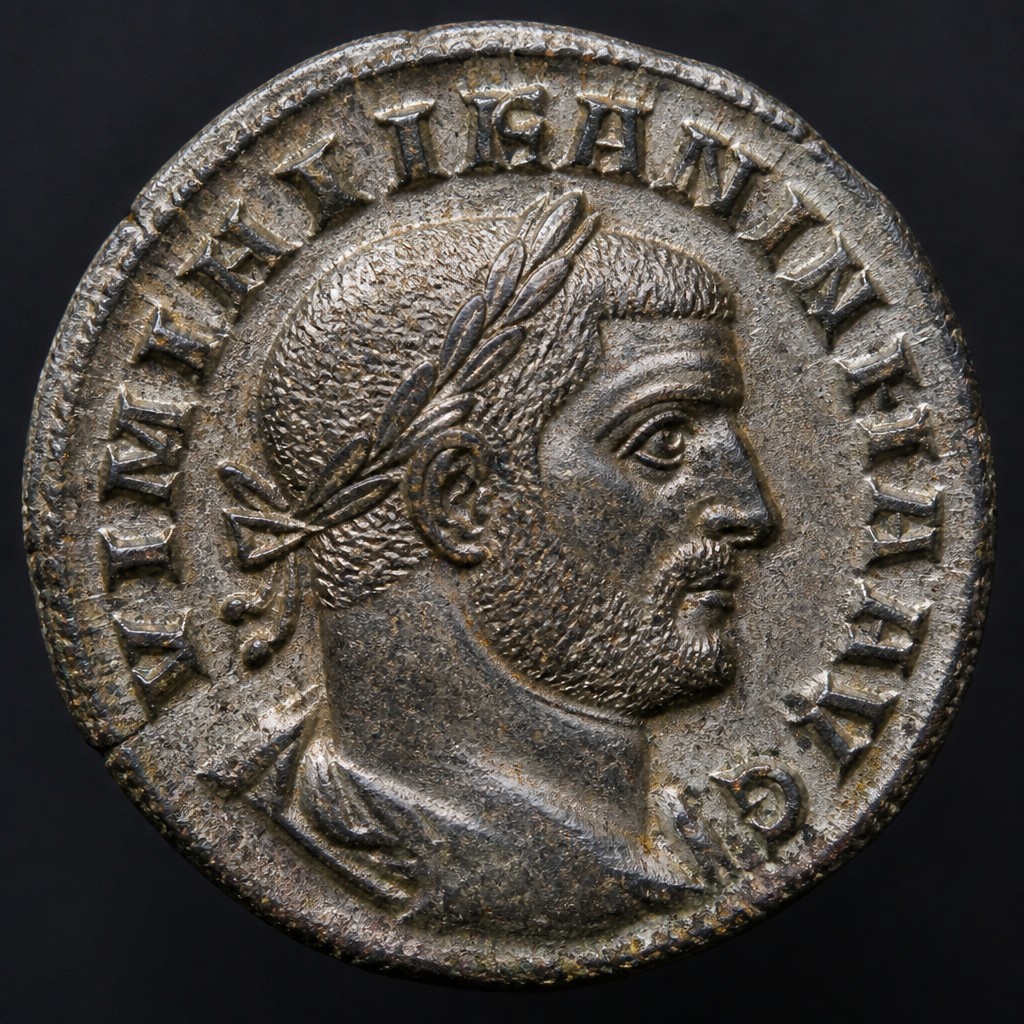
What Is the Maximian Follis?
Maximian served as Diocletian's co-Augustus in the Tetrarchy, ruling the western provinces from 286 to 305, briefly returning to power in 306-308 and again in 310 before his forced suicide. His follis coinage mirrors Diocletian's in design and was struck at many of the same western mints.
Obverse Design and Inscriptions
The obverse shows a laureate head right, with the legend IMP MAXIMIANVS AVG or the fuller IMP C M A MAXIMIANVS PF AVG.
Reverse Design and Inscriptions
It shares the same GENIO POPVLI ROMANI standing Genius type used throughout the Tetrarchy, along with sacrifice scenes on some issues showing the emperor before an altar.
Size, Weight, and Metal
The coin matches Diocletian's follis standard, roughly 27-28mm and around 9-10 grams at introduction, tapering in weight over time, struck in bronze with a thin silver wash.
Mint Marks and Where to Find Them
The same system used across the Tetrarchy applies here; western mints such as Trier, Lugdunum, Ticinum, Aquileia, Siscia, and Carthage are common findspots in the exergue, with officina letters or numerals following the city code.
Telling It Apart from Similar Coins
Distinguish Maximian from Diocletian, Constantius I, and Galerius purely by the obverse name legend, since the reverse types are shared. His later 306-308 restoration issues can also be identified by context, as coinage from that period includes newer rivals such as Maxentius and Constantine sharing mint output.
Judging Condition at a Glance
Assess portrait wear and the amount of remaining silvering using the same criteria as Diocletian's follis, since both coins share the same fabric and denomination.
Authenticity Red Flags
The same general cautions apply as with Diocletian's follis: watch for tooled or re-engraved mint marks meant to suggest a rarer attribution, and for artificial re-silvering applied over a worn or corroded surface to make a common coin look better preserved than it is.
Frequently asked questions
How do I tell Maximian's follis apart from Diocletian's?
Both use the same GENIO POPVLI ROMANI reverse type, so the obverse legend naming the emperor is the only reliable way to distinguish them.
What mints produced Maximian's follis coinage?
Mostly western mints, including Trier, Lugdunum, Ticinum, Aquileia, Siscia, and Carthage, identified by an abbreviation in the exergue.
Why did Maximian rule more than once?
He first ruled 286-305 as co-Augustus with Diocletian, then briefly returned to power in 306-308 and again in 310 during the civil wars that followed the original Tetrarchy's collapse, before his forced suicide.
What should raise suspicion about a Maximian follis?
A re-engraved or unusually crisp mint mark relative to the coin's overall wear, or a suspiciously bright, uniform silvering that might have been artificially applied over a worn surface.