
How to Identify the Maundy Money Threepence
A collector's checklist for spotting a genuine British Maundy silver threepence, using the crowned III reverse, portrait, size and metal.
Read the full Maundy Money Threepence encyclopedia entry →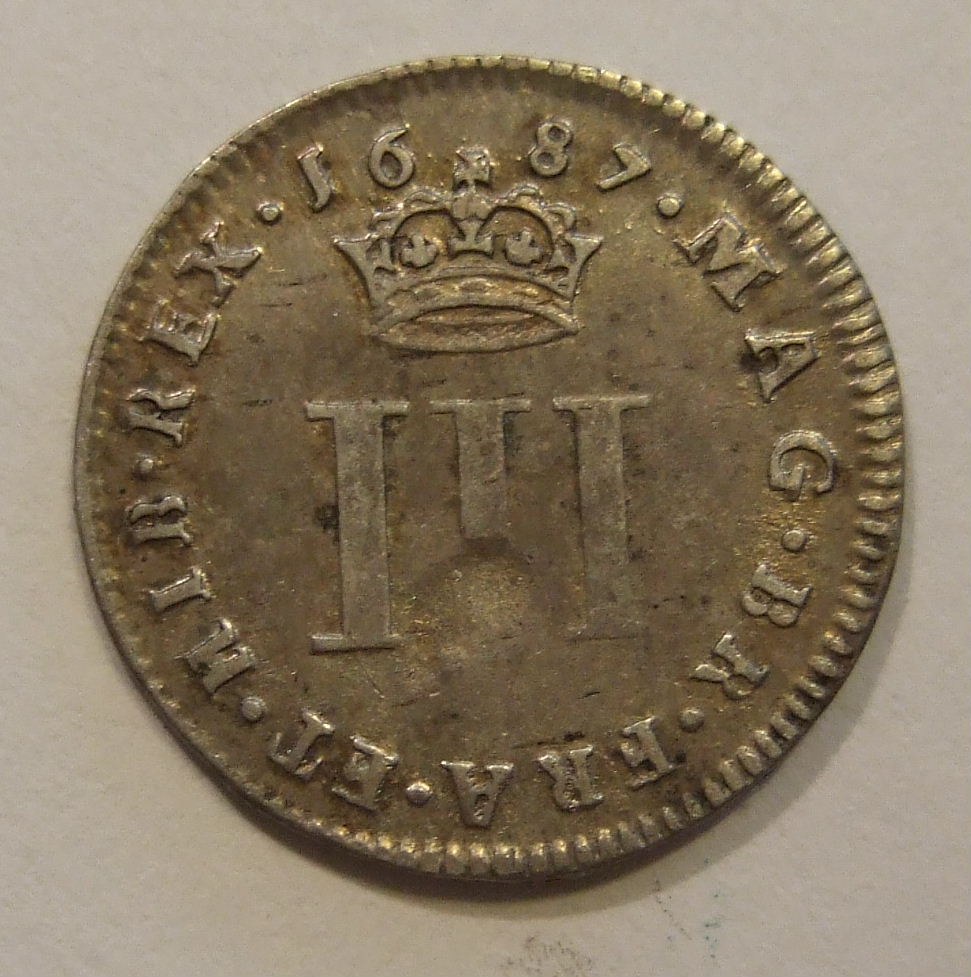
Start with the reverse numeral, which is the single most decisive feature. A Maundy threepence carries a large Roman numeral III beneath a crown. If you see I, II or IIII/IV instead, you are holding the penny, twopence or fourpence of the same set, not the threepence. The date — 1687 on the example here — appears in the surrounding reverse legend.
Next read the obverse portrait and legend. The photographed coin shows the crowned profile of James II with a Latin legend giving his name and royal titles. Matching the monarch's portrait style and the spelling of the legend to the claimed reign is an important cross-check; a mismatched bust or an anachronistic legend is a warning sign.
Confirm the physical characteristics: the threepence is a very small, thin sterling-silver coin weighing well under two grams, with a plain (not milled or reeded) edge typical of these tiny denominations. Silver should tone naturally to grey; bright, uniformly shiny surfaces can indicate cleaning or a modern copy. Weigh and measure the coin and compare against reference figures for the specific reign.
Beware of look-alikes and pitfalls: the four Maundy denominations are near-identical apart from the numeral, so misattribution is common; later restrikes and full Maundy sets exist; and small silver of this era has been widely copied, holed for jewellery, or cleaned. For a high-value attribution, seek confirmation from a specialist in British hammered and early milled silver or a reputable grading service.
Frequently asked questions
What is the quickest way to confirm it is a threepence?
Look at the crowned Roman numeral on the reverse. Three strokes (III) means threepence. This distinguishes it instantly from the penny (I), twopence (II) and fourpence (IIII/IV) in the same silver series.
How can I check the coin is not a modern fake?
Verify weight and diameter against published figures for the reign, look for natural silver toning rather than artificial brightness, and examine the portrait and legend for correct style and spelling. When in doubt, use a professional grading or authentication service.
Does a mint mark help identify it?
Early milled British small silver of this type generally relies on the portrait, legend, date and numeral rather than a prominent mint mark. Focus on those diagnostics and compare with reference images for the exact monarch and year.