
How to Identify the Matte Proof Lincoln Cent
A guide to the grainy, non-reflective matte proof finish used on early Lincoln cents from 1909 to 1916, and how it differs from later brilliant proofs.
Read the full Matte Proof Lincoln Cent encyclopedia entry →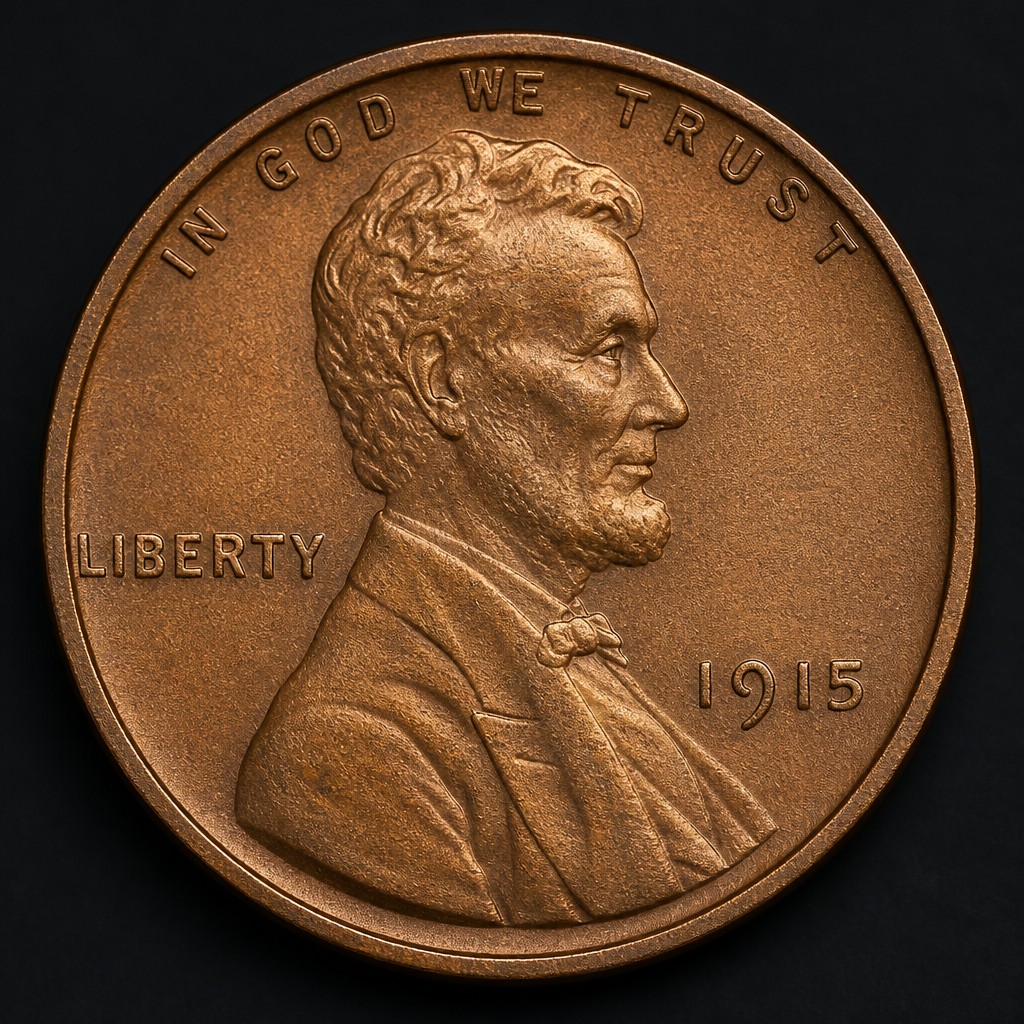
What It Is
Between 1909 and 1916, the U.S. Mint produced proof Lincoln cents for collectors using a "matte proof" finish rather than the mirror-bright finish used on proofs both before and after this period. The dies were specially treated and the coins given a light sandblasted or acid-etched texture, resulting in a subdued, frosty look rather than a shiny, reflective surface.
Obverse Design
The obverse shows the familiar right-facing Lincoln bust by Victor David Brenner, "IN GOD WE TRUST" above, "LIBERTY" to the left, and the date to the right. On matte proofs, the entire surface, including the fields, has a uniform grainy texture rather than the smooth mirror finish seen on business-strike or later proof cents.
Reverse Design
The reverse carries the wheat ears design with "ONE CENT" and "UNITED STATES OF AMERICA," matching circulation strikes of the era, but again with the same fine matte texture across the whole surface.
Size, Weight, Metal, and Edge
Matte proof Lincoln cents share the same specifications as circulation cents of the period: 95% copper with 5% tin and zinc, about 3.11 grams, 19mm across, with a plain edge. What sets them apart is not size or weight but finish and strike sharpness.
Mint Marks
All matte proof Lincoln cents were struck at the Philadelphia Mint and carry no mint mark, since branch mints did not produce proof coinage during this period.
Telling It Apart from Similar Coins
The key distinguishing feature is the finish. A genuine matte proof has sharp, squared rims, full and complete design details even in the smallest recesses, and a soft, even graininess across the whole coin rather than a bright, shiny luster. This differs from a business-strike cent of the same date, which has rounded rims and a more typical mint luster, and from later proof Lincoln cents (resumed in 1936), which have deeply reflective, mirror-like fields rather than a matte texture.
Judging Condition at a Glance
Because these coins were made for collectors and usually kept out of circulation, most surviving examples remain in high grades. Look for hairlines, spotting, or fingerprints on the surface (which can dull the delicate matte texture), and check the rims for the sharp, wire-like edge typical of proof coinage, as opposed to the rounder rims of circulation strikes.
Authenticity Red Flags
Because early matte proofs are valuable, some collectors have mistaken well-struck, lustrous business-strike cents for proofs, or attempted to artificially dull a shiny surface to mimic the matte texture. A true matte proof should have squared rims and full, sharp design details throughout, not just a dull or toned surface; an artificially sandblasted or acid-dipped example will often look uneven or show telltale abrasion patterns inconsistent with an original mint-applied finish.
Frequently asked questions
What does 'matte proof' mean?
It refers to a proof coin finish with a fine, grainy, non-reflective surface texture, used on U.S. proof Lincoln cents from 1909 to 1916.
How is a matte proof different from a regular business-strike cent?
Matte proofs have squared, sharp rims and fully struck-up details with a uniform grainy texture, while business strikes have rounded rims and typical mint luster.
Do matte proof Lincoln cents have a mint mark?
No, they were struck only at the Philadelphia Mint and carry no mint mark.
When did the Mint stop making matte proof cents?
The matte proof finish for Lincoln cents ended after 1916; proof coinage did not resume again until 1936, using a brilliant mirror finish instead.