
How to Identify the Massachusetts Cent (1787-1788)
A copper state coinage struck by the Commonwealth of Massachusetts in 1787-1788, easily recognized by its Indian figure obverse and standing eagle reverse.
Read the full Massachusetts Cent (1787-1788) encyclopedia entry →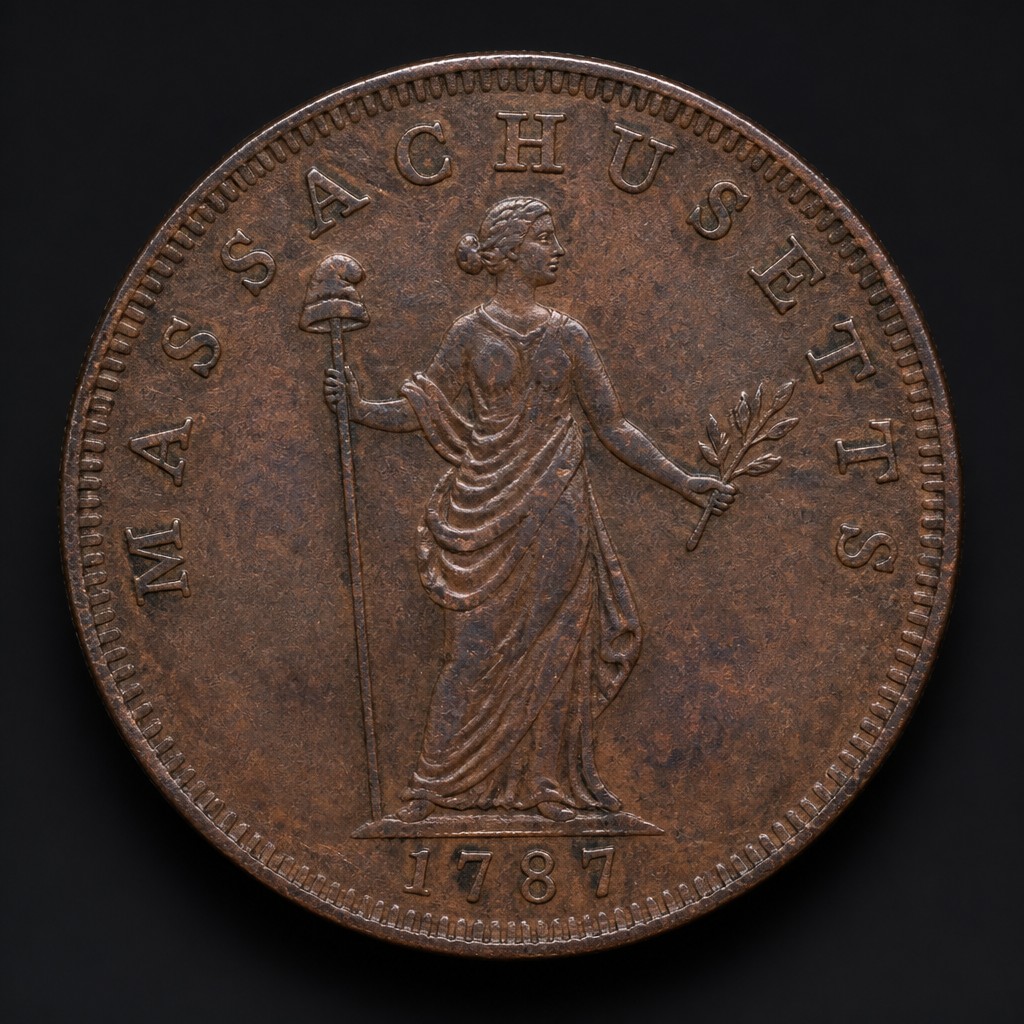
What It Is
The Massachusetts Cent was an official state copper coin authorized by the Commonwealth of Massachusetts and struck at a state-run mint in Boston in 1787 and 1788. Unlike many contemporary coppers produced by private contractors, this issue carried genuine government authority, making it one of the more "official" pieces of pre-federal American coinage.
Obverse Design
The obverse shows a Native American figure standing, facing right, holding a bow in one hand and an arrow in the other. A star sits to the left of the figure. The legend "COMMONWEALTH" arcs around the upper border, with the date (1787 or 1788) below the figure.
Reverse Design
The reverse depicts an eagle with wings displayed, a shield on its breast, and an olive branch and arrows clutched in its talons — a design that anticipates later federal eagle motifs. The legend "MASSACHUSETTS" appears around the border, and the denomination "CENT" is shown near the bottom, sometimes with a fraction "1/100" indicating its value relative to a dollar.
Size, Weight, and Metal
These are pure copper coins, roughly the size of a large cent, typically around 28-29mm in diameter and weighing close to 8 grams, though weight varies with wear and striking pressure. The edge is plain.
Mint Marks
There is no separate mint mark since the entire issue came from a single state mint; authenticity rests instead on die variety, lettering style, and weight rather than a mark.
Telling It Apart From Similar Coins
Confusion sometimes arises with other state coppers like the Connecticut or New Jersey issues, but the standing Indian obverse and eagle-with-shield reverse are unique to Massachusetts. Compare the shape of the eagle and the positioning of the star next to the Indian figure to known die varieties, since several obverse and reverse die combinations exist with minor differences in lettering and design placement.
Judging Condition at a Glance
Well-preserved examples show sharp detail in the Indian's feathers, bow string, and the eagle's individual feathers. Heavily circulated pieces often show a smooth, worn central design with legends still legible around the rim. Look for original brown or olive surfaces; cleaned or artificially shiny copper is a red flag for past conservation attempts.
Authenticity Red Flags
Because these coins circulated heavily and were sometimes lightly struck, look for die cracks, doubling, or unusual weight that doesn't match known specifications. Cast copies often show a grainy or pitted surface texture rather than the smooth flow lines of a struck coin, and the fine details of the Indian figure and eagle are usually mushy or blurred on fakes.
Frequently asked questions
What metal is the Massachusetts Cent made of?
It is struck in pure copper, with a plain edge and no other metal content.
Does the Massachusetts Cent have a mint mark?
No. It was produced at a single state mint in Boston, so there is no separate mint mark to check.
How can I tell 1787 from 1788 examples apart?
The date appears directly below the standing Indian figure on the obverse and is usually legible even on moderately worn coins.
What's the easiest way to identify this coin at a glance?
Look for the standing Native American figure with bow and arrow on one side and an eagle with a shield on its breast on the other.