How to Identify the Marcus Aurelius Denarius
A guide to the silver denarius of philosopher-emperor Marcus Aurelius, focused on his bearded portrait, common virtue-personification reverses, and the numbering used to date individual issues.
Read the full Marcus Aurelius Denarius encyclopedia entry →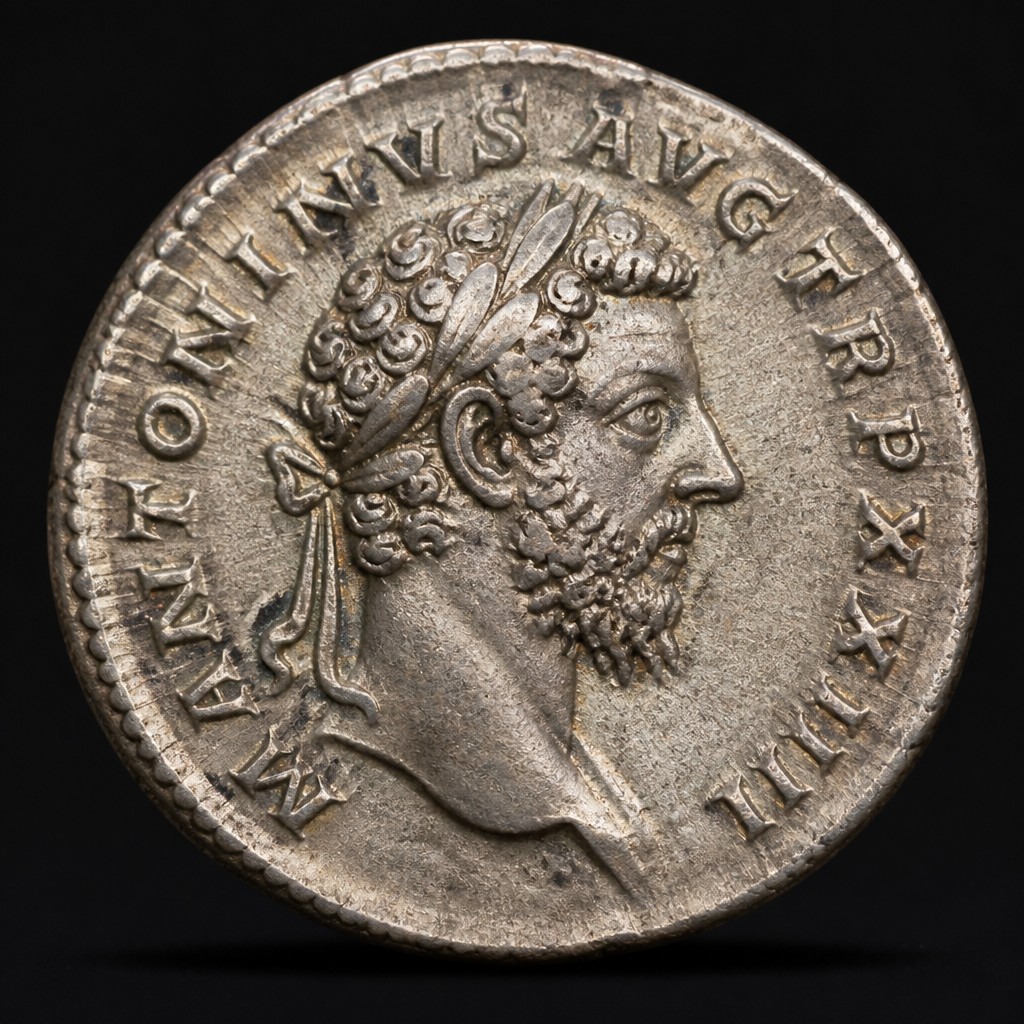
What This Coin Is
This silver denarius was struck under Marcus Aurelius, who reigned from AD 161 to 180, part of the mature 2nd-century Antonine coinage system produced both before and after he became sole emperor following Lucius Verus's death.
Obverse Design
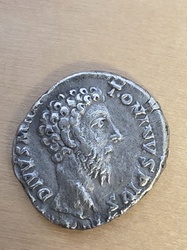
The obverse shows a bearded head of Marcus Aurelius facing right, with a portrait that gradually ages and gains a fuller beard over his nearly two-decade reign. The legend typically reads M ANTONINVS AVG or a similar variant, while earlier issues from his time as Caesar read M AVREL ANTONINVS CAES.
Reverse Design
Reverse types are predominantly personifications of virtues and blessings, including Providentia, Salus, Fortuna, Felicitas, Concordia, and Aequitas, generally shown standing or seated with characteristic attributes such as a rudder, patera, scales, or cornucopia. Military and Danube-war related types appear later in the reign, reflecting his campaigns.
Size, Weight, and Metal
These denarii measure roughly 17-18mm across and weigh around 3.3 grams, typical of the period, with a gradual, well-documented decline in silver fineness continuing through the century.
Mint Marks and Dating
Struck at Rome without a separate mint abbreviation, dating relies on the tribunician power (TR P) and consulship (COS) combination in the legend, the standard way to place a specific issue within his reign.
Telling It Apart From Similar Coins
As Caesar, before AD 161, his portrait is younger and beardless on some early issues, easily confused at a glance with Lucius Verus's own Caesar-period coinage. Once bearded and titled AVG, compare against Antoninus Pius's slightly different beard treatment and Lucius Verus's fuller, curlier beard style as joint emperor.
Grading at a Glance
Check hair and beard curl definition and the reverse figure's drapery and attribute clarity. Antonine-era dies were generally well engraved, so notable mushiness in the portrait usually indicates wear or a weak strike rather than an inherently crude issue.
Authenticity Red Flags
Compare the beard style and title abbreviation to the claimed date range, since inconsistent combinations are a common tell in fakes. Check weight against the roughly 3.3 gram standard, and inspect for a plating seam that would reveal a silver-washed base-metal forgery.
Frequently asked questions
How can I tell if my coin shows Marcus Aurelius as Caesar or as Augustus?
Look at the legend; issues from before AD 161 use the title CAES and typically show a younger, less bearded portrait, while issues after he became emperor use AVG with an older, fuller-bearded portrait.
Why are there so many virtue personifications on the reverse?
Roman emperors regularly used reverse types depicting abstract virtues like Providence, Health, and Fortune to promote an image of good, stable governance, and Marcus Aurelius's coinage relied heavily on this convention.
How is his portrait different from Lucius Verus, his co-emperor?
Lucius Verus is generally shown with a fuller, more elaborately curled beard and hairstyle, while Marcus Aurelius's portrait is comparatively more restrained, especially in his earlier bearded issues.
What does TR P followed by a number mean?
It denotes tribunician power and the number of times it was renewed, usually annually, which specialists use as the primary tool for pinning down the exact year a coin was struck.
Marcus Aurelius Denarius identified by the community
Recent Marcus Aurelius Denarius coins identified with Coin Identifier.