
How to Identify the Mamluk Gold Dinar
A gold dinar of the Mamluk Sultanate of Egypt and Syria (1250-1517 AD), later standardized to a trade-friendly weight close to the Venetian ducat and inscribed with the sultan's chancery titles.
Read the full Mamluk Gold Dinar encyclopedia entry →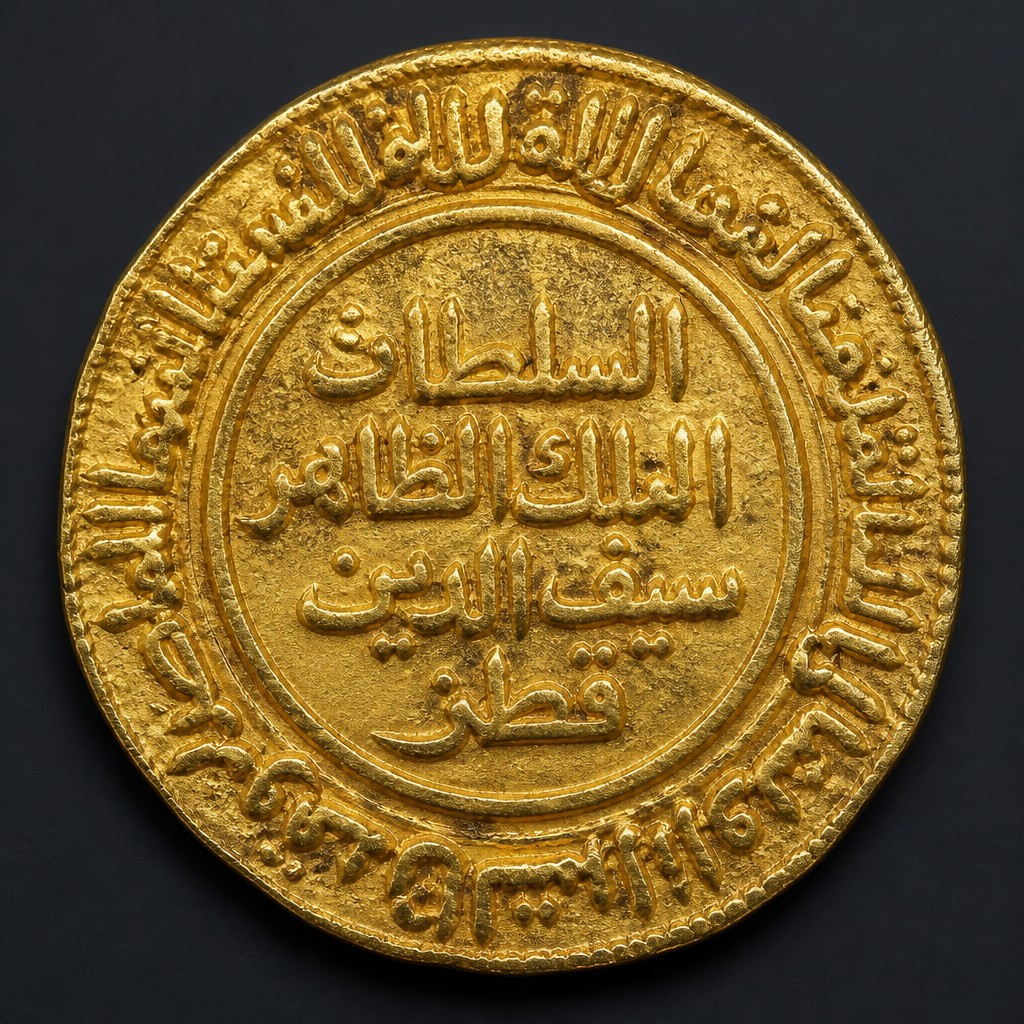
What It Is
The Mamluk Sultanate succeeded the Ayyubids in Egypt and Syria in 1250 and continued the Islamic tradition of epigraphic (text-only) gold dinars. From the reign of Sultan al-Ashraf Barsbay (1422-1438) onward, the Mamluks standardized their gold coinage, sometimes called the "ashrafi" dinar, at a lighter weight designed to match international trade standards of the time. The Mamluk Sultanate itself was ruled by a series of former military slave-soldiers who rose to the throne rather than through hereditary succession, and this shifting succession is reflected in the wide variety of different sultans' names found on surviving dinars.
Obverse Design
The obverse presents Kufic or naskh-style inscriptions arranged in linear or circular bands, citing the shahada along with the sultan's regnal title, or laqab, such as "al-Malik al-Ashraf." Mamluk sultans favored elaborate chancery titulature, so these inscriptions can be quite descriptive.
Reverse Design
The reverse continues the religious inscription and provides the mint city and date in the margin. Some later Mamluk issues also include small heraldic-style rank emblems (blazons) associated with particular Mamluk offices, though the coinage remains overwhelmingly text-based rather than pictorial.
Size, Weight, Metal, and Edge
Weight standards varied somewhat in the earlier Mamluk period but were fixed under Barsbay's reform at roughly 3.4-3.45 grams of pure gold on a small, thick flan about 18-20mm in diameter.
Mint Marks and Dates
The issuing city, such as Misr (Cairo), Dimashq (Damascus), or Halab (Aleppo), is spelled out in the margin along with the Hijri date in words.
Telling It Apart from Similar Coins
Earlier Ayyubid dinars followed a heavier standard of about 4.25 grams, so a lighter dinar around 3.4 grams points to the post-Barsbay Mamluk standard. The Venetian ducat shares a very similar weight to the reformed Mamluk ashrafi dinar, but the ducat carries figural imagery (the Doge and Christ), immediately setting it apart from the text-only Mamluk coin. Distinguishing between different Mamluk sultans requires reading the specific laqab inscribed on the coin.
Judging Condition at a Glance
Look at how sharply the small Kufic or naskh letters have been struck, how well-centered the coin is, and whether its weight matches the standard expected for its particular period, since the Mamluk weight standard itself changed over the sultanate's history.
Authenticity Red Flags
Weigh the coin against the known standard for its era, examine the gold color for consistency, and check that the Arabic text is legible and coherent. Because the popular Mamluk trade-weight dinar was also imitated by other regional mints copying its trusted standard, unusual mint names or titulature combinations are worth researching further.
Frequently asked questions
Why do some Mamluk dinars weigh close to 4.25 grams and others closer to 3.4 grams?
Early Mamluk gold coinage followed the older, heavier dinar standard inherited from earlier dynasties, but Sultan al-Ashraf Barsbay's reform in the 1420s and 1430s introduced a lighter, standardized weight close to 3.4 grams to align with international trade currencies of the time.
How is the Mamluk ashrafi dinar different from a Venetian ducat, since they weigh about the same?
The Venetian ducat shows figural images of the kneeling Doge and Christ, while the Mamluk dinar remains entirely text-based with no images, making the presence or absence of pictorial design the quickest distinguishing feature.
How do I identify which sultan issued my Mamluk dinar?
You need to read the sultan's regnal title, or laqab, inscribed on the coin, such as 'al-Malik al-Ashraf,' and match it against the known sequence of Mamluk sultans.
What do the small symbols alongside the text on some Mamluk coins mean?
Some later Mamluk issues include small heraldic-style rank emblems, or blazons, associated with particular Mamluk administrative or military offices, appearing alongside the main religious and dynastic inscriptions.
What's a good first check for authenticity?
Weigh the coin and compare it to the standard expected for its approximate period, either the earlier roughly 4.25 gram standard or the later roughly 3.4 gram Barsbay-era standard, and check that the Arabic inscriptions are legible and consistent.