
How to Identify the Macao 20 Patacas
A collector's checklist for the silver 20 patacas of Macau: the Portuguese arms, the junk-and-harbor reverse, size and metal, and cautions on look-alikes and fakes.
Read the full Macao 20 Patacas encyclopedia entry →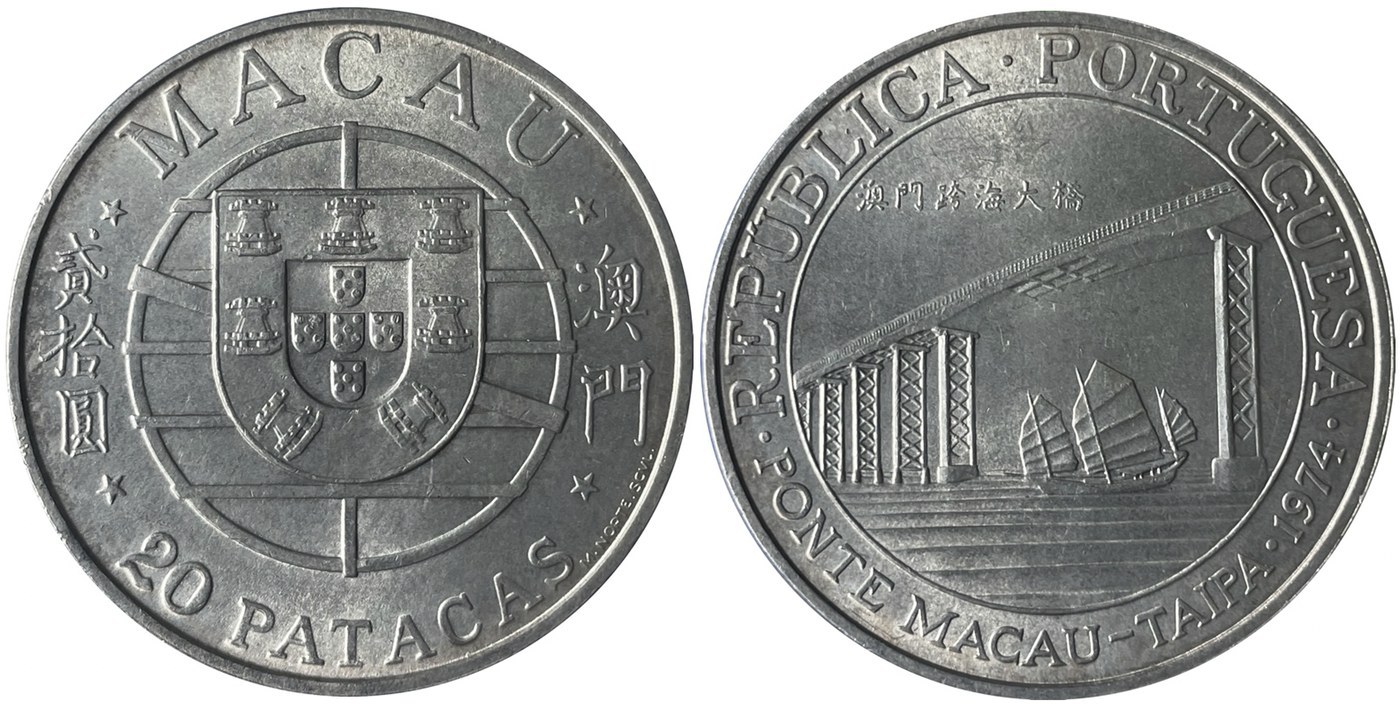
Start with the heraldic side, because it fixes the issuing authority. Look for the Portuguese coat of arms, a shield with small inner shields (the quinas) inside a border set with castles, accompanied by Portuguese-language legends that name Macau. Portuguese heraldry paired with the name Macau is the clearest sign that the coin belongs to the territory's Portuguese-administration coinage rather than to any mainland Chinese series.
Turn to the harbor side and read its two key elements. You should see a traditional Chinese junk, identifiable by its high stern and battened sails, riding on water in front of a waterfront or shoreline. Nearby the design carries the denomination written as 20 patacas together with the date. The deliberate contrast between European arms on one face and a Chinese vessel on the other is itself a reliable Macau identifier, so treat the two sides together rather than in isolation.
Confirm the physical traits next. This is a silver coin, noticeably heavy and sizeable for its denomination, and it should have the mass and clean ring associated with silver. Weigh and measure it against published specifications for the type; a piece that is markedly light, undersized, or dull-sounding deserves caution. Read the date carefully and check any small mint or engraver marks against catalog references, since silver patacas were produced in more than one year and design details can differ between issues.
Guard against confusion with other coins. The junk motif appears on several Macau denominations, so do not rely on the ship alone; verify the 20 patacas denomination and the silver fabric so you do not mistake a smaller base-metal pataca for the silver piece. Likewise, other Portuguese-territory coins share the same style of arms, so anchor the identification on the legends naming Macau and on the specific junk-and-harbor scene.
Finally, watch for authenticity problems common to collectable silver. Inspect the shield and the junk's hull and sails for the crisp detail of a struck coin rather than the soft, grainy look of a cast copy, and check the edge and fields for tooling, filed seams, or altered date digits. Because these coins were made for a small territory, compare weight, diameter, and design against trusted references, and for any valuable example favor a coin authenticated by a reputable grading service.
Frequently asked questions
What is the quickest way to recognize this coin?
Match two things: the Portuguese coat of arms with legends naming Macau on one side, and a traditional Chinese junk in a harbor on the other. Together with the 20 patacas denomination and a silver fabric, that pairing identifies the type.
How do I tell the silver 20 patacas from smaller pataca coins?
Several Macau denominations use the junk motif, so read the denomination and judge the metal. The 20 patacas is a large, heavy silver piece, distinct from the smaller base-metal patacas and avos that share similar imagery.
How do I keep from confusing it with other Portuguese-territory coins?
Other coins issued under Portugal use the same style of shield with quinas and castles. Rely on the legends: wording that names Macau, paired with the Chinese junk and harbor scene, sets this piece apart from Portuguese and other overseas issues.
What should I check to guard against fakes?
Confirm weight and diameter against published figures, listen for a true silver ring, and inspect the arms and junk for sharp struck detail rather than soft cast surfaces. Examine the date for altered digits, and for valuable pieces buy coins authenticated by a reputable grading service.