
How to Identify the Lysimachos Tetradrachm (Alexander/Athena)
A guide to identifying tetradrachms of King Lysimachos, showing the deified head of Alexander the Great with a ram's horn and a seated Athena on the reverse.
Read the full Lysimachos Tetradrachm (Alexander/Athena) encyclopedia entry →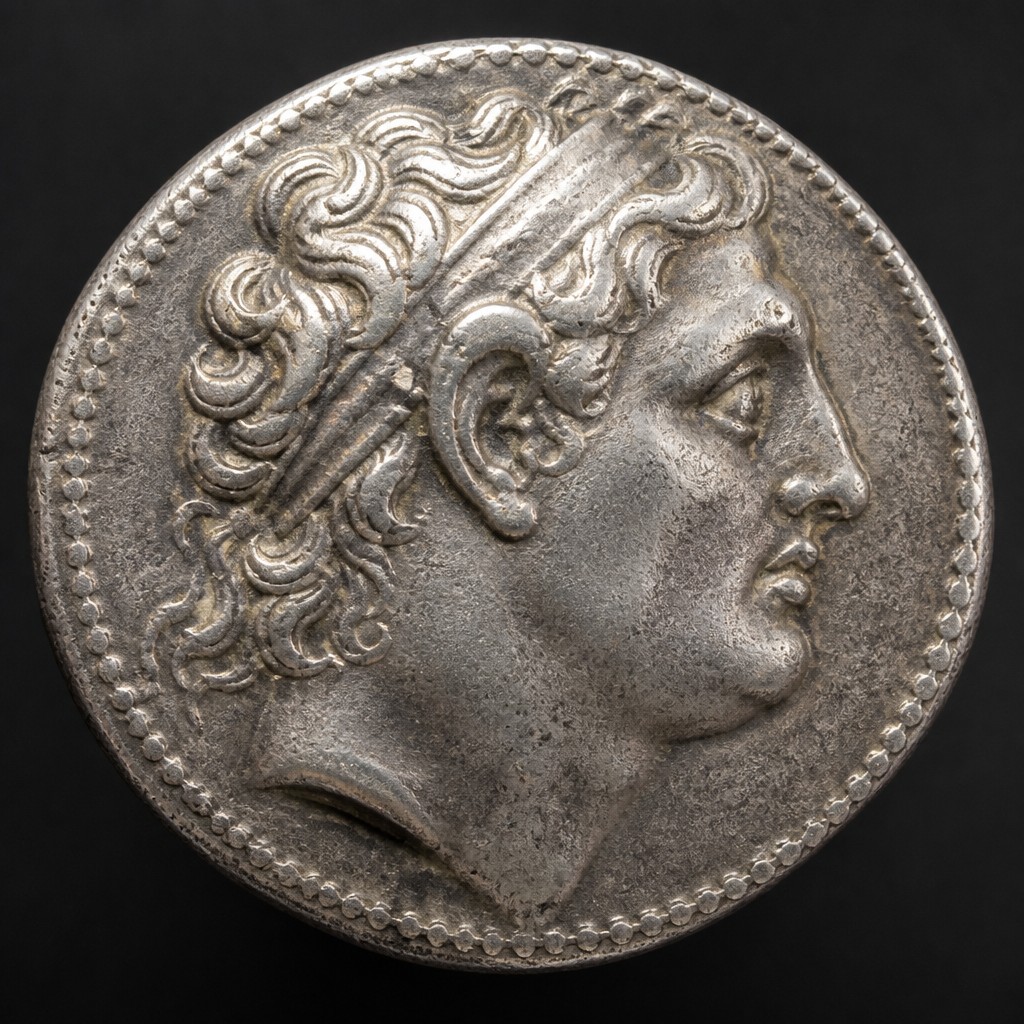
What It Is
Lysimachos was one of Alexander the Great's generals who, after Alexander's death, became king of Thrace and parts of Asia Minor. His tetradrachms, first struck around 297-281 BC and continued by various mints for a long period afterward (including posthumous issues struck well after his death), pay tribute to Alexander as a deified figure while establishing Lysimachos's own royal identity through the reverse and inscription.
Obverse
The obverse shows the head of the deified Alexander the Great facing right, wearing the horn of Ammon curling beside his ear, a diadem band in his hair, and flowing curls, presenting Alexander as a god-like ruler rather than a living king. The portrait style is idealized rather than a strict likeness.
Reverse
The reverse shows Athena Nikephoros ("Athena bearing victory") seated left on a throne, resting one arm on a shield propped beside her and holding a small figure of Nike (Victory) in her extended hand. The inscription reads BAΣΙΛΕΩΣ ΛΥΣΙΜΑΧΟΥ ("of King Lysimachos"), usually arranged vertically beside the figure, with a mint monogram or symbol in the exergue below.
Size, Weight, and Metal
This is a silver tetradrachm struck on the Attic weight standard at approximately 17.2 grams, the standard denomination used across most of Alexander's former empire and its successor kingdoms.
Identifying the Mint
Because this type was struck at numerous mints across Thrace, Asia Minor, and the Black Sea region over a long span of time, the specific mint and date of an individual coin is identified by the monogram or small control symbol placed in the reverse exergue beneath Athena's throne, which varies from issue to issue and mint to mint.
Telling It Apart From Similar Coins
This type is easily confused with genuine lifetime and posthumous Alexander the Great tetradrachms themselves (which show Alexander as Herakles wearing a lion-skin headdress on the obverse and a seated Zeus on the reverse); the horned, diademed Alexander-as-Ammon portrait paired with seated Athena is specific to the Lysimachos series and should not be mistaken for the Herakles/Zeus type. Because this coinage remained popular and was imitated or continued for a very long time, including by Black Sea cities long after Lysimachos's death, style and fabric should be checked carefully against the specific period a given coin claims to represent.
Grading at a Glance
Look for a fully struck horn and diadem on Alexander's head and clear detail in the flowing hair, along with a legible legend and complete seated Athena figure on the reverse. Because this was a long-running, widely struck type, quality varies considerably between mints and periods, so condition should be judged relative to typical output from the specific mint and era in question.
Authenticity Red Flags
Be alert to a flat, stiff, or poorly individualized Alexander portrait, an Athena figure with indistinct drapery or a garbled Nike figure in her hand, and an illegible or incorrectly spelled BAΣΙΛΕΩΣ ΛΥΣΙΜΑΧΟΥ legend. Because so many genuine mints and long time periods exist for this type, an unusual monogram is not automatically suspicious, but cast surface texture, incorrect weight, or stylistic elements inconsistent with any known period of the series are meaningful warning signs.
Frequently asked questions
Why does this coin show a deified Alexander the Great instead of Lysimachos himself?
Lysimachos, like several other Alexander successors, used Alexander's revered image to lend legitimacy to his own rule rather than putting his own portrait on the coinage.
What is the horn on Alexander's head?
It represents the horn of Ammon, linking Alexander to the Egyptian god Ammon-Ra and reinforcing his portrayal as a divine or god-descended figure.
How can I tell this apart from a regular Alexander the Great tetradrachm?
Genuine Alexander tetradrachms show Alexander as Herakles wearing a lion-skin headdress with a seated Zeus on the reverse, while Lysimachos tetradrachms show a horned, diademed Alexander with a seated Athena instead.
Were all Lysimachos-type tetradrachms struck during his lifetime?
No, many mints continued producing this popular type long after Lysimachos's death, so style and fabric can vary considerably depending on when and where a specific coin was struck.