
How to Identify the Lydian Lion Trite (Electrum)
One of the earliest coins ever struck, from ancient Lydia around 600 BC, identified by a roaring lion's head with a forehead nodule on one side and plain incuse punches on the other.
Read the full Lydian Lion Trite (Electrum) encyclopedia entry →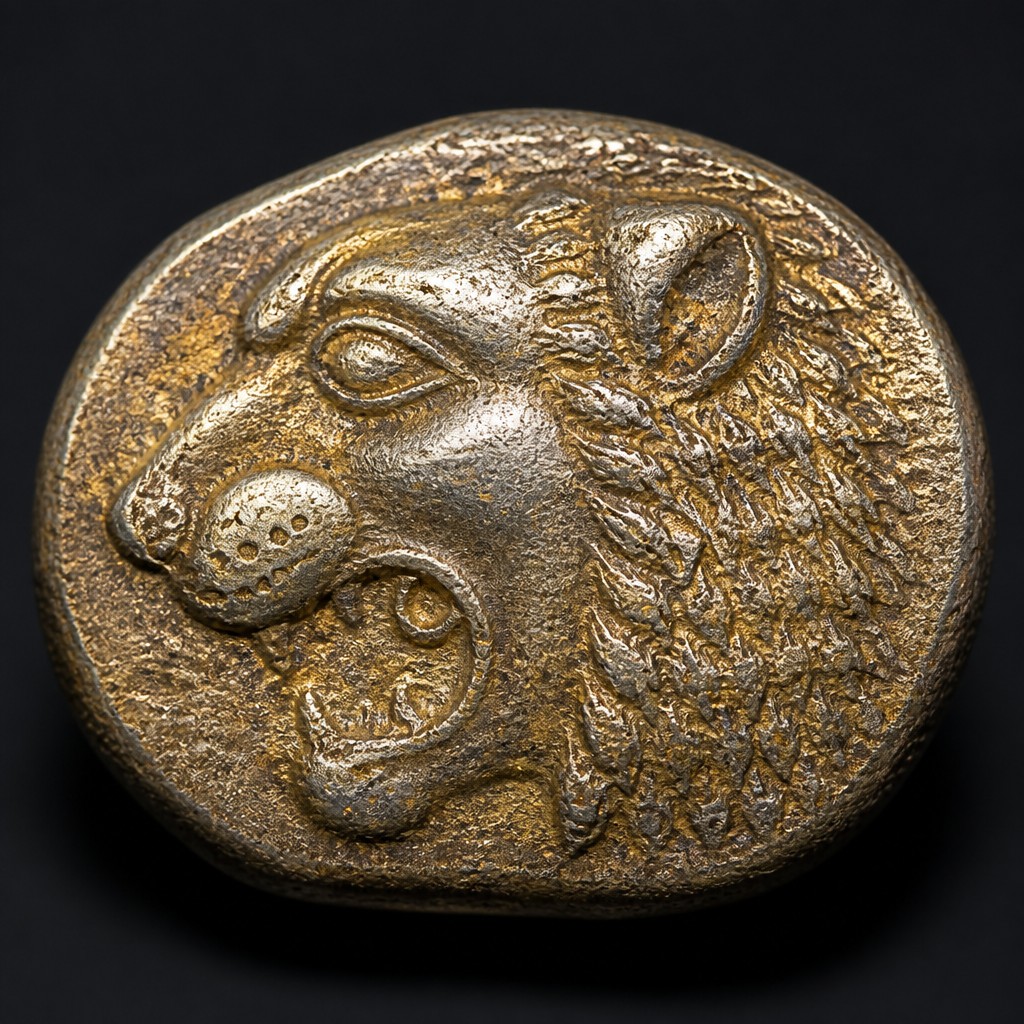
What This Coin Is
The Lydian Lion Trite is widely regarded as one of the earliest true coins in world history, struck in the Kingdom of Lydia (in what is now western Turkey) under King Alyattes, roughly around 600 BC. A "trite" is a denomination equal to one-third of a stater, the base unit of Lydian electrum coinage. These small pieces predate the widespread use of inscriptions on coins and represent the very beginning of coinage as a concept.
Obverse Design
The obverse shows the head of a roaring lion facing right, rendered in a bold, simplified style typical of the earliest coinage. A distinctive raised knob or "wart," thought to represent a sunburst or solar symbol, appears on the lion's forehead — this nodule is a key identifying feature of genuine Lydian lion coinage. There is no lettering or inscription, since writing had not yet been incorporated into coin design at this early date.
Reverse Design
The reverse carries no pictorial design at all. Instead, it shows two or more incuse (sunken) punch marks — typically one larger rectangular punch and one or two smaller square punches — left by the punches used to drive the blank metal into the engraved obverse die during striking. This blank, punch-marked reverse is a hallmark of the earliest electrum coinage before reverse dies with designs came into use.
Size, Weight, and Metal
The coin is struck in electrum, a naturally occurring alloy of gold and silver (often with trace copper), typically containing somewhere in the range of 70-90% gold depending on the specific source and period. A trite typically weighs around 4.7 grams, roughly one-third the weight of a full stater (around 14.1 grams). As with all ancient hand-struck coinage, there is no engineered "edge" design; pieces are small, thick, and slightly irregular in shape.
Identifying Genuine Examples
Because these coins predate mint marks or inscriptions entirely, identification relies on recognizing the lion-head style, the forehead nodule, the incuse punch reverse, and the coin's weight and metal composition. Genuine examples show the lion rendered with a somewhat archaic, blocky style consistent with the earliest Lydian dies, rather than the more refined, later Greek lion imagery seen on other ancient coinages.
Telling It Apart from Similar Coins
Later Lydian and Ionian electrum coins sometimes show a lion facing a bull, or other animal combinations, and later issues gradually introduced more refined styles and, eventually, inscriptions under later Lydian and Persian rule. Confirming the single roaring lion head with the forehead nodule, paired with a blank incuse-punch reverse and electrum composition, helps distinguish this specific early trite from later, more developed Lydian and Greek electrum coinage.
Judging Condition and Authenticity
Condition is assessed by how clearly the lion's mane, eye, and forehead nodule are preserved, along with the depth and clarity of the incuse punches on the reverse. Because of this coin's importance and value as one of the earliest coins in existence, authenticity should always be confirmed by a specialist in ancient numismatics — checking metal composition (genuine electrum has a specific gold-silver-copper signature), correct weight, and die style consistent with known genuine Lydian lion issues before any purchase.
Frequently asked questions
Why is this coin considered so historically important?
It is one of the earliest known true coins, struck in Lydia around 600 BC, marking the beginning of coinage as a form of standardized currency.
What is electrum?
A naturally occurring alloy of gold and silver, sometimes with trace copper, used for early Lydian and Ionian coinage before pure gold and silver coins became common.
What is the raised bump on the lion's forehead?
A distinctive nodule, thought to represent a sunburst or solar symbol, that is a key identifying feature of genuine Lydian lion coinage.
Why does the reverse have no picture?
The earliest electrum coins were struck using simple punches rather than an engraved reverse die, leaving only incuse rectangular and square marks instead of a design.
What is a trite?
A denomination equal to one-third of a stater, the base unit of weight in Lydian electrum coinage, weighing roughly 4.7 grams.