
How to Identify the Louis d'Or Coin Weight
A collector's guide to recognizing a French bronze Louis d'Or monetary weight and telling it apart from coins, tokens and modern reproductions.
Read the full Louis d'Or Coin Weight encyclopedia entry →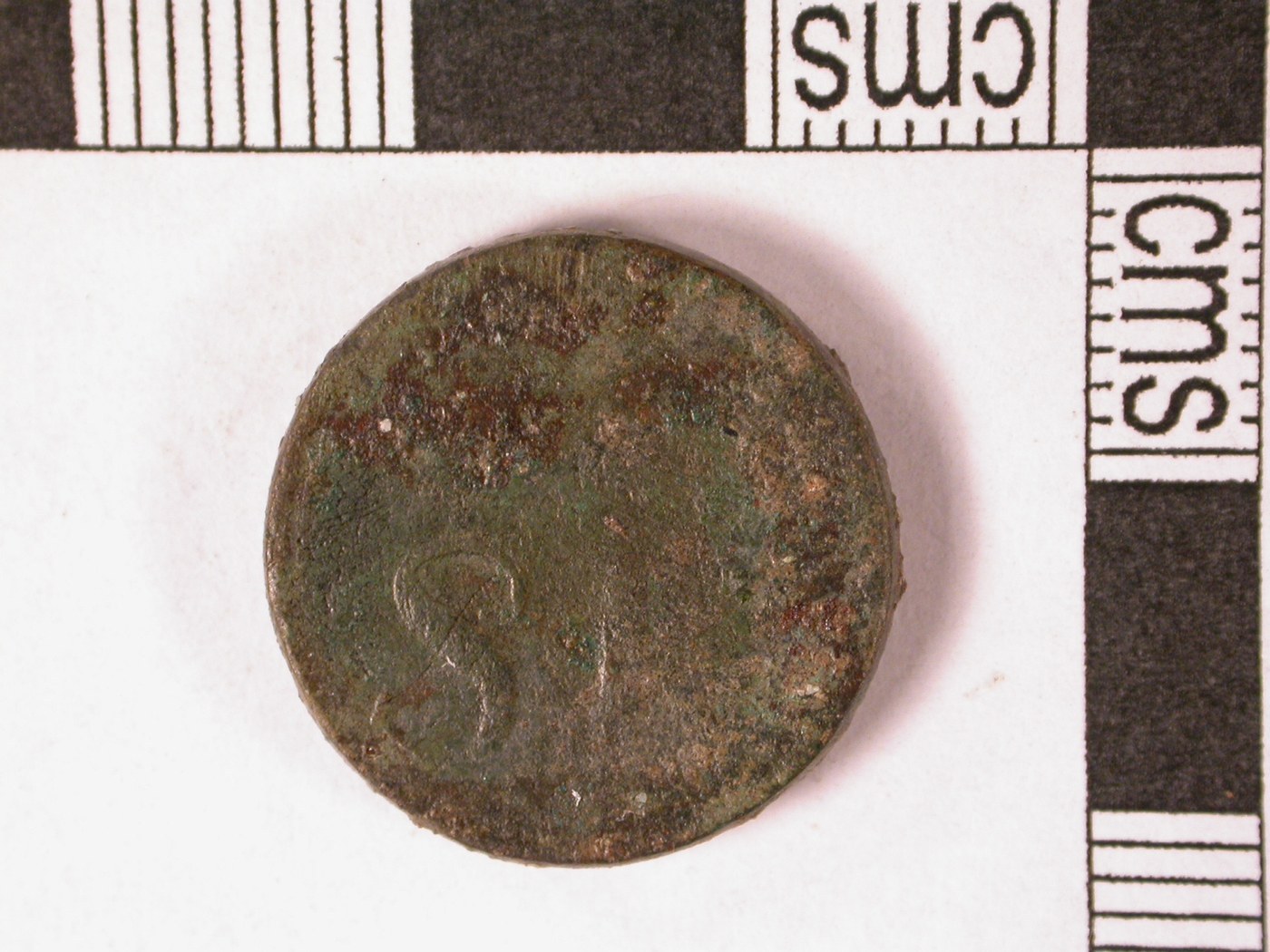
Begin by separating a coin weight from an actual coin. A Louis d'Or coin weight is a solid bronze or brass disc, usually a bit thicker and heavier-feeling for its size than a coin, with a plain edge and no denomination struck as currency. If the piece has a reeded edge, a clear face value and a mint-fresh coin design, you are probably holding a coin or a token, not a monetary weight.
Examine the faces for a functional marking rather than a portrait-and-shield coin layout. Historically these weights bear a small stamped device—a fleur-de-lis, crown, royal initial or effigy—with a brief legend or abbreviation identifying the coin they represent. On worn examples the device survives only as a faint raised outline, as with this piece's softened profile. Study the surface under raking light to recover any trace of the original stamp.
Use metal and mass as decisive checks. The correct material is base metal—bronze or brass with a brown, olive or chocolate patina—never gold. Weigh the piece on an accurate scale and measure its diameter against a metric rule, exactly as in the reference photograph. A genuine Louis d'Or weight should come close to the historical mass of the gold coin (a few grams, varying by issue), with a diameter usually slightly larger than the coin for easy handling.
Watch for look-alikes. Jetons and reckoning counters, religious or gaming tokens, buttons with the shanks removed, and plain metal blanks are all commonly mistaken for coin weights. Conversely, a real weight is sometimes mislabeled as a crude coin. The presence of a case, a matching balance, or sibling weights in a graduated series strongly supports a monetary-weight identification.
Be cautious about authenticity and attribution. Patina should be even and consistent with age, not painted or artificially darkened; sharp, glossy "antiqued" reproductions exist. Because so many similar weights were made over many decades, resist over-specific dating of a worn, unsigned disc—document weight, diameter and any surviving marks, and compare against reference collections of French poids monétaires before assigning a maker or date.
Frequently asked questions
How can I tell a coin weight from a real coin?
A coin weight is a plain base-metal disc with no currency denomination and typically a thicker, heavier feel; a coin has a struck design, often a value, and frequently a reeded edge. When in doubt, weigh and measure it and look for a functional stamp rather than a full coin portrait.
What markings should a genuine Louis d'Or weight show?
Look for a stamped device such as a fleur-de-lis, crown, royal initial or effigy, sometimes with a short legend or abbreviation for the coin it verified. On worn pieces this may survive only as a faint outline, so inspect under angled light.
Is it worth getting one authenticated?
For a worn single weight, careful comparison to reference examples is usually enough. For signed pieces, complete cased sets, or higher-value examples, a specialist in French monetary weights can confirm attribution and flag reproductions.