
How to Identify the Libya 1 Dinar (Counterfeit)
A collector's guide to spotting a counterfeit brass Libyan 1 Dinar by its metal, lettering, weight, and design quality versus a genuine issue.
Read the full Libya 1 Dinar (Counterfeit) encyclopedia entry →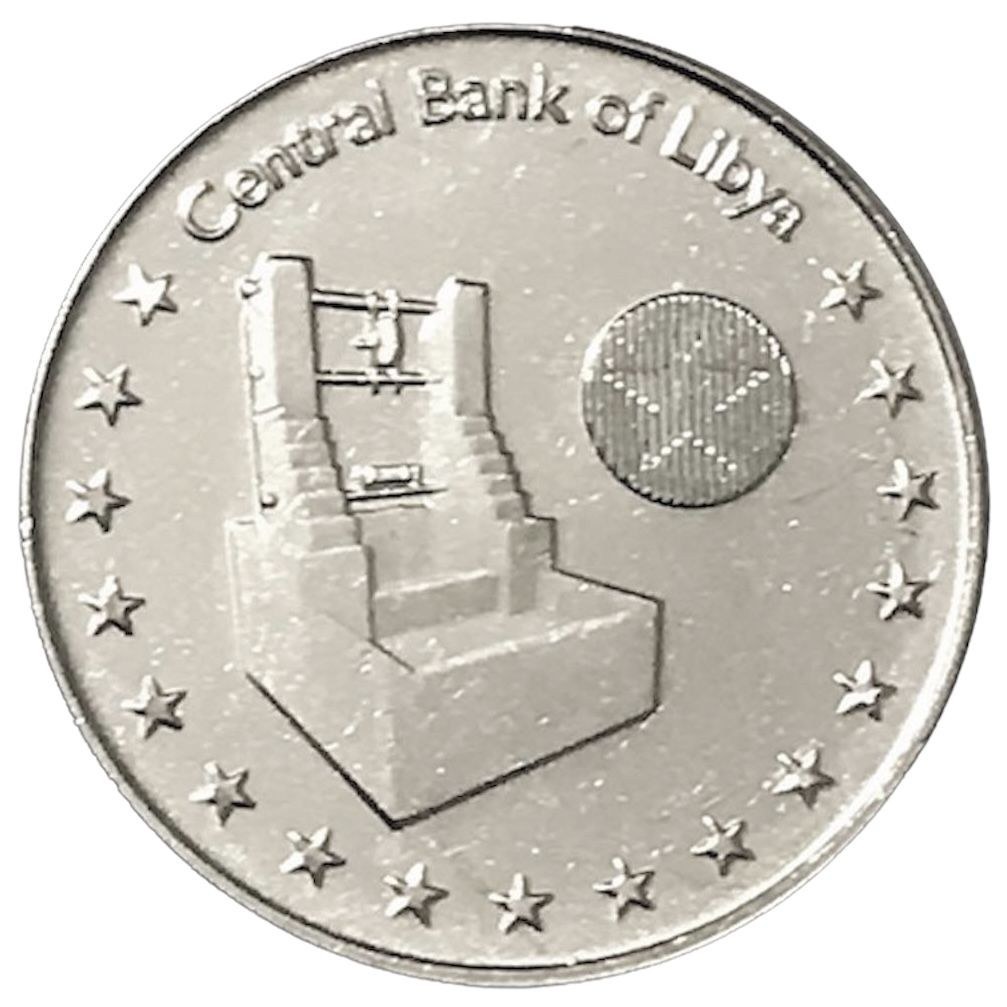
Start with the metal and color. This coin is brass, so it shows a yellowish, gold-like tone. Ask whether that finish matches what an official Libyan 1 Dinar should look like: authentic circulation coinage is struck to defined metal standards, and a brassy 'gold' color where a genuine base-metal or bimetallic finish is expected is an immediate warning sign.
Read the two faces carefully. The obverse here shows Arabic script with an ornamental geometric pattern and a central numeral '1' for the denomination, and the reverse carries Arabic inscriptions around a central design. On genuine coins the Arabic calligraphy is crisp and correctly formed. On imitations the lettering is often soft, blurred, uneven, or subtly malformed, so examine the script closely against verified reference images.
Check size, weight, and edge. Counterfeits frequently miss the exact diameter and weight of the coin they copy, and cast fakes may show a seam, file marks, or a grainy texture along the edge and in the fields. Weighing the coin and measuring its diameter, then comparing to published specifications for genuine Libyan coinage, is one of the most reliable single tests.
Beware of look-alikes and overstated claims. Libyan and other North African coins share Arabic legends and geometric ornament, so a piece can look 'right' at arm's length while failing on detail. Treat any date or mint-like mark on this coin with suspicion, since a counterfeit's markings are not trustworthy evidence of origin.
When in doubt, authenticate. If the coin is being represented as genuine, rare, or valuable, compare it side by side with confirmed images of official Central Bank of Libya coinage and, if needed, consult a dealer or numismatist experienced with Middle Eastern and North African issues. For a piece already flagged as counterfeit, the goal of identification is simply to document the imitation, not to establish a market value.
Frequently asked questions
What is the single fastest sign this coin is fake?
The brass, gold-like color combined with soft or uneven Arabic lettering is the quickest tell. Genuine Libyan coinage is struck to set standards, so a brassy finish and mushy detail together strongly point to a counterfeit or replica.
Can I use weight and size to check it?
Yes. Counterfeits often miss the exact weight and diameter of the coin they imitate. Measure and weigh the piece and compare against published specifications for genuine Libyan coins; a clear mismatch confirms an imitation.
Is the date or any mark on the coin reliable?
No. On a counterfeit, any date, numeral, or mint-like mark is not trustworthy evidence of origin. Treat such markings with caution and rely instead on metal, lettering quality, weight, and comparison to verified references.
Should I have it professionally authenticated?
If anyone presents it as a genuine or valuable Libyan dinar, yes. Compare it to confirmed images of official coinage and consult a dealer or numismatist familiar with North African issues before accepting any claim of authenticity or value.