
How to Identify the Liberty Cap Large Cent
A collector's guide to spotting the 1793-1796 Liberty Cap cent: the cap-and-pole portrait, wreath reverse, copper size, and fakes to avoid.
Read the full Liberty Cap Large Cent encyclopedia entry →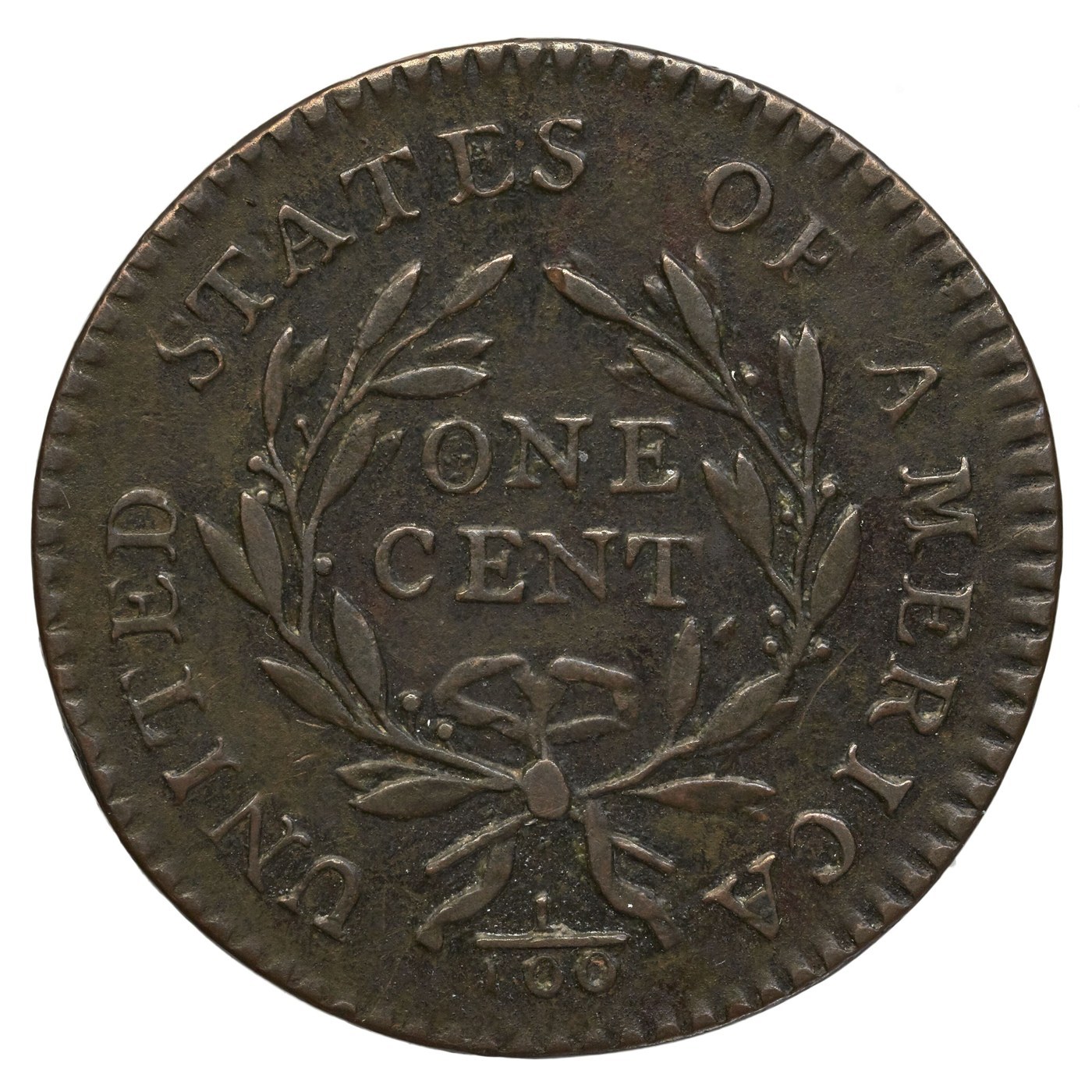
Start with the portrait direction and headgear. On the Liberty Cap cent, Liberty faces right with flowing hair, and a soft cap rests on a pole behind her head. If Liberty has no cap and no pole, you are likely looking at the earlier Flowing Hair cent instead; if she wears a ribbon and a draped bust, it is the later Draped Bust type. LIBERTY should sit above the head and the date below.
Check the reverse layout. A genuine coin shows a single wreath tied at the bottom with a bow, enclosing ONE CENT, with UNITED STATES OF AMERICA running around the rim. Some coins add a small fraction below the wreath. A wreath with a chain motif points to a different, earlier cent.
Confirm the physical traits: this is a pure copper coin, large and heavy for a cent (near the diameter of a modern half dollar) and it should never have a mint mark. Weighing and measuring the piece is a quick sanity check against undersized or lightweight fakes and against copper-plated modern reproductions.
Be cautious with authentication. This series is widely counterfeited and altered, dates are sometimes tooled, and cleaned or corroded copper is common. Because 1794 alone has dozens of die varieties, matching a coin to a specific variety and confirming it is genuine is best done with reference plates or professional certification rather than a naked-eye guess.
Frequently asked questions
How do I tell a Liberty Cap cent from a Flowing Hair cent?
Look for the cap and pole behind Liberty's head. Flowing Hair cents share the right-facing hair but lack the cap-on-a-pole device that defines the Liberty Cap type.
What size and weight should it be?
It is a large pure-copper cent, roughly the diameter of a modern half dollar and heavy in hand. Anything markedly smaller, lighter, or magnetic should be treated as suspect.
Are there mint marks to look for?
No. Every coin of this type came from the Philadelphia Mint with no mint mark, so a mint letter would be a red flag for a fake.
Should I clean a copper cent before identifying it?
No. Cleaning damages copper surfaces and sharply reduces value. Identify and evaluate the coin as-is, and let a professional service handle authentication and grading.