
How to Identify the Leontini Lion Tetradrachm
A Sicilian silver tetradrachm from Leontini featuring a laureate head of Apollo on the obverse and a roaring lion's head or full lion on the reverse, a visual pun on the city's name.
Read the full Leontini Lion Tetradrachm encyclopedia entry →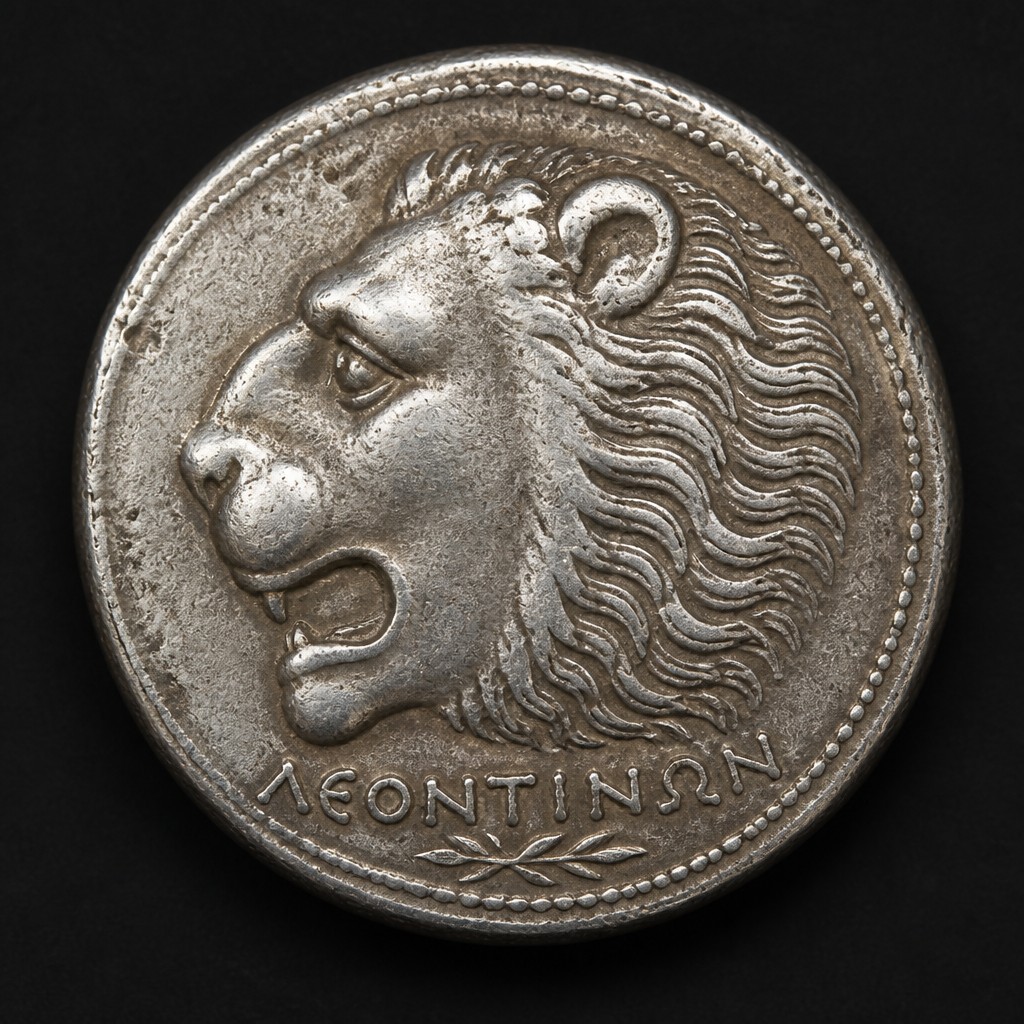
What This Coin Is
This is a silver tetradrachm struck by the Greek city of Leontini in eastern Sicily, primarily during the later fifth century BC. The city's name, derived from the Greek word for lion (leon), inspired one of the most recognizable visual puns in ancient Greek coinage: a prominent lion device on nearly every issue.
Obverse Design
The obverse shows the laureate head of Apollo facing right, rendered in the confident, idealized style typical of high-quality Sicilian engraving of the period. Around the head, four dolphins are often arranged symmetrically in the field, a decorative convention shared with some other Sicilian mints of the era to fill the space around the central portrait.
Reverse Design
The reverse is dominated by a lion, most often shown as a forward-facing or right-facing lion's head with an open, roaring mouth, though some issues depict a full striding lion. Around the lion, barley grains or laurel leaves may appear as secondary devices, and the ethnic ΛΕΟΝΤΙΝΩΝ (of the Leontines) is inscribed in the field, usually arranged around the lion's head.
Size, Weight, and Metal
Struck in silver on the Attic-Sicilian standard, these tetradrachms typically weigh close to 17 grams and measure roughly 24 to 27 millimeters across. As with all coins of this era, the edge is plain and hand-struck rather than machine-milled.
Mint Marks and Where to Find Them
The ethnic ΛΕΟΝΤΙΝΩΝ around the lion's head on the reverse is the key identifying inscription. Small accessory symbols such as barley grains, referencing the region's agricultural wealth, or a laurel leaf tied to Apollo, may also appear and can help distinguish specific issues within the series.
Telling It Apart From Similar Coins
The forward-facing, open-mouthed lion head is quite distinctive and differs from other Sicilian animal reverses such as Gela's man-headed bull or Segesta's hunting hound. Because several Greek cities used Apollo obverses with surrounding dolphins, the reverse lion device combined with the ΛΕΟΝΤΙΝΩΝ ethnic is the most reliable way to confirm a Leontini attribution rather than relying on the obverse alone.
Judging Condition at a Glance
On the obverse, check Apollo's hair and laurel wreath for crisp detail, and note whether all four dolphins remain visible, since off-center strikes can crop them. On the reverse, the lion's mane, facial features, and open jaw are the highest-relief points and the first to wear smooth; a coin that retains sharp definition in the lion's mane and teeth is in notably better condition than one where these details have flattened.
Authenticity Red Flags
Because the lion-head reverse is visually appealing and well known, it has attracted decorative reproductions and older-style casts. Warning signs include a grainy or pitted surface rather than the smooth, hard finish of struck silver, a visible seam around the edge, garbled or misspaced Greek lettering in the ethnic, and a weight or diameter noticeably outside the normal range expected for genuine Leontini tetradrachms.
Frequently asked questions
Why does this coin feature a lion so prominently?
The lion is a visual pun on the city's name, Leontini, which derives from the Greek word for lion, making it an easily recognizable civic emblem on the coinage.
What are the small dolphins around Apollo's head on the obverse?
They are decorative field fillers common on Sicilian coinage of the period, arranged symmetrically around the central portrait rather than carrying a specific narrative meaning tied to Leontini itself.
How is this different from other Sicilian animal-themed tetradrachms?
The forward-facing, roaring lion head is unique to Leontini among Sicilian reverse types, distinguishing it from Gela's man-headed bull, Segesta's hound, or Messana's hare and mule cart.
What weight and size should I expect from a genuine example?
Genuine coins typically weigh close to 17 grams and measure about 24 to 27 millimeters in diameter, consistent with the Attic-Sicilian tetradrachm standard.