
How to Identify the Laurel
A collector's walkthrough for attributing a James I gold Laurel by its laureate bust, quartered shield, mint mark, size, and metal.
Read the full Laurel encyclopedia entry →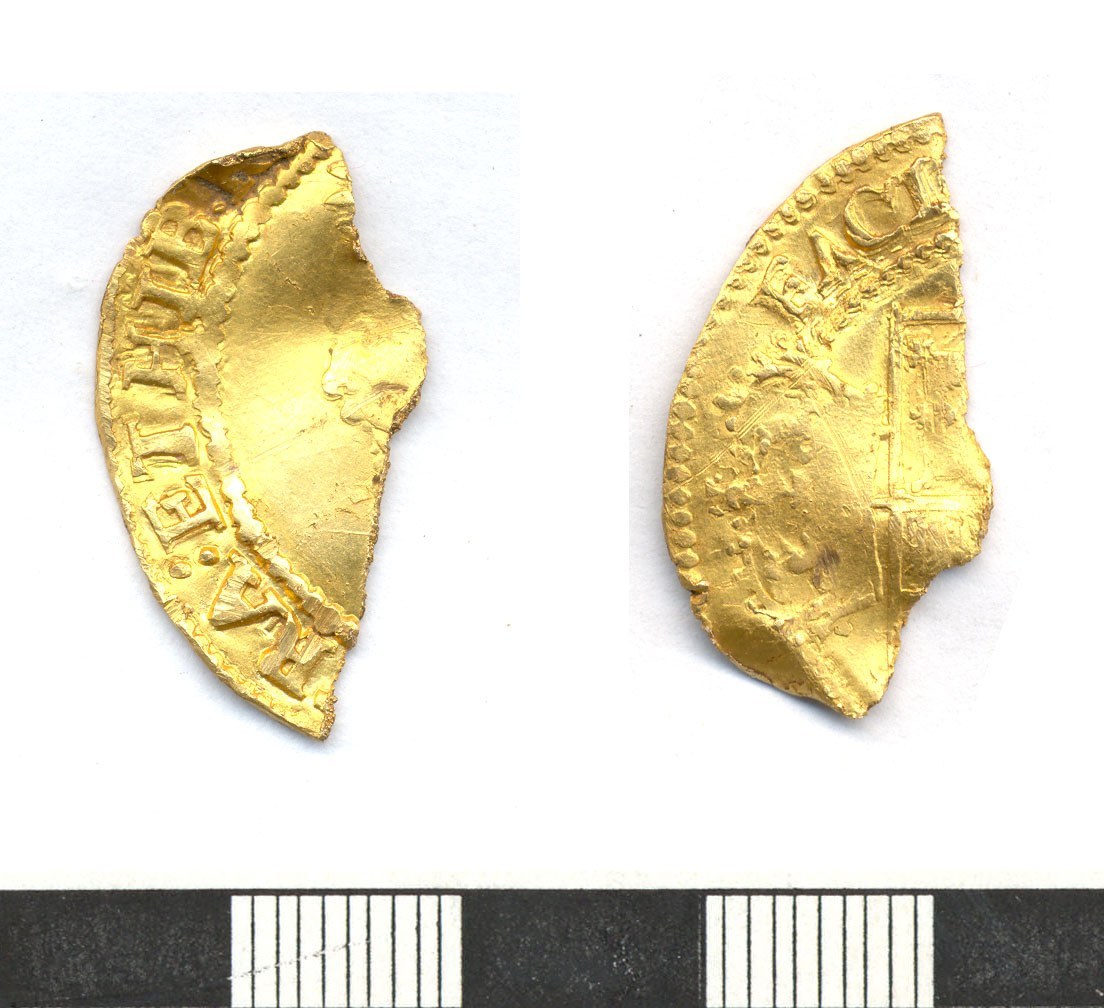
Begin with the metal and size. A Laurel is a hammered gold coin struck on a broad, thin, and slightly irregular flan, and it should have the warm color and reassuring heft of a gold pound piece of the early seventeenth century. A coin that is far too light, the wrong color, or magnetic is not a genuine gold Laurel. Diameter and weight fall within the range expected for a twenty-shilling gold coin of the third coinage, so compare against published figures before going further.
Read the obverse for the defining feature. You should see a profile bust of James I facing right with a laurel wreath around his head rather than a crown, and a Latin legend naming him as king running around the border. This laureate head is the key diagnostic: the crowned busts of the Sovereign and Unite belong to earlier coinages, so a wreath means you are almost certainly looking at a Laurel. A value mark such as the numeral for twenty may appear near the bust.
Turn to the reverse to confirm the type. Look for a crowned shield of arms bearing the quarterings of England, Scotland, France, and Ireland, set within an ornamental frame, again surrounded by a Latin legend. Then find the mint mark, a small symbol at the start of the legend, which places the coin within the 1619 to 1625 window and is essential for narrowing the exact issue. Matching the bust size and mint mark to a standard reference is how specialists pin down the variety.
Be alert to look-alikes and cautions. The Laurel can be confused with the Unite and Sovereign of James I and with the early Laurels of Charles I, so read the legend and check for the wreath rather than a crown. Gold coins of this stature are frequently forged, so watch for casting seams, soft or mushy detail, a wrong weight, or an unnaturally smooth flan, all of which suggest a cast copy rather than a struck original. Mounting marks, bends, creases, and tooled portraits reduce both authenticity confidence and value.
For any Laurel of consequence, seek a second opinion from a specialist in hammered English gold or rely on a reputable auction record. Because busts and mint marks changed across the third coinage, careful comparison against published plates, and ideally an expert examination, is worthwhile before paying a premium.
Frequently asked questions
What is the fastest way to recognize a Laurel?
Look for the laurel wreath on the king's head on the obverse. That laureate profile of James I facing right, combined with a gold flan and a crowned quartered shield on the reverse, is the signature of the Laurel.
Where is the mint mark on a Laurel?
It is normally a small symbol at the very start of the legend, and identifying it against a reference on hammered English coinage helps place the coin within the 1619 to 1625 period and narrow the exact issue.
How can I avoid buying a fake Laurel?
Confirm the coin is struck rather than cast, with crisp die detail and no casting seams, and that the weight and color are right for gold. Irregular flans are normal, but mushy surfaces, wrong weight, or a too-smooth flan are warning signs. For valuable pieces buy from a specialist or trusted auction.