
How to Identify the Larissa Nymph Facing Drachm
A Thessalian silver drachm from Larissa featuring a graceful facing head of the nymph Larissa paired with a free horse, admired as one of the finest facing portraits in Greek coinage.
Read the full Larissa Nymph Facing Drachm encyclopedia entry →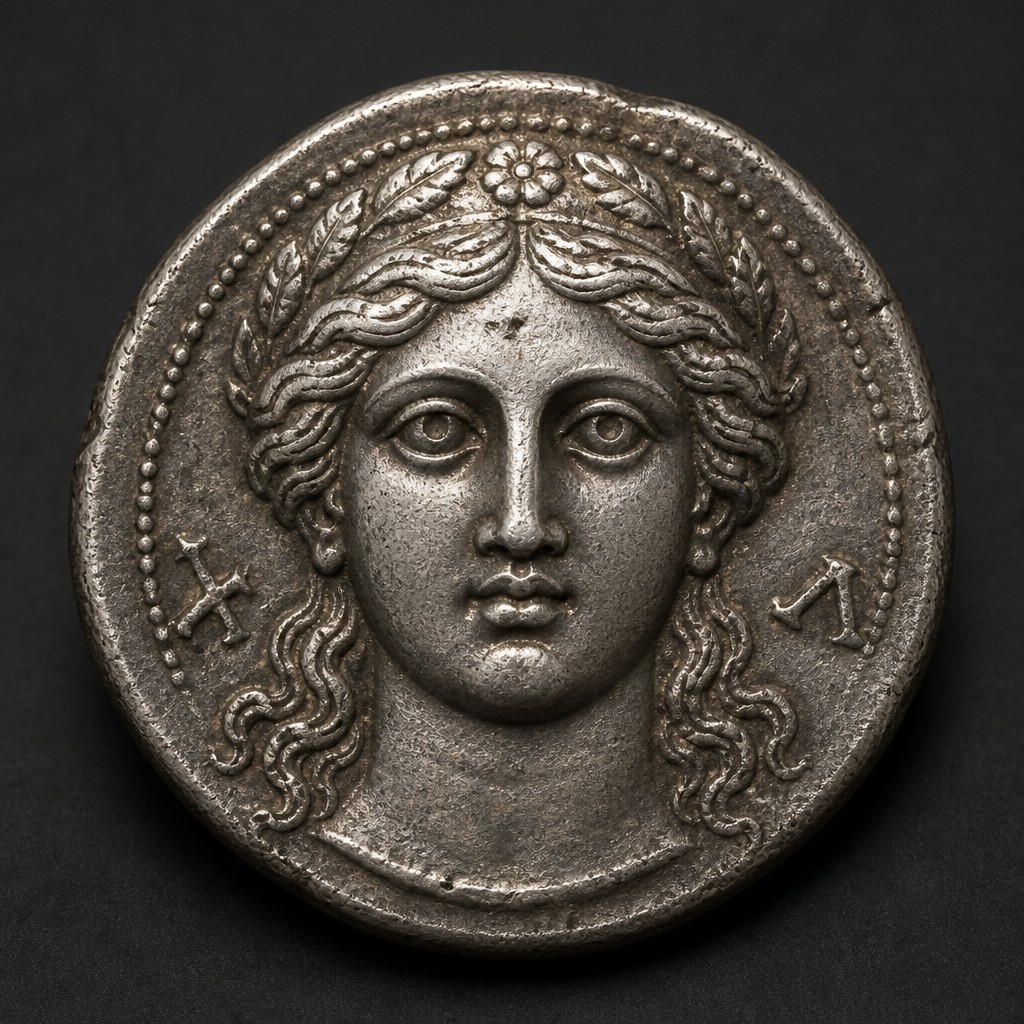
What the Coin Is
Larissa was the leading city of Thessaly, a region famed throughout antiquity for horse breeding, and its silver coinage from the late fifth through mid-fourth centuries BC reflects both the city's namesake nymph and its equestrian culture. The drachm denomination in particular is well known among collectors for the technical skill shown in its facing portrait.
Obverse Design
The obverse depicts the head of the nymph Larissa turned to face the viewer directly or at a three-quarter angle, a difficult pose for an engraver to render convincingly on a small, curved flan. Her wavy hair is usually gathered loosely, sometimes bound with a simple band or net (ampyx or sakkos), and the best examples of this type are regarded as among the most technically accomplished facing portraits in all of Greek coinage.
Reverse Design
The reverse shows a horse, most often grazing with its head lowered to the ground, or in some issues standing free or trotting without a rider or bridle. This unadorned, riderless horse reflects Thessaly's renown for horse pasturage rather than depicting a specific mythological scene. The ethnic ΛΑΡΙΣΑΙΩΝ (of the Larissaians) typically runs around the horse.
Size, Weight, and Metal
This is a silver drachm, a smaller denomination than a stater or tetradrachm, generally weighing in the range of about 5.7 to 6.1 grams. The flan is usually round and moderately thick, giving the engraver enough surface to render the facing head with reasonable clarity.
Mint Marks and Where to Find Them
There is no separate mint mark; the ethnic legend around the horse on the reverse serves to confirm the city of issue, and small control symbols or letters occasionally appear in the field near the horse's legs or above its back to distinguish different issues within the series.
Telling It Apart from Similar Coins
Facing heads appear on coinage from several other Greek cities, but the specific combination of a facing nymph head with a grazing or free horse reverse and the ΛΑΡΙΣΑΙΩΝ legend is distinctive to this Thessalian mint. Other Thessalian cities and leagues used related horse imagery but paired it with different obverse types, so checking both sides together resolves most attribution questions.
Judging Condition at a Glance
Because the facing head is engraved in fairly high relief to create the illusion of depth, it is especially prone to weak striking on the highest points of the nose, lips, and hair; a well-struck coin will show a full, rounded face rather than a flattened or smeared impression. On the reverse, the horse's head and legs wear down first, so crisp definition there indicates lighter circulation.
Authenticity Red Flags
Facing heads are technically difficult to fake convincingly, so modern reproductions often show a flatter, less three-dimensional face than genuine dies, or facial features that appear slightly asymmetrical or doll-like. Also check for a horse with unnaturally stiff or blocky legs, and be cautious of coins with a uniformly smooth, low-relief strike across the whole design, which can indicate a cast copy rather than one struck from genuine dies.
Frequently asked questions
Why is the facing head considered special on this coin?
Engraving a head that faces the viewer directly, rather than in profile, required considerably more skill to render convincingly in relief, and Larissa's die engravers were particularly accomplished at this technique.
What does the horse on the reverse represent?
It reflects Thessaly's ancient reputation as prime horse-breeding country, showing an unadorned, riderless horse rather than a specific mythological figure.
How much should a genuine drachm weigh?
A full-weight silver drachm from Larissa typically weighs approximately 5.7 to 6.1 grams.
How do I distinguish this from other Thessalian horse coins?
Check both sides together: the pairing of a facing nymph head with a grazing or free horse and the ΛΑΡΙΣΑΙΩΝ legend is specific to Larissa, while other Thessalian issues use different obverse types.