
How to Identify the Kyrene Silphium Tetradrachm
A silver tetradrachm from Kyrene in North Africa featuring the now-extinct silphium plant, the source of the city's legendary wealth as a medicinal and culinary export.
Read the full Kyrene Silphium Tetradrachm encyclopedia entry →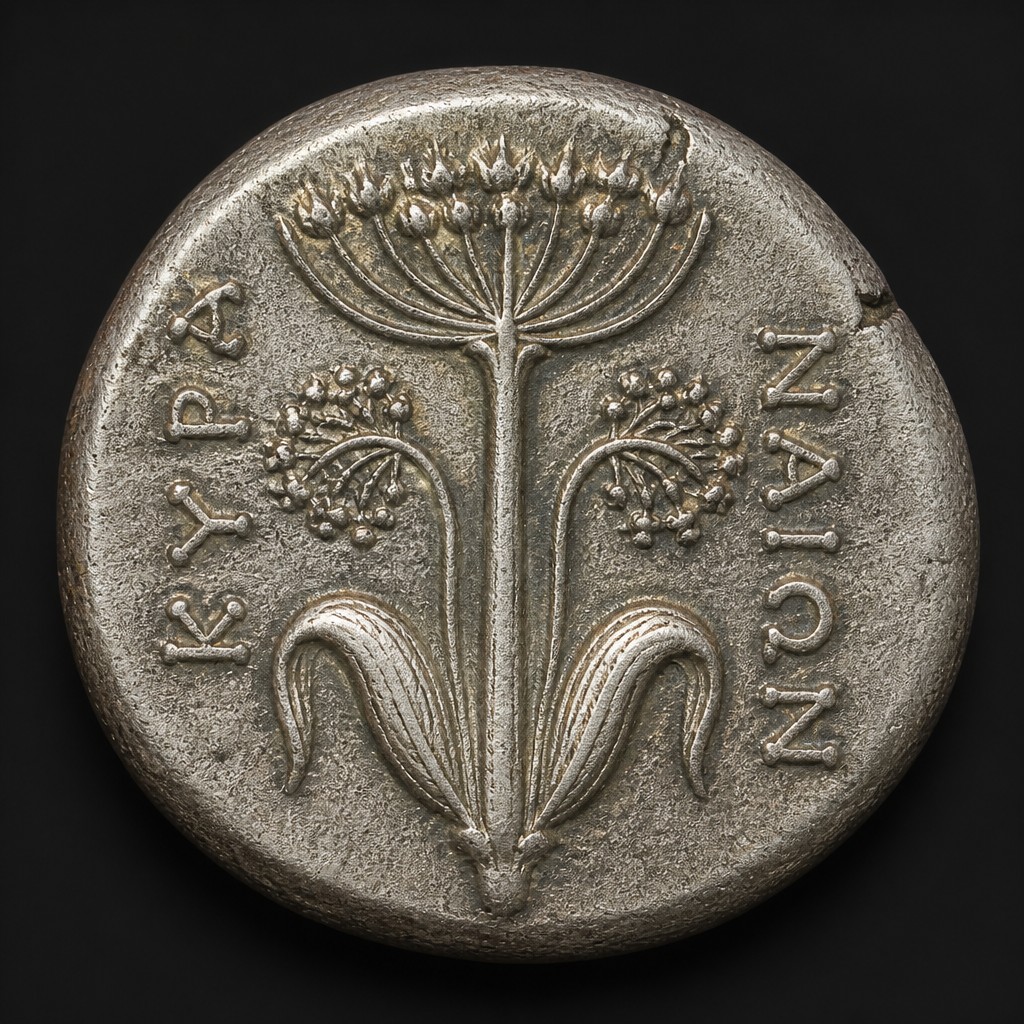
What the Coin Is
Kyrene (Cyrene) was a prosperous Greek colony on the coast of Cyrenaica, in what is now eastern Libya, and its economy rested heavily on the export of silphium, a wild plant used in ancient medicine and cooking that is now extinct. The city celebrated this resource directly on its coinage across several denominations, including tetradrachms struck mainly in the fifth and fourth centuries BC.
Obverse Design
The obverse typically shows the silphium plant itself, rendered as a stylized stalk with a distinctive umbrella-like cluster of flowers or seed pods at the top and heart-shaped fruit segments often shown separately in the design. This plant image, unique to Kyrene's coinage, is one of the only surviving detailed depictions of the now-vanished species.
Reverse Design
Reverse types vary across the series and can include the head of a youthful Zeus Ammon, recognizable by a ram's horn curling beside his ear, or a seated female figure identified as the nymph Kyrene, sometimes shown wrestling or subduing a lion in reference to the mythical founding of the city. Some smaller denominations simply repeat a silphium fruit or seed alone. The city's ethnic, usually a form of KYRA or KYRANAION, appears in the field.
Size, Weight, and Metal
Kyrene's tetradrachms are silver, generally weighing in the range of roughly 14 to 17 grams depending on the specific period and weight standard in use, since the mint adjusted its standard more than once over its history. Smaller silphium-themed denominations exist at lighter weights and should not be mistaken for full tetradrachms.
Mint Marks and Where to Find Them
There is no separate mint mark system; instead, look for the partial ethnic legend near the reverse figure and small control symbols or letters in the field, which vary by issue and help specialists date the coinage. The silphium plant itself, being unique to this mint, functions as the primary visual signature of Kyrene's coinage.
Telling It Apart from Similar Coins
No other ancient mint used the silphium plant as a design, so its presence on the obverse is an immediate and reliable identifier for Kyrene. The main challenge is distinguishing between different Kyrenaican denominations and periods, since the reverse type (Zeus Ammon head versus Kyrene and the lion) changes over time and can help narrow down the approximate date of an individual coin.
Judging Condition at a Glance
On the obverse, check the fine branching detail of the silphium stalk and seed pods, which are delicate and quick to wear down. On the reverse, the facial features of Zeus Ammon or the drapery and lion in the Kyrene scene are the first details lost to circulation wear or a weak strike.
Authenticity Red Flags
Because the silphium design is famous and visually striking, it has been reproduced in modern fantasy and souvenir pieces, sometimes with an exaggerated or overly symmetrical plant shape that doesn't match genuine ancient die engraving. Be cautious of coins with a plant design that looks too crisp, clean, or cartoonish, an inconsistent or anachronistic reverse pairing, or a soft, grainy surface texture suggesting a cast rather than struck origin.
Frequently asked questions
What is silphium and why is it on this coin?
Silphium was a wild plant native to Cyrenaica used widely in ancient medicine and cooking; it was the region's most valuable export and became the signature symbol of Kyrene's coinage before the plant went extinct in antiquity.
Why do the reverse designs vary so much?
Kyrene issued coinage over a long period with different denominations and mint officials, leading to multiple reverse types including a Zeus Ammon head and a seated Kyrene-and-lion scene.
How much should a genuine tetradrachm weigh?
Weights vary by period and standard, but genuine Kyrene tetradrachms generally fall in the range of about 14 to 17 grams in silver.
Can any other city's coin be confused with this one?
Unlikely, since the silphium plant design is unique to Kyrene and does not appear on the coinage of any other ancient mint.