
How to Identify the Kwangtung Province Dragon Dollar
A late Qing dynasty Chinese provincial silver dollar from Kwangtung (Guangdong), identified by Chinese characters naming the province on the obverse and a coiled dragon on the reverse.
Read the full Kwangtung Province Dragon Dollar encyclopedia entry →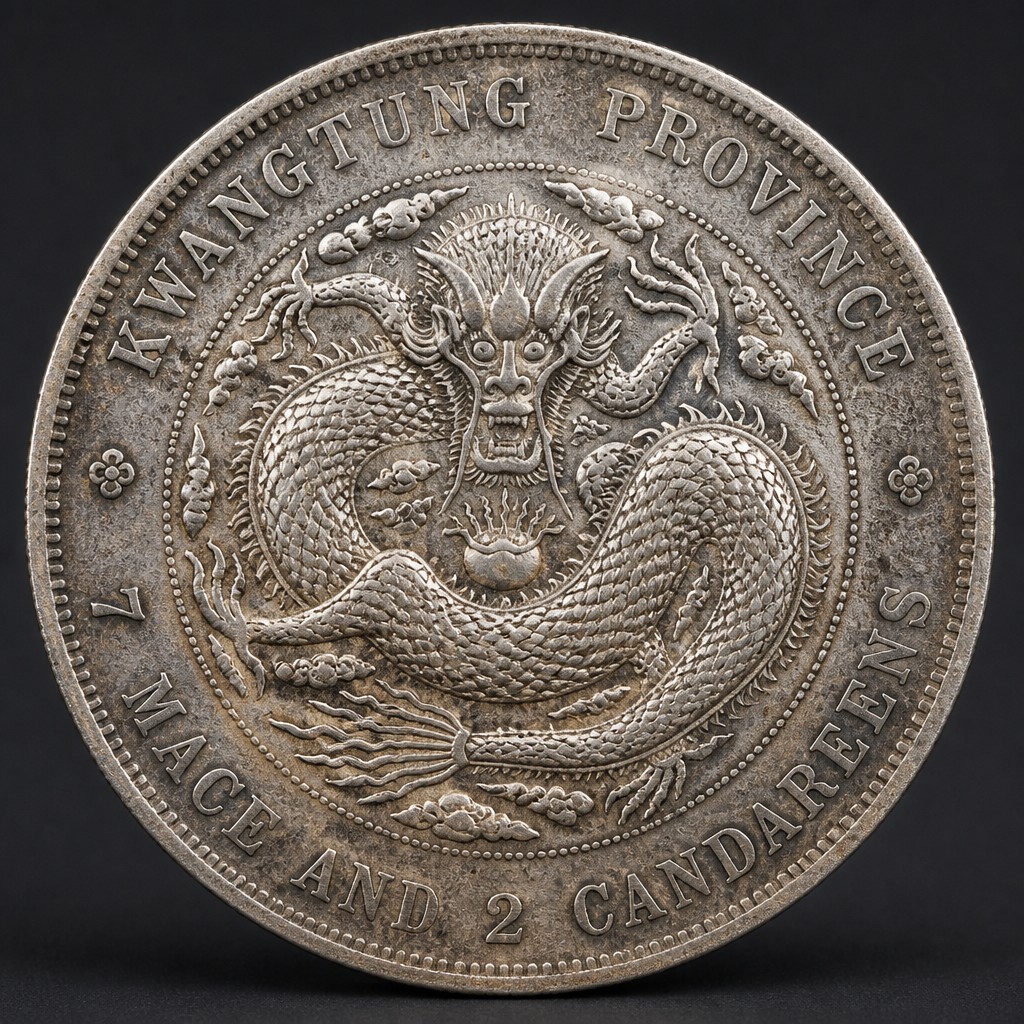
What It Is
The Kwangtung Province Dragon Dollar is a silver coin struck by the Qing dynasty provincial mint in Kwangtung (modern Guangdong) province in southern China during the late 19th and early 20th centuries. Kwangtung was among the first Chinese provinces to adopt Western-style machine-struck coinage, and its dragon dollars became a widely used and influential model for other Chinese provincial mints. Its early adoption of machine-struck, Western-style coinage set a design template that several other Chinese provinces would later copy or adapt for their own provincial dollar issues, making Kwangtung's dragon dollar historically influential well beyond its own regional circulation.
Obverse Design and Inscriptions
The obverse is dominated by Chinese characters arranged in a circular or grid pattern identifying the issuing province ("Kwangtung Province") and the denomination in traditional Chinese monetary units, along with English lettering around the outer rim reading something like "KWANG-TUNG PROVINCE" and the value "7 MACE AND 2 CANDAREENS," the traditional Chinese silver weight equivalent to one dollar.
Reverse Design and Inscriptions
The reverse features a coiled or striding Chinese dragon, a powerful imperial symbol, encircled by the English inscription and sometimes small Manchu script elements, depending on the specific date and type. The dragon's pose, number of claws, and scale detailing can vary slightly between different striking years.
Size, Weight, Metal, and Edge
The coin is dollar-sized, approximately 39 mm in diameter, struck in roughly .820-.900 fine silver and weighing about 26.7-27 grams, corresponding to the "7 mace 2 candareens" traditional weight standard used across Chinese provincial dollar coinage of the period. The edge is reeded.
Mint Marks and Where to Find Them
As a single provincial mint's product, there is no separate branch mint letter; instead, the province name spelled out in both Chinese and English serves as the primary identifier, and small die variety differences (such as dragon design variants) help collectors pinpoint more specific striking batches.
Telling It Apart from Similar Coins
Kwangtung dollars are easily confused with dragon dollars from other Chinese provinces, such as Kiangnan, Peiyang (Chihli), or Fengtien, which share the same general format but differ in the province name, dragon pose, and specific denomination wording. Always read the province name in the English legend to confirm the specific provincial issue.
Judging Condition at a Glance
Examine the dragon's scales, claws, and facial whiskers, since these fine details wear down quickly with circulation. A well-preserved coin shows individually distinct scales and a sharp dragon face, while a worn example shows a smoothed, indistinct dragon body and shallow Chinese character strokes.
Authenticity Red Flags
Because Chinese dragon dollars are heavily counterfeited and collected, watch for incorrect weight or diameter, garbled or malformed Chinese characters, an unnatural dragon pose compared to documented genuine varieties, or a surface that looks cast rather than struck, with a grainy texture and visible mold seam. Comparing the specific die variety against known genuine examples is often necessary given how many fakes exist for popular Chinese provincial dollars.
Frequently asked questions
How do I identify which Chinese province issued a dragon dollar?
Read the English-language legend around the rim, which spells out the issuing province's name, such as 'KWANG-TUNG PROVINCE.'
What does '7 MACE AND 2 CANDAREENS' mean?
It is the traditional Chinese silver weight standard equivalent to one dollar, commonly inscribed on Qing dynasty provincial dollar coins.
Why are Chinese dragon dollars often counterfeited?
Their historical significance and collector demand make them frequent counterfeit targets, so weight, diameter, and fine die details should always be checked carefully.
What silver content and weight should a genuine coin have?
Roughly .820-.900 fine silver and about 26.7-27 grams, matching the traditional Chinese dollar weight standard.