
How to Identify the Kuwaiti Fils
The small-denomination base-metal coinage of the State of Kuwait, easily identified by Arabic numerals, the national dhow or falcon motifs, and modest size.
Read the full Kuwaiti Fils encyclopedia entry →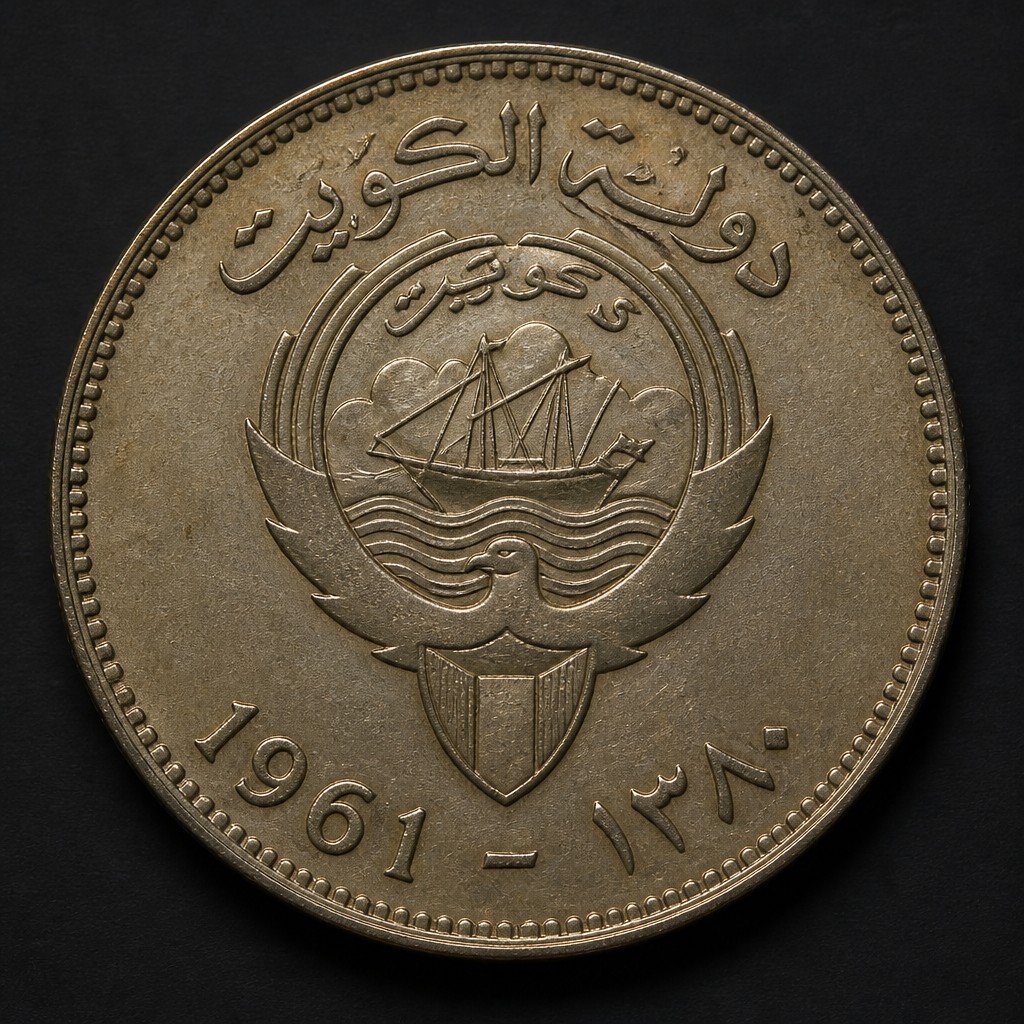
What It Is
The fils is the subsidiary coin of Kuwait, with 1,000 fils equal to one Kuwaiti dinar. Since Kuwait's first independent coinage in the 1960s, fils pieces have circulated in several denominations (such as 1, 5, 10, 20, 50, and 100 fils) and have been restruck with updated designs over the decades as rulers changed.
Obverse Design & Inscriptions
The obverse generally carries the denomination in both Arabic and Western numerals, along with the words "State of Kuwait" in Arabic script. Some series place a national symbol, such as a stylized sailing dhow (representing Kuwait's maritime and pearling heritage) or a falcon, prominently in the design.
Reverse Design & Inscriptions
The reverse commonly shows the Hijri and/or Gregorian date along with additional Arabic text, and on many issues repeats or complements the emblem used on the obverse. Higher-denomination fils coins tend to carry more detailed engraving, while the smallest denominations are simpler.
Size, Weight, Metal & Edge
Kuwaiti fils coins are struck in base metals such as bronze, cupro-nickel, or nickel-brass depending on denomination and era, and are noticeably smaller and lighter than the silver or gold coins used in Gulf trade during earlier centuries. Larger fils denominations are typically produced with a distinctive scalloped (multi-sided) or plain round shape to help users distinguish them by touch; edges vary from plain to reeded depending on the specific denomination.
Mint Marks & Where to Find Them
Kuwaiti fils coins generally do not carry a separate mint-mark letter, since they have been produced under contract by established national mints; the identifying details are the Arabic legend, date, and denomination rather than a hidden symbol.
Telling It Apart From Similar Coins
Fils coins are sometimes confused with other small Gulf coins such as Bahraini or Qatari fils/dirham pieces because of similar size and Arabic script. The key distinguishing point is the specific wording "Dawlat al-Kuwait" (State of Kuwait) in the legend, plus Kuwait's characteristic dhow or falcon imagery, which differs from the palm trees, dhows of different style, or coats of arms used by neighboring states.
Judging Condition at a Glance
Because these are everyday circulation coins in base metal, wear shows as smoothing of the raised dhow or falcon design and softened numerals. Well-preserved examples retain sharp feather or hull details and a clear date; heavily circulated coins can have nearly illegible numerals and a dark, grimy surface from handling.
Authenticity Red Flags
Counterfeiting of low-value circulation fils is uncommon because of their small intrinsic value, but altered or re-plated coins do occasionally appear, particularly among collectors seeking rare date combinations. Watch for mismatched color between the coin's edge and face suggesting plating, blurry or re-cut numerals that suggest a tooled date, and an unusually light or heavy weight compared with the standard specification for that denomination.
Frequently asked questions
What does 'fils' mean and how does it relate to the dinar?
The fils is Kuwait's subsidiary coin; 1,000 fils equal one Kuwaiti dinar, similar to how cents relate to a dollar.
What images appear on Kuwaiti fils coins?
Common motifs include a traditional sailing dhow representing Kuwait's maritime heritage, a falcon, and Arabic text reading 'State of Kuwait' along with the denomination and date.
Why are some fils coins multi-sided instead of round?
Certain higher denominations use a scalloped or multi-sided shape so users can distinguish them from other coins by touch, a common practical design choice in circulating coinage.
Are fake Kuwaiti fils common?
Because their metal value is low, outright counterfeits are rare, but check for mismatched plating color or re-cut dates if you encounter an unusual example.