
How to Identify the Kroisos (Croeseid) Gold Stater of Lydia
An ancient Lydian gold coin from the reign of King Croesus, identified by confronting lion and bull foreparts on the obverse and two unequal incuse squares on the plain reverse.
Read the full Kroisos (Croeseid) Gold Stater of Lydia encyclopedia entry →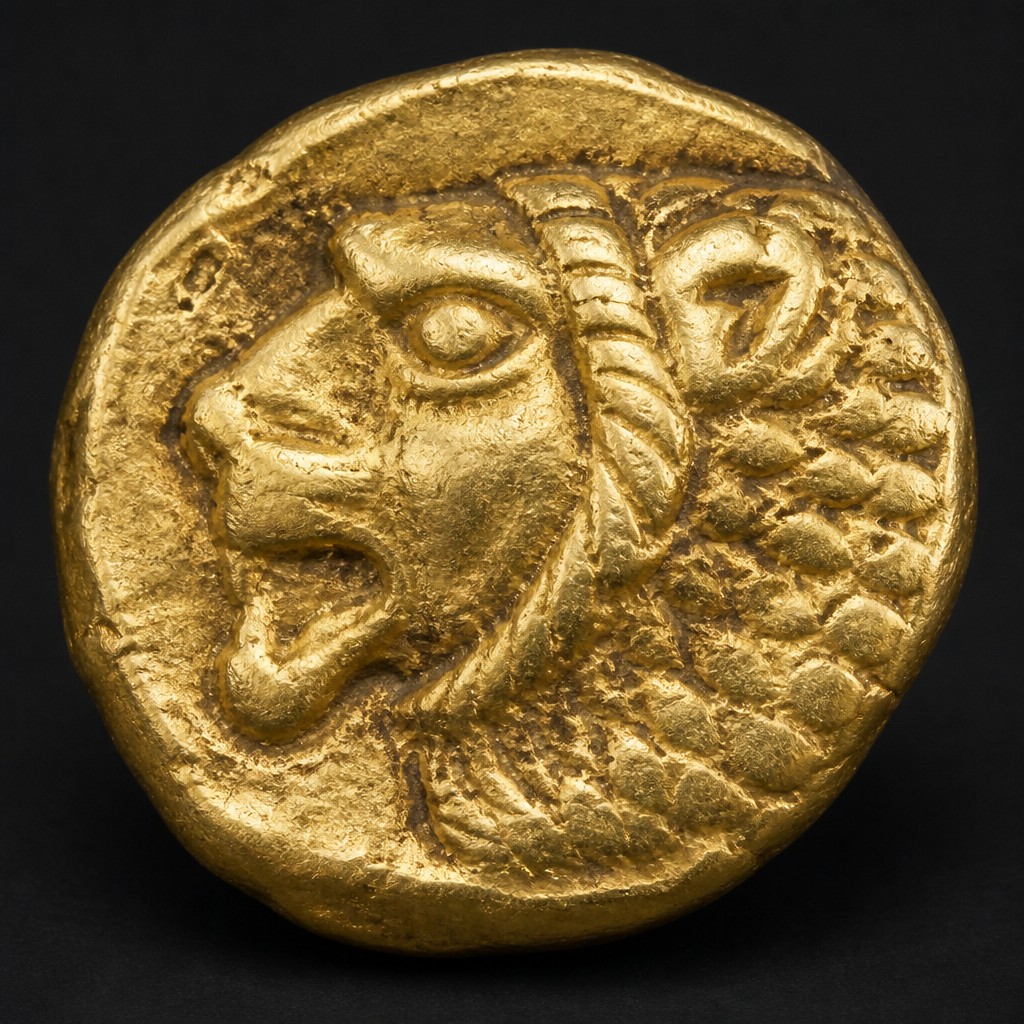
What This Coin Is
The Kroisos, or Croeseid, gold stater was struck under King Croesus of Lydia (traditionally dated to around 561-546 BC), a ruler whose immense wealth gave rise to the enduring expression "rich as Croesus." This coin type is historically significant as one of the first coinages to separate gold and silver into distinct, fixed-value denominations rather than relying on the variable-composition electrum used by earlier Lydian kings.
Obverse Design
The obverse shows the confronted foreparts of a lion (on the viewer's right) and a bull (on the viewer's left), facing each other, with the lion typically rendered in an aggressive, roaring pose. This lion-and-bull confrontation motif became closely associated with Lydian royal coinage and was later carried forward, in modified form, into the Persian gold daric after the Persian conquest of Lydia.
Reverse Design
The reverse carries no pictorial design. Instead, it shows two incuse (sunken) rectangular punch marks of unequal size, left by the punches used during striking. This plain, punch-marked reverse reflects continuity with the earlier electrum coinage tradition, even as the obverse design and the gold-silver bimetallic system were new.
Size, Weight, and Metal
The coin is struck in gold, with the standard "light" weight version weighing approximately 8.05 grams, though heavier and lighter denominations and standards also existed within this coinage system. Diameter is typically small, around 16-17mm, consistent with other ancient gold staters. As with other hand-struck ancient coins, there is no engineered edge, and slight irregularities in shape are normal.
Identifying the Mint and Period
There is no mint mark system on this coinage; identification relies on recognizing the specific lion-and-bull confrontation style, the coin's gold composition, and its weight relative to known Croeseid standards. Because Croesus's bimetallic gold-and-silver system was innovative for its time, silver Croeseids of similar design also exist, struck to a fixed exchange ratio with the gold pieces — confirming which metal a given piece is struck in is part of correctly identifying it within this system.
Telling It Apart from Similar Coins
The lion-and-bull confrontation obverse is distinct from the single roaring lion head seen on earlier Lydian electrum trites, marking a clear stylistic transition point in Lydian coinage. After the Persian conquest of Lydia, the lion-and-bull design was gradually replaced by the Persian daric's kneeling archer motif, so the confronted-animals design combined with the plain double-incuse reverse helps place a coin specifically within the Lydian royal period under Croesus rather than the later Persian era.
Judging Condition and Authenticity
Condition is assessed by the clarity of the lion's mane and the bull's musculature on the obverse, along with the depth and definition of the two incuse punches on the reverse. Given this coin's importance as one of the earliest fixed-denomination gold coinages and its consequent value, authenticity should be confirmed through gold purity testing, weight verification against known Croeseid standards, and die-style comparison with catalogued genuine examples, ideally with the help of a qualified ancient coin specialist before any purchase.
Frequently asked questions
Why is this coin historically significant?
It represents one of the earliest systems of fixed-denomination gold and silver coinage, replacing the variable-composition electrum used by earlier Lydian rulers, under King Croesus.
What animals are shown on the obverse?
The confronted foreparts of a lion and a bull, facing each other, a design closely associated with Lydian royal coinage under Croesus.
Why does the reverse have no picture?
It carries two incuse rectangular punch marks of unequal size rather than a design, continuing a tradition from earlier Lydian electrum coinage.
How does this relate to the Persian gold daric?
After Persia conquered Lydia, the lion-and-bull design was eventually replaced by the daric's kneeling archer motif, making the Croeseid a stylistic predecessor to later Persian gold coinage.
What weight should a genuine example have?
The standard light-weight gold stater weighs approximately 8.05 grams, though other weight standards existed within this coinage system.