
How to Identify the Korean Sangpyeong Tongbo Cash
Korea's long-running Joseon-dynasty cash coin, cast for roughly two centuries, recognizable by its four-character inscription and reverse mint or foundry markings.
Read the full Korean Sangpyeong Tongbo Cash encyclopedia entry →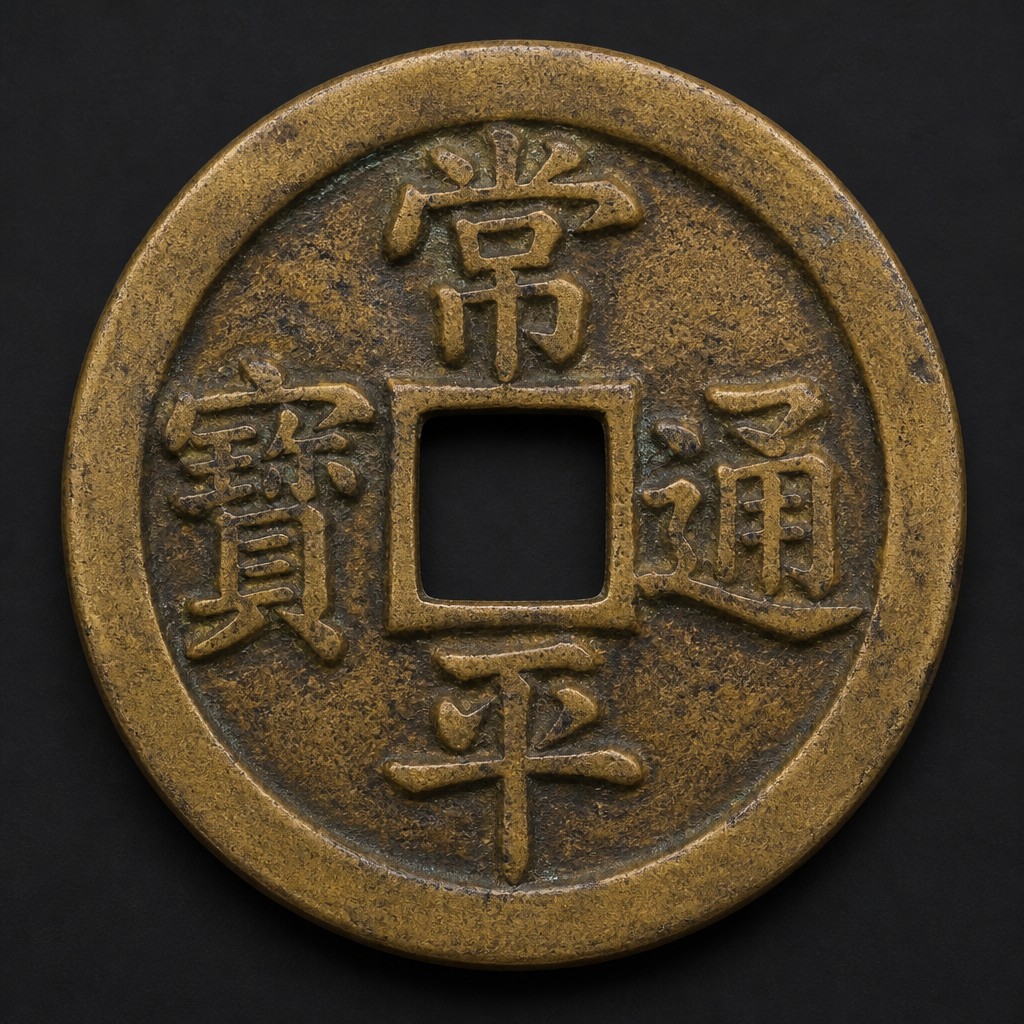
What the Coin Is
The Sangpyeong Tongbo (常平通寶, "ever-normal circulating treasure") was the main cash coin of Korea's Joseon dynasty, first cast in the 1630s and produced in large quantities especially from the later 17th century into the late 19th century. It follows the traditional East Asian round coin with a square center hole.
Obverse Design & Inscription
The obverse reads clockwise 常平通寶. Character style varies by mint and period, but the four-character phrase itself remains constant throughout the coin's long production run, making it easy to identify at a glance.
Reverse Design & Mint Marks
The reverse is where individual issues are distinguished. Most examples carry one Chinese character above the hole identifying the casting bureau or mint, often abbreviating a government office or region, sometimes paired with a number or additional character below or beside the hole indicating a specific furnace or batch. This reverse marking system is the primary way collectors sort Sangpyeong Tongbo into hundreds of cataloged varieties.
Size, Weight, Metal, Edge
Standard pieces are cast in bronze/brass, typically around 25-27 mm in diameter, though larger denominations issued later in the 19th century during currency reforms were struck at increased size and weight to represent higher face values. Edges are plain and unmilled, consistent with cast cash coinage.
Telling It Apart from Similar Coins
Because the four-character inscription is unique to Korea, confusion mainly arises with generic cash-coin shapes from China or Japan. The inscription 常平通寶 does not appear on genuine Chinese or Japanese issues, so reading the obverse characters is the fastest way to confirm Korean origin. Within the series, reverse mint characters, rather than the obverse, distinguish one variety from another. It is also worth noting the character style itself: earlier casts tend toward a somewhat thicker, more angular brushwork, while later 19th-century pieces often show thinner, more standardized strokes as casting technique and central oversight of the mint bureaus evolved.
Judging Condition at a Glance
Look for clear, evenly cast characters on both sides and a full, undamaged rim. Because so many were produced, common varieties in worn condition are typical; sharper strikes with legible reverse mint marks are more desirable to variety collectors even when the coin itself is not rare. Pay attention as well to the squareness and centering of the central hole, since a crooked or off-center hole can indicate either careless period casting or a later, cruder reproduction.
Authenticity Red Flags
Modern tourist reproductions exist, often with unnaturally smooth or overly dark artificial patina, blurry or incorrect reverse characters, or a diameter and weight that doesn't match known genuine ranges. A reverse mint mark that doesn't correspond to any documented casting office is a sign of a fantasy or reproduction piece rather than a period coin.
Frequently asked questions
What does the character above the square hole on the reverse mean?
It typically identifies the government office or mint that cast the coin, and is the main way collectors classify different varieties of this coin.
How long was the Sangpyeong Tongbo produced?
It was cast over roughly two centuries, from the 1630s into the late 1800s, with the heaviest production concentrated from the later 17th century onward.
Are all Sangpyeong Tongbo coins the same size?
No, while most standard pieces are similarly sized, later 19th-century currency reforms introduced larger, higher-denomination versions.
How do I know it's Korean and not Chinese or Japanese?
Read the obverse inscription; 常平通寶 is specific to Korea's Joseon-era coinage and does not match Chinese or Japanese four-character cash inscriptions.
Why do reverse markings vary so much between examples?
Coins were cast at many regional mints and furnaces over a long period, each using its own identifying character or number on the reverse.