
How to Identify the Korean Sang Pyong Tong Bo (Mun cash coin)
Korea's standard cast bronze cash coin of the Joseon dynasty, identified by its four-character obverse legend and mint-bureau character on the reverse.
Read the full Korean Sang Pyong Tong Bo (Mun cash coin) encyclopedia entry →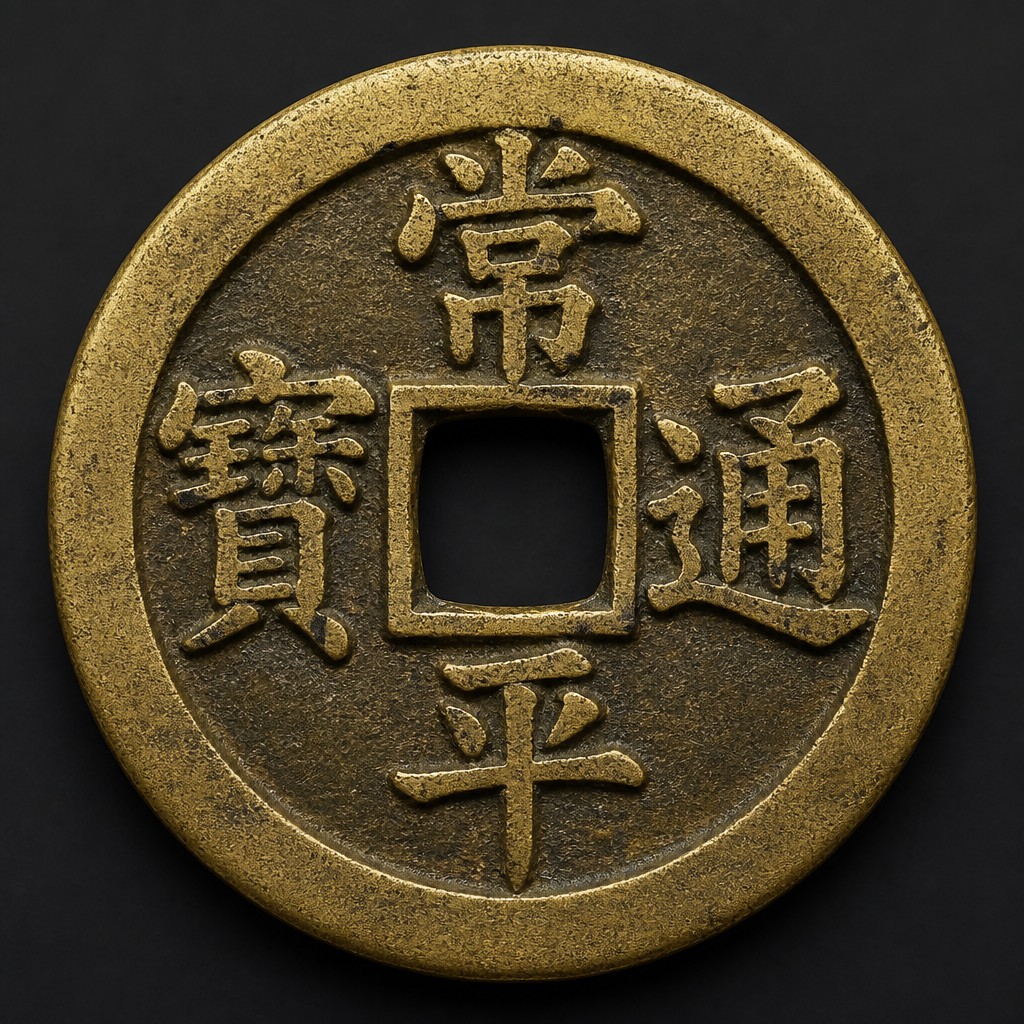
What It Is
Sang Pyong Tong Bo was the standard cast bronze or brass cash coin of Korea's Joseon dynasty, produced from the 17th century (beginning in 1633) through the late 19th century by numerous regional and government mint bureaus. It follows the traditional East Asian round-coin-with-square-hole format shared with Chinese and Japanese cash coins. Its long production run across many bureaus and changing economic conditions means the type includes an enormous range of minor die varieties, making it a popular entry point for collectors interested in cataloging small differences between casting batches.
Obverse Design & Inscriptions
Four Chinese characters reading "常平通寶" (Sang Pyong Tong Bo, roughly "Ever-Normal Circulating Treasure") are arranged around the central square hole, read in the order top-bottom-right-left.
Reverse Design & Inscriptions
The reverse typically bears one or two additional Chinese characters identifying the issuing mint bureau (such as abbreviations for the Ministry of Revenue, Ministry of War, or various provincial bureaus), and sometimes a numeral indicating a particular casting series, positioned above, below, or beside the square hole.
Size, Weight, Metal & Edge
Standard "1 mun" pieces are cast bronze or brass, roughly 24-27mm in diameter and 3-5 grams, though larger denominations exist, notably the much heavier "hundred cash" (dangbaekjeon) issued briefly in 1866-67. Edges are plain and unfiled as cast, sometimes showing casting seams.
Mint Marks & Where to Find Them
Mint identification appears on the reverse as the small character(s) near the square hole. Cross-referencing these characters against known mint-bureau lists is the standard way to attribute a specific coin's origin. Some reverse marks also include a small cyclical or numeral character indicating a particular casting batch, which specialist Korean cash coin references organize into detailed variety lists.
Telling It Apart from Similar Coins
Distinguish this coin from contemporary Chinese and Japanese cash coins mainly by the obverse legend text itself, since "Sang Pyong Tong Bo" is unique to Korea, while Chinese cash bear their own reign-title inscriptions and Japanese cash (like Kan'ei Tsuho) carry entirely different characters.
Judging Condition at a Glance
Because these coins are cast rather than struck, look at how crisply the characters were formed in the mold, whether file marks around the rim (used to smooth casting flash) are present and even, and general wear on the raised character strokes. A coin with sharp, well-defined character edges and minimal surface pitting is considered notably well preserved compared to the heavily worn, smoothed examples typically found after long circulation.
Authenticity Red Flags
Modern tourist-market reproductions of Korean cash coins are common. Genuine antique pieces typically show an aged brown-green patina and slightly irregular, hand-finished rims, while modern casts often look uniformly shiny, are too light or too heavy, or have crudely formed characters.
Frequently asked questions
What does the obverse inscription mean?
"Sang Pyong Tong Bo" translates roughly to "Ever-Normal Circulating Treasure," a name used consistently across this coin's long production run.
How do I identify which mint bureau produced a specific coin?
Check the small character or characters on the reverse near the square hole and compare them against reference lists of known Joseon mint bureaus.
Why do sizes and weights vary so much between examples?
This coin type was produced over more than two centuries by many different bureaus, and denominations ranged from the standard 1 mun piece up to much larger and heavier issues like the 100 cash coin.
How is this different from Chinese or Japanese cash coins?
All three share the round, square-holed format, but the specific four-character obverse legend differs by country, making the legend text the clearest way to tell them apart.
What should I check for a modern reproduction?
Look for an aged, uneven brown-green patina and slightly irregular hand-finished rims; overly shiny, uniform, or crudely formed examples often indicate a modern tourist reproduction.