
How to Identify the Korean Gwangmu Half Won (1905)
A machine-struck silver coin from the Korean Empire's 1905 currency reform, identified by its dragon design and Gwangmu-era date inscription.
Read the full Korean Gwangmu Half Won (1905) encyclopedia entry →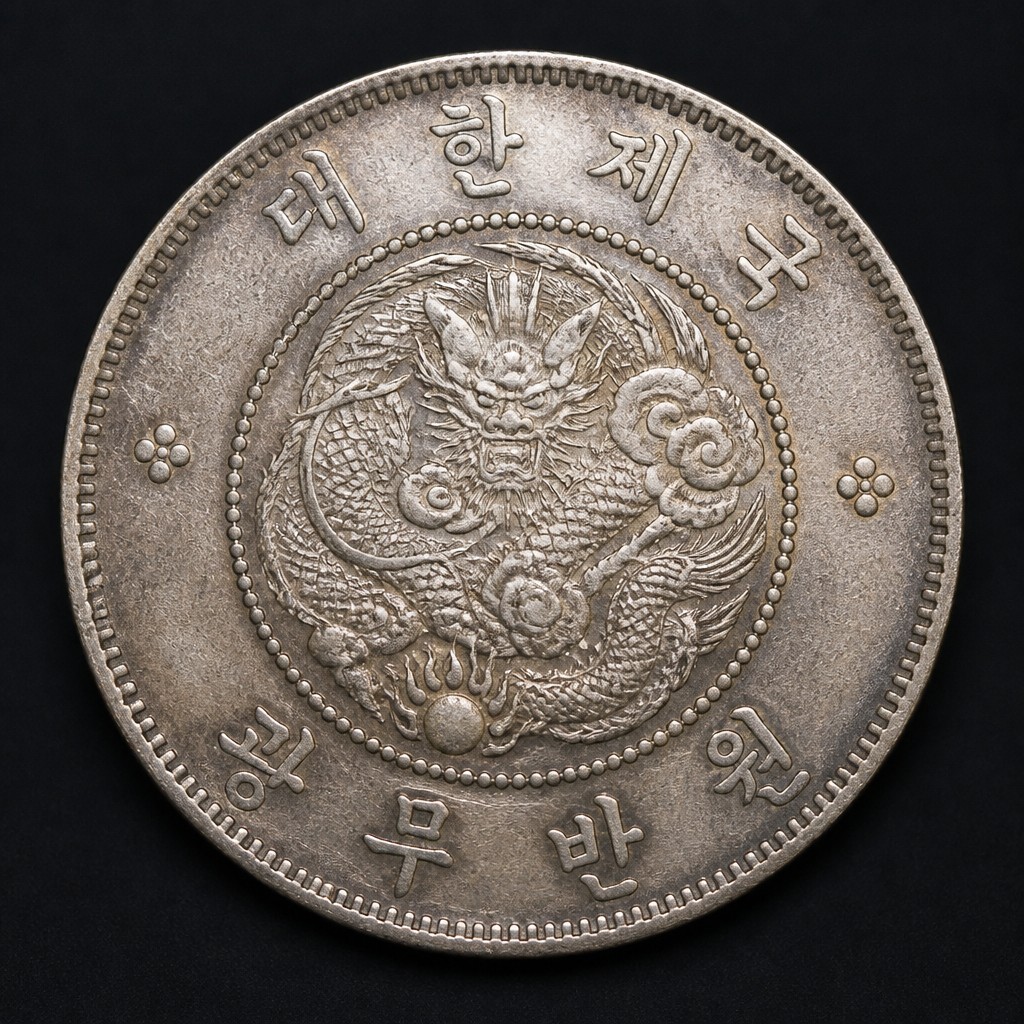
What It Is
This silver coin was struck in 1905, the 9th year of the Gwangmu era, as part of a currency reform carried out by the Korean Empire (Daehan Jeguk) under Japanese financial oversight, replacing older cast cash coinage with modern machine-struck decimal denominations. The reform, associated with the financial advisor Megata Tanetaro, aligned Korean coinage more closely with the Japanese monetary system in the years leading up to Japan's formal annexation of Korea, making this coin an important artifact of that transitional period.
Obverse Design & Inscriptions
The obverse features a coiled dragon design encircling the center, with the Korean imperial plum-blossom emblem placed at the top, along with an inscription reading the Gwangmu era year ("Gwangmu Year 9") and the country name.
Reverse Design & Inscriptions
The reverse shows the denomination "半圜" (half won) within a wreath or decorative border, sometimes flanked by crossed flags or floral sprays, following a layout influenced by contemporary Japanese coin design since the reform coinage was struck at a Japanese mint.
Size, Weight, Metal & Edge
It is a silver coin roughly 30-31mm in diameter, weighing around 13.5 grams, with fineness of approximately .800. It has a reeded (milled) edge typical of the new machine-struck series.
Mint Marks & Where to Find Them
Coins from this reform series were produced at the Osaka Mint in Japan under the reform agreement. Identifying marks are generally limited to the era-date inscription rather than a separate mint letter. Because the whole reform series was struck at a single foreign mint using consistent machinery, die varieties are relatively limited compared to older, more decentralized Korean cash coinage.
Telling It Apart from Similar Coins
Distinguish this coin from the earlier cast Sang Pyong Tong Bo cash coins by its round, machine-struck form, dragon design, and Gwangmu-era dating, rather than the older square-holed cast format. Distinguish it from other denominations in the same series (such as 1 won or 20 jeon) by size and the "半圜" denomination characters.
Judging Condition at a Glance
Check the dragon's scale detail and the plum-blossom crest for wear, and confirm the wreath and lettering on the reverse remain sharp, since these raised elements wear down first with circulation. Original mint luster, when present, tends to survive longest in the recessed background fields around the dragon and crest rather than on the highest raised points.
Authenticity Red Flags
Verify weight and diameter against the known standard, and look for crisp, well-centered striking. Reproductions or altered pieces may show soft dragon detailing, incorrect edge reeding, or a tone inconsistent with aged silver.
Frequently asked questions
Why does this coin look similar to contemporary Japanese coinage?
It was struck at the Osaka Mint in Japan as part of a currency reform overseen by Japanese financial advisors, which is why the layout and production style echo contemporary Japanese coin design.
What does "Gwangmu Year 9" mean?
Gwangmu was the era name used by the Korean Empire, and "Year 9" corresponds to 1905 in the Gregorian calendar.
How is this coin different from the older Sang Pyong Tong Bo cash coins?
This coin is round, machine-struck, and shows a dragon design with a modern denomination, replacing the older square-holed cast cash coins used for centuries before the reform.
What denomination does "半圜" represent?
It represents "half won," a fractional denomination introduced under the 1905 decimal currency reform.
What should I check for authenticity?
Confirm the weight, diameter, and edge reeding match the known standard, and look for crisp dragon and lettering detail rather than soft or blurred design elements.