
How to Identify the Korean 5 Yang Silver Dollar (1892)
Korea's first dollar-sized silver coin, struck in 1892 with a coiled dragon obverse and '5 Yang' denomination reverse, closely resembling contemporary Chinese and Japanese dragon dollars.
Read the full Korean 5 Yang Silver Dollar (1892) encyclopedia entry →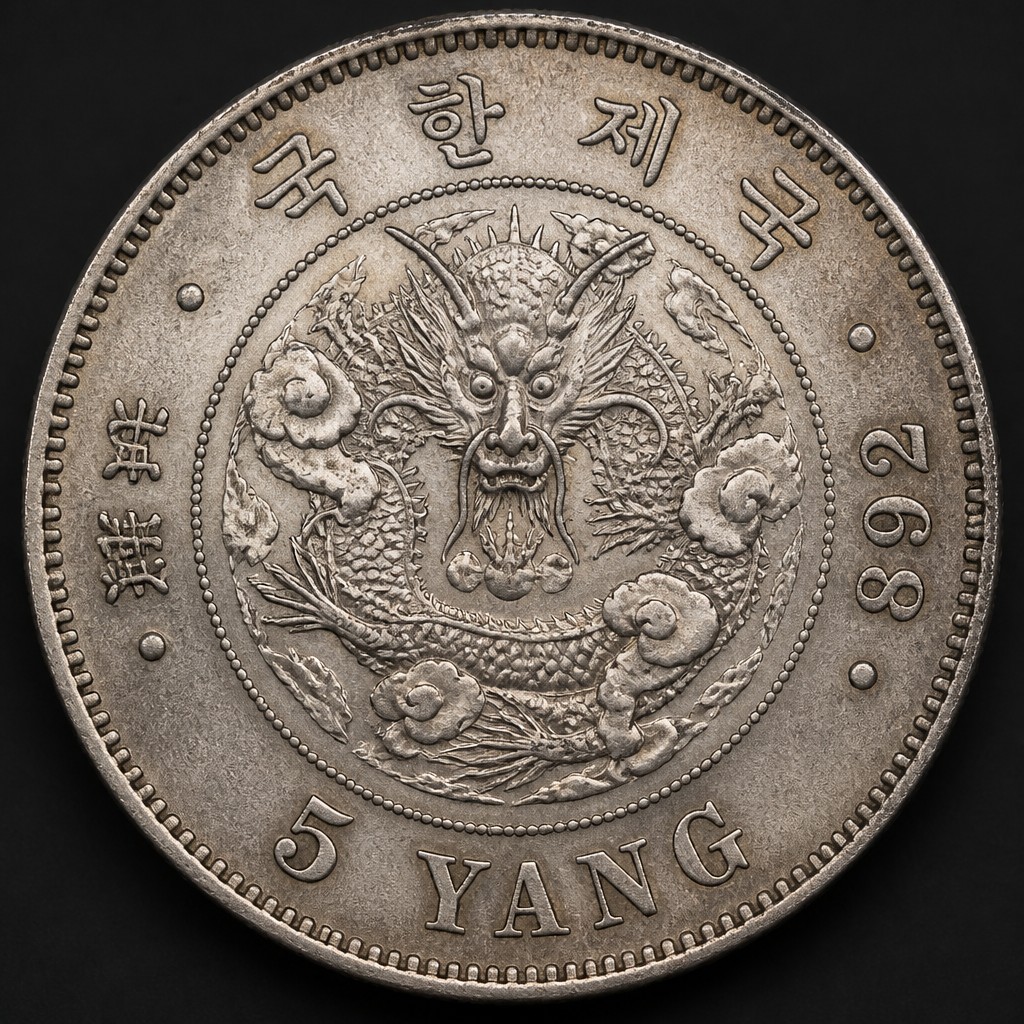
What This Coin Is
The 5 Yang silver dollar of 1892 was the flagship large-silver denomination of Korea's late Joseon currency reform, intended to give the kingdom a modern, dollar-sized coin comparable to those already circulating from China, Japan, and Mexico in East Asian trade. Produced in limited numbers at Korea's new mechanized mint, it is one of the most historically significant and sought-after coins in Korean numismatics.
Obverse Design
The obverse features a large coiled dragon facing forward or in profile, a design closely modeled on the "dragon dollar" coinage style used by neighboring China and Japan at the time. Chinese characters (hanja) around the rim identify the issuing Korean state, and the piece was struck using Japanese-supplied minting machinery and technical guidance.
Reverse Design
The reverse displays the denomination "5 Yang" (五兩) in Chinese characters at the center, usually within a wreath or beaded circle, with the reign-year date recorded using Korea's dynastic dating system rather than the Western calendar.
Size, Weight, Metal, and Edge
As a dollar-sized silver coin, the 5 Yang is considerably larger and heavier than the fractional 1 Yang and smaller denominations in the same series, struck in high-grade silver with a reeded edge consistent with contemporary trade dollar coinage.
Mint Marks and Where to Find Them
These coins were produced at Korea's mint near Incheon (Inchon), built with foreign technical assistance during the reform period. Because mintages were very limited and the series was short-lived, no separate branch-mint marks are typically found; instead, collectors focus on subtle die varieties in the dragon's pose and lettering style to distinguish individual issues.
Telling It Apart from Similar Coins
The 5 Yang is frequently compared to Chinese provincial dragon dollars and Japanese trade dollars of the same general era, since all three share a dragon-and-denomination design language. The distinguishing feature is always the denomination inscription itself ("5 Yang" in this case) along with the specific style of the Korean dragon and border, which differs in fine detail from Chinese and Japanese dies.
Grading at a Glance
High-grade examples show full, crisp dragon scales, clear claws, and a sharply struck denomination with an even, lustrous surface. Circulated pieces show wear first on the dragon's raised central body and head, with the reverse characters softening and the rim beading becoming less distinct.
Authenticity Red Flags
Because genuine 1892 5 Yang dollars are rare and valuable to collectors, this is one of the more heavily counterfeited Korean coin types. Red flags include cast-looking surfaces with tiny bubbles or graininess, a dull or artificially toned finish meant to mimic age, incorrect weight or diameter compared to known genuine specimens, and dragon or character details that appear soft, blurred, or subtly different in style from verified authentic examples.
Frequently asked questions
Why is this coin considered historically significant?
It was Korea's first dollar-sized machine-struck silver coin, marking the kingdom's shift toward modern Western-style coinage.
How does it compare to Chinese and Japanese dragon dollars?
It shares the general dragon-and-denomination design language of the era but carries distinct Korean inscriptions, denomination text, and die details.
Why should I be extra cautious buying this coin?
Because genuine examples are scarce and valuable, this type is frequently targeted by counterfeiters, so careful comparison against verified authentic examples is important.
What does the date on the coin actually read?
It is recorded using Korea's dynastic reign-year system rather than a Gregorian year, so it must be converted for reference.