
How to Identify the Koban with Dutch East Indies Counterstamp
A collector's checklist for reading a counterstamped koban: confirming the gold host coin, isolating the Dutch and Japanese marks, and authenticating both.
Read the full Koban with Dutch East Indies Counterstamp encyclopedia entry →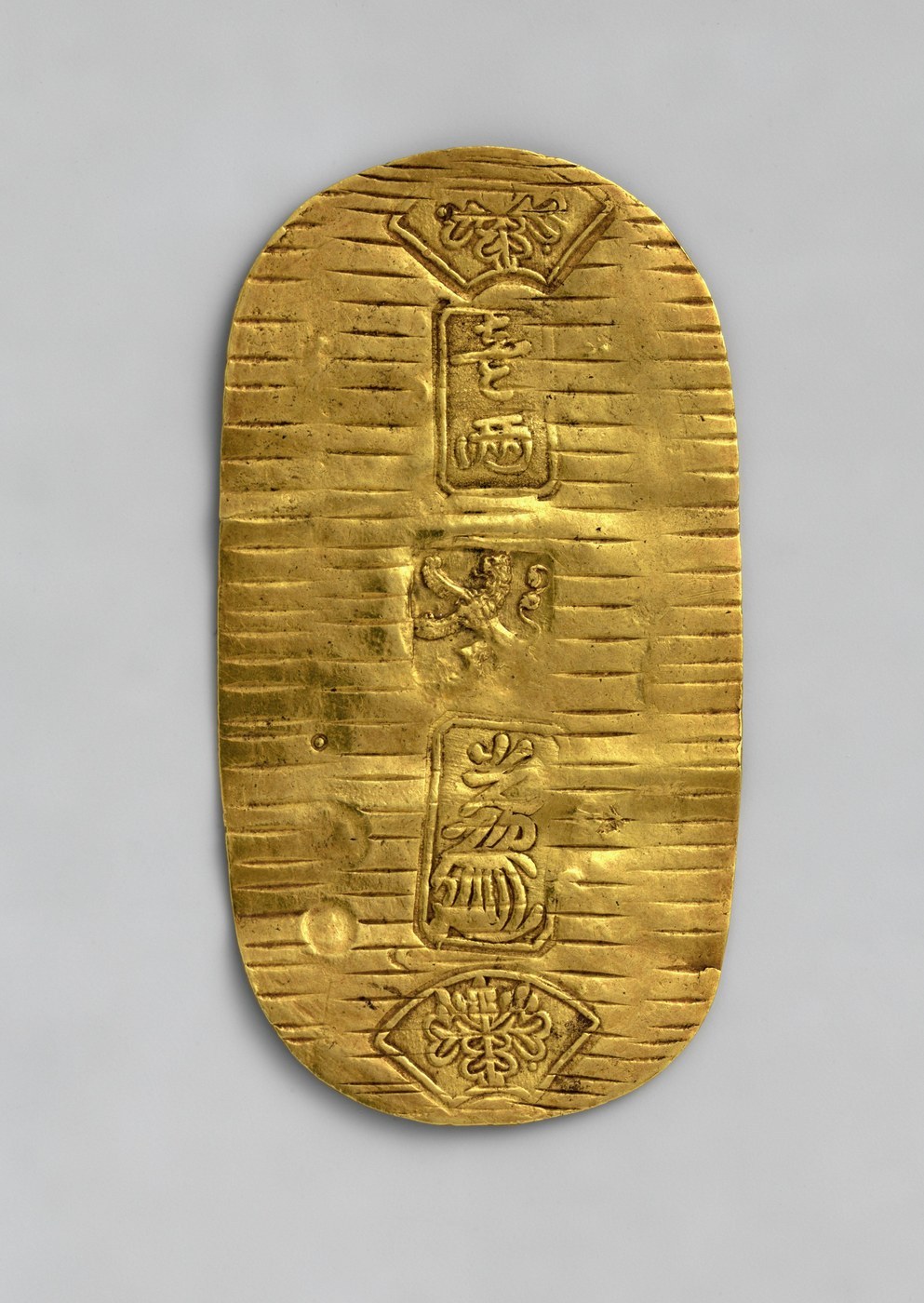
Work in two stages: first confirm the host coin is a genuine koban, then evaluate the counterstamps separately. The koban form is the anchor -- expect a flat, elongated oval of gold with rounded ends, a soft golden luster, and characteristic fine horizontal striations across the surface, visible here on the reverse. A round shape, a milled edge, or a bright modern polish points away from an authentic period koban and toward a replica.
Examine the obverse marks. Identify the impressed Japanese-character cartouche and the small Dutch coat-of-arms stamp as distinct punches. A true counterstamp sits on top of the coin: it cuts into the underlying striations or original devices, may displace metal into a raised lip, and often shows a different depth or tone than the surrounding surface. Note the heraldic details of the arms and the characters in the cartouche precisely, since these are what a specialist will check.
Turn to the reverse. Beyond the horizontal striations, look for the additional punched marks described on this piece and judge whether they, too, are later additions or original koban features. Photograph and describe each mark in isolation -- position, shape, and content -- rather than treating the coin as one uniform design; counterstamped pieces are essentially layered objects made by more than one hand at more than one time.
Compare against look-alikes. Plain kobans (with only original mint punches), later Meiji-era gold, and outright reproductions can all be confused with a counterstamped koban. The presence of a European heraldic stamp is the distinguishing feature here, but it is also the feature most often faked, because a foreign counterstamp is used to invent romantic trade histories.
Apply firm authentication caution. Genuine kobans are frequently reproduced in gilt or base metal, and fantasy counterstamps are added to both real and fake hosts. Test weight and dimensions against documented koban types, avoid destructive scratching, and be wary of marks that look too crisp, too shallow, or inconsistent with period tools. For any piece of consequence, obtain professional authentication and grading and cross-check with published references before accepting either the koban or its stamps as genuine.
Frequently asked questions
How do I confirm the coin is really a koban?
Look for the diagnostic form: a flat, oval gold piece with rounded ends and fine horizontal striations across a satiny surface. A round outline, milled edge, or bright modern finish suggests a replica rather than a genuine Edo-period koban.
How can I tell the counterstamp from the original marks?
Counterstamps are applied after minting, so they sit on top of the surface -- cutting into the striations or original devices, displacing metal into a small rim, and often differing in depth or tone. The Japanese cartouche and Dutch arms here should show these signs of being later punches.
What look-alikes should I rule out?
Plain kobans with only original punches, later Meiji-era gold, and modern reproductions can all resemble this piece. The European coat-of-arms stamp is the distinguishing detail, but it is also the most commonly faked, so verify it rather than assume it is genuine.
Should I get it authenticated?
Yes. Both replica kobans and fantasy counterstamps are widespread, and no single official series governs these marks. Test weight and dimensions non-destructively, compare with documented examples, and seek professional authentication and grading before assigning value or history.