
How to Identify the Kenya 5 Shillings
A collector's guide to recognizing the bimetallic Kenyan 5 shillings by its two-tone build, portrait, coat of arms, and inscriptions.
Read the full Kenya 5 Shillings encyclopedia entry →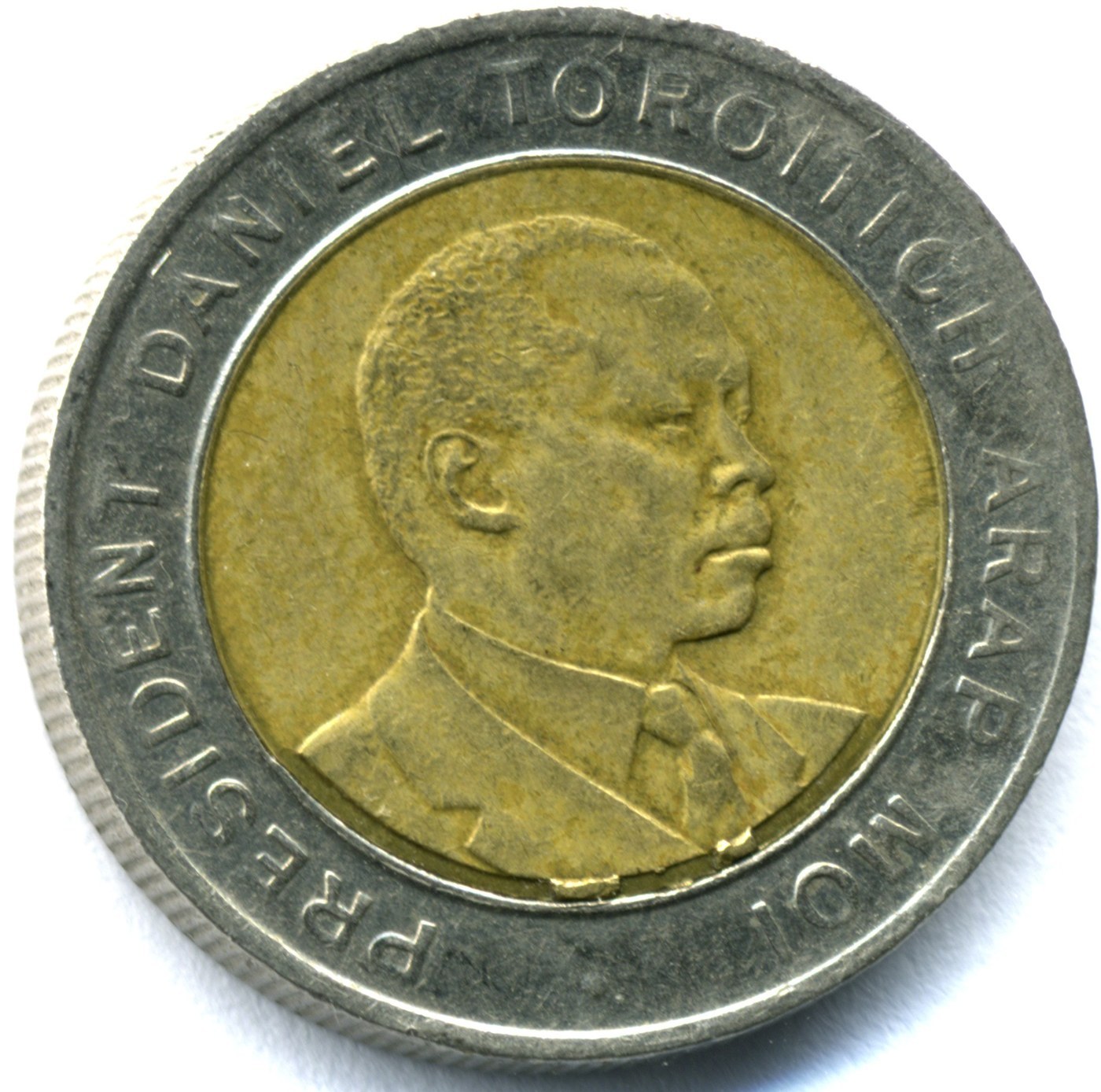
Begin with the coin's construction, because it is the fastest diagnostic. The 5 shillings is bimetallic: a pale inner disc set inside an outer ring of a different color. If the coin is a single, uniform metal, it is a different Kenyan denomination or a different coin entirely. Confirm the value by locating the numeral 5 together with the word SHILLINGS.
Study the two faces. One side shows the side-profile portrait of a Kenyan president surrounded by the country name and legends. The other side carries the Kenyan coat of arms, recognizable by two lions supporting a central shield with crossed spears and a ribbon bearing the national motto, along with the denomination. Seeing both a portrait and this specific arms design together is the strongest confirmation of the type.
Check size, weight, and the two-tone color scheme against catalog specifications for the series. As a mid-value circulation coin the 5 shillings is a substantial round piece, heavier and thicker than the small single-metal coins. Weigh and measure a questionable example; a coin that is markedly off in diameter, mass, or color may be a different denomination or a misidentification.
Use the inscriptions and date to place the coin precisely. A genuine piece names KENYA and states the value in shillings, and the four-digit year in the field pins down the exact issue. Note that the presence of a presidential portrait, rather than a lion or other wildlife, marks this as the earlier bimetallic type rather than the later new-generation redesign, which is a common point of confusion.
Authentication is rarely a concern for such a low-value coin, but inspect the join between the center and ring for gaps, looseness, or discoloration from heavy wear, and be wary of cleaned or polished surfaces. For grading and any scarce-date premium, judge luster and detail on the portrait and the coat of arms, and verify the date against world-coin references before assigning value.
Frequently asked questions
How do I confirm this is the 5 shillings and not another Kenyan coin?
Read the coin. It must show the numeral 5 with the word SHILLINGS and be bimetallic, with a pale center in a differently colored ring. Single-metal coins or other numerals indicate a different denomination.
How can I tell the older portrait type from the newer Kenya coins?
Look at the design. The earlier bimetallic 5 shillings shows a president's portrait, while the later new-generation coins replaced it with wildlife imagery. A leader's portrait points to the earlier series.
Where is the date on the coin?
The four-digit year of striking appears in the field, typically near the coat of arms or the denomination. It identifies the specific issue within the series and helps assess any scarcity.
Is it worth authenticating a Kenya 5 shillings coin?
Rarely. Its low value means counterfeiting is not a real concern. Focus instead on reading the inscriptions and date correctly, checking the two-tone construction, and judging condition for any small collector premium.