
How to Identify the Keicho Koban
A collector's checklist for the Keicho Koban: judging the oval gold plate, reading its striations and stamps, and separating genuine coins from the flood of replicas.
Read the full Keicho Koban encyclopedia entry →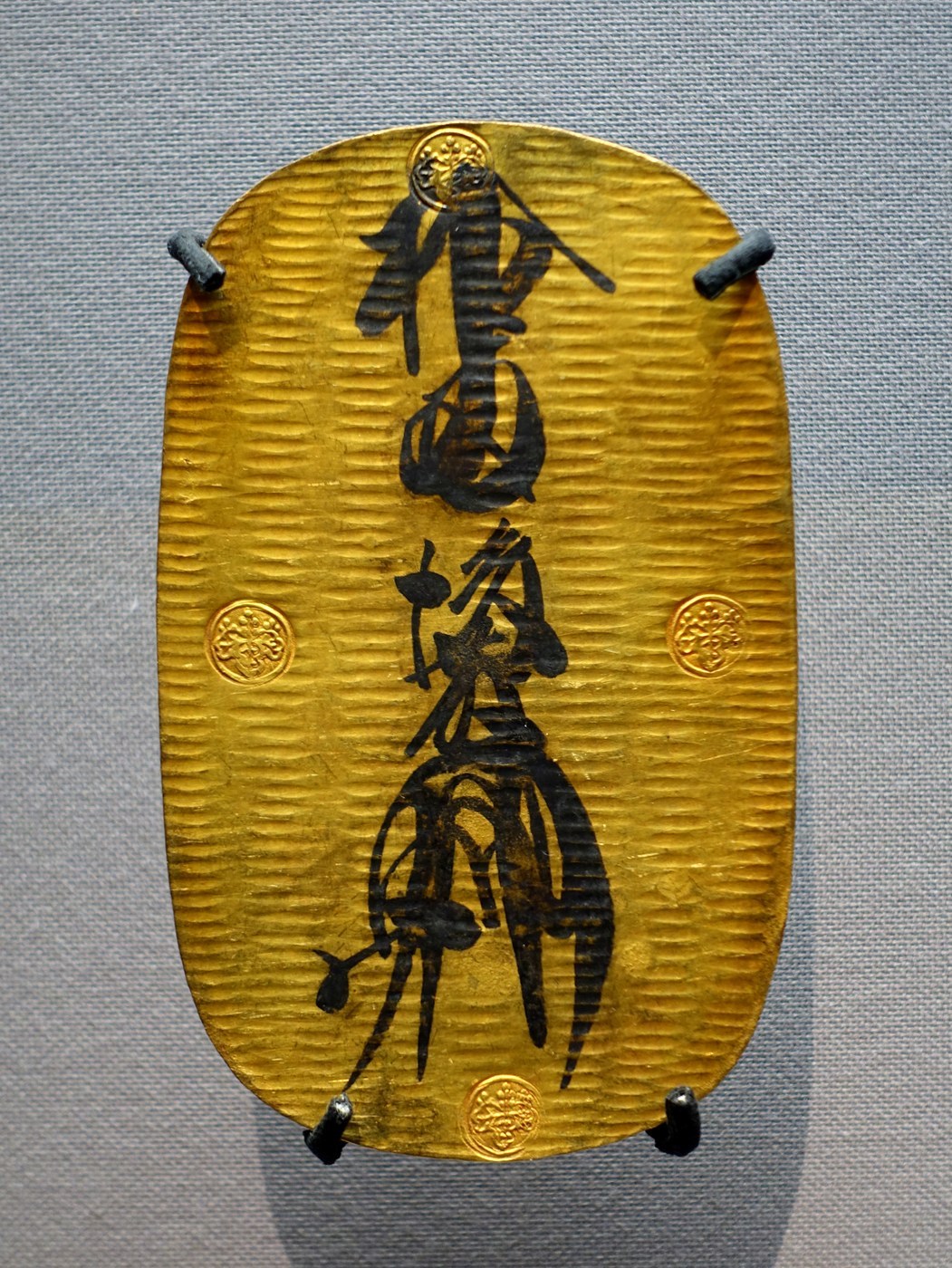
Begin with the form and feel. A Keicho Koban is a thin, flat oval of gold with rounded ends, sized to sit in the palm and worth one ryo. It is hand-hammered, so it should feel like a worked plate of soft metal, not a thick round struck coin. The single most telling texture is the field of fine, closely spaced parallel striations covering both faces; a smooth or cast-looking blank without these hammer lines is a red flag.
Examine the obverse stamps. Across the striated ground you should see fan-shaped crest stamps near the top and bottom and a central cartouche of characters giving the denomination and issue. On genuine coins these are punched impressions driven into the metal, with slightly raised or crushed striations around them, rather than flat printed or engraved lines.
Check the reverse marks. The back carries the same striated field plus circular seal stamps and the signature and monogram (kao) of the Goto mint master, which acted as the official guarantee. The presence, position, and crispness of these mint marks are central to attribution, and their absence or a mushy, indistinct look should raise suspicion.
Weigh and test the metal. Real koban are solid, high-purity gold with a specific expected weight for the type; the Keicho issue is known for higher purity than later debased koban. Use weight and non-destructive assay to screen candidates, since the vast majority of "koban" in circulation are brass or gilt souvenirs that are far too light or the wrong color.
Rule out look-alikes and fakes. Distinguish the koban from the larger oban, which bears a brush-written ink inscription. Be aware that the Keicho Koban is among the most reproduced coins in existence, so treat any inexpensive, pristine, or unusually heavy/light example with skepticism, and obtain specialist authentication or third-party grading before paying a genuine-coin price.
Frequently asked questions
Which side is the front of a koban?
The obverse is the side with the fan-shaped crest stamps at top and bottom and the central denomination cartouche. The reverse carries the circular seal stamps and the Goto mint master's signature and monogram, which served as the official guarantee.
How can I quickly spot a fake koban?
Most fakes are brass or gilt and are the wrong weight or color for solid gold, with soft, printed-looking marks instead of crisp punches. Genuine koban show true hammered striations, sharp stamped cartouches, and the correct gold weight. When in doubt, have it assayed and authenticated.
Are all koban Keicho Koban?
No. Koban were issued in several series across the Edo period, including the Keicho, Genroku, and later types. They share the oval striated form, so the specific sub-variety is identified by size, weight, gold purity, and the exact configuration of the stamps, which is best confirmed by a specialist.
Should I clean a koban I think is genuine?
No. Cleaning can scratch the soft gold, blur the diagnostic striations and stamps, and reduce both authenticity confidence and value. Leave any suspected genuine koban as-is and take it to a specialist or grading service for evaluation.