
How to Identify the Kai Yuan Tong Bao
A collector's checklist for the Tang cash coin: reading the four-character legend, checking the reverse, size and metal, and spotting later copies.
Read the full Kai Yuan Tong Bao encyclopedia entry →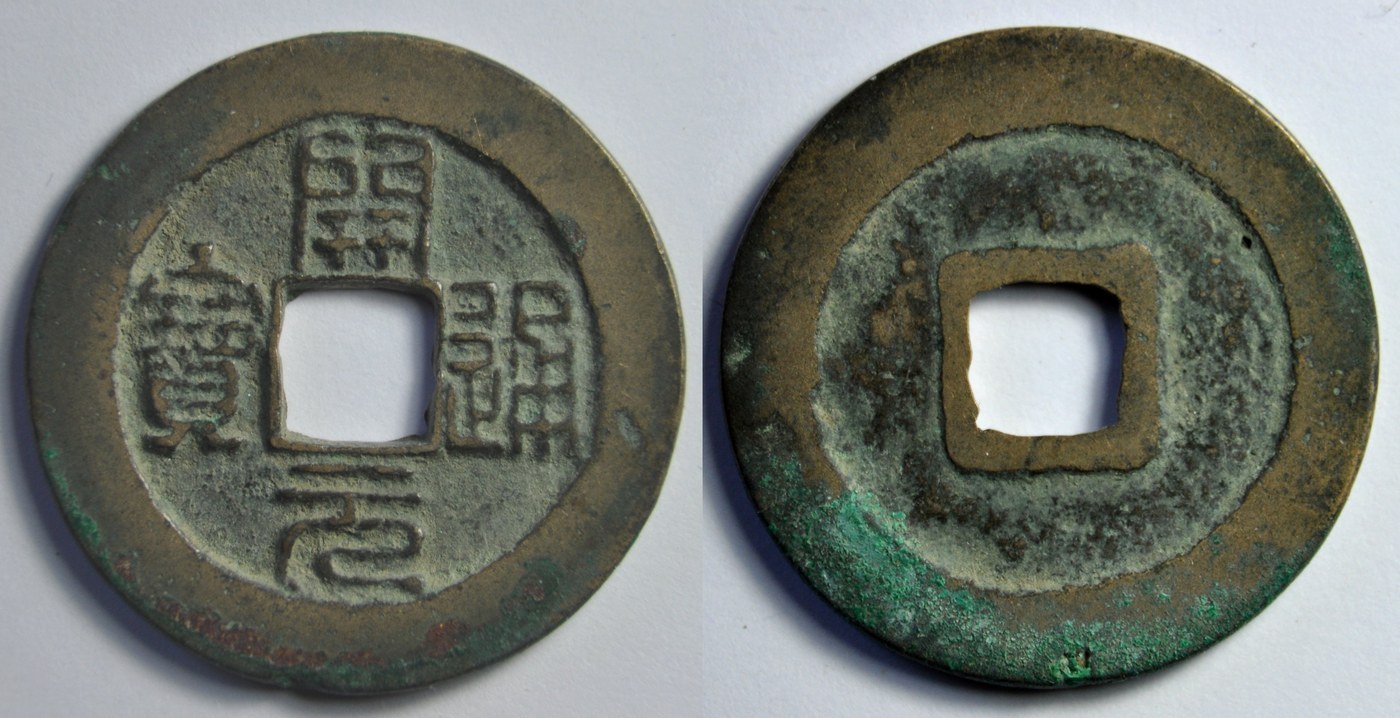
Start with the overall form. A Kai Yuan Tong Bao is a round bronze coin with a central square hole, cast rather than struck, so edges and characters have the soft, slightly rounded look of a mold rather than sharp struck detail. If a piece was clearly struck by dies, has a round center hole, or shows milled edges, it is not a genuine Tang cash coin.
Read the obverse legend, which is the decisive identifier. Four characters surround the hole and are read top, bottom, right, then left as Kai Yuan Tong Bao (開元通寶). Confirm all four characters against a reference chart; the early-Tang calligraphy has strong, even strokes and a compact layout. A single misread character can cause confusion with other tong bao cash coins from later dynasties that share the same last two characters.
Examine the reverse carefully, as it separates varieties. A completely blank back, like the example shown, points to the earlier Tang issues. Look for a small crescent ("fingernail") mark, a raised dot, or a single character; these reverse features indicate later castings or specific mints and are worth recording precisely, since they drive much of the difference in scarcity and value.
Check size, metal, and patina as supporting clues. Genuine pieces are modest-diameter bronze or copper-alloy castings, usually with a brown, red-brown, or green earthen patina built up over centuries. Be cautious of coins that are suspiciously bright, uniform, or lightweight, or whose patina looks painted on, as these can signal modern reproductions or cleaned pieces.
Finally, apply authentication caution. Because the Kai Yuan was cast for centuries and copied across Japan, Korea, and Vietnam, many similar coins exist, and outright fakes are made for collectors. Compare calligraphy style, casting quality, hole shape, and reverse marks against documented examples; where value is significant, seek a specialist opinion rather than relying on the four-character legend alone.
Frequently asked questions
How do I read the four characters in the right order?
Read them top, bottom, right, then left: Kai (開), Yuan (元), Tong (通), Bao (寶). This top-bottom-right-left order is standard for this coin; reading them left-to-right will scramble the name.
What should the reverse look like?
The earliest Tang issues, like the example shown, have a plain blank reverse with just the square hole and rim. Later castings may add a crescent mark, a dot, or a mint character, which help identify the specific variety.
How can I tell a genuine cast coin from a modern copy?
Genuine coins are cast bronze with soft mold-made detail and a natural aged patina. Be wary of struck detail, milled edges, suspiciously bright or uniform metal, painted-on patina, or unusually light weight, and seek expert review for valuable pieces.
Could my coin be from Japan, Korea, or Vietnam instead of China?
Possibly. The round-with-square-hole cash form spread across East Asia, and other regions cast similar coins. The Chinese Kai Yuan Tong Bao is identified by its specific four characters and early-Tang calligraphy, so compare the legend and style against references.