
How to Identify the Kai Yuan Tong Bao Cash
The Kai Yuan Tong Bao is the landmark Tang-dynasty cash coin whose four-character round-and-square-hole format became the standard model for East Asian coinage for over a thousand years.
Read the full Kai Yuan Tong Bao Cash encyclopedia entry →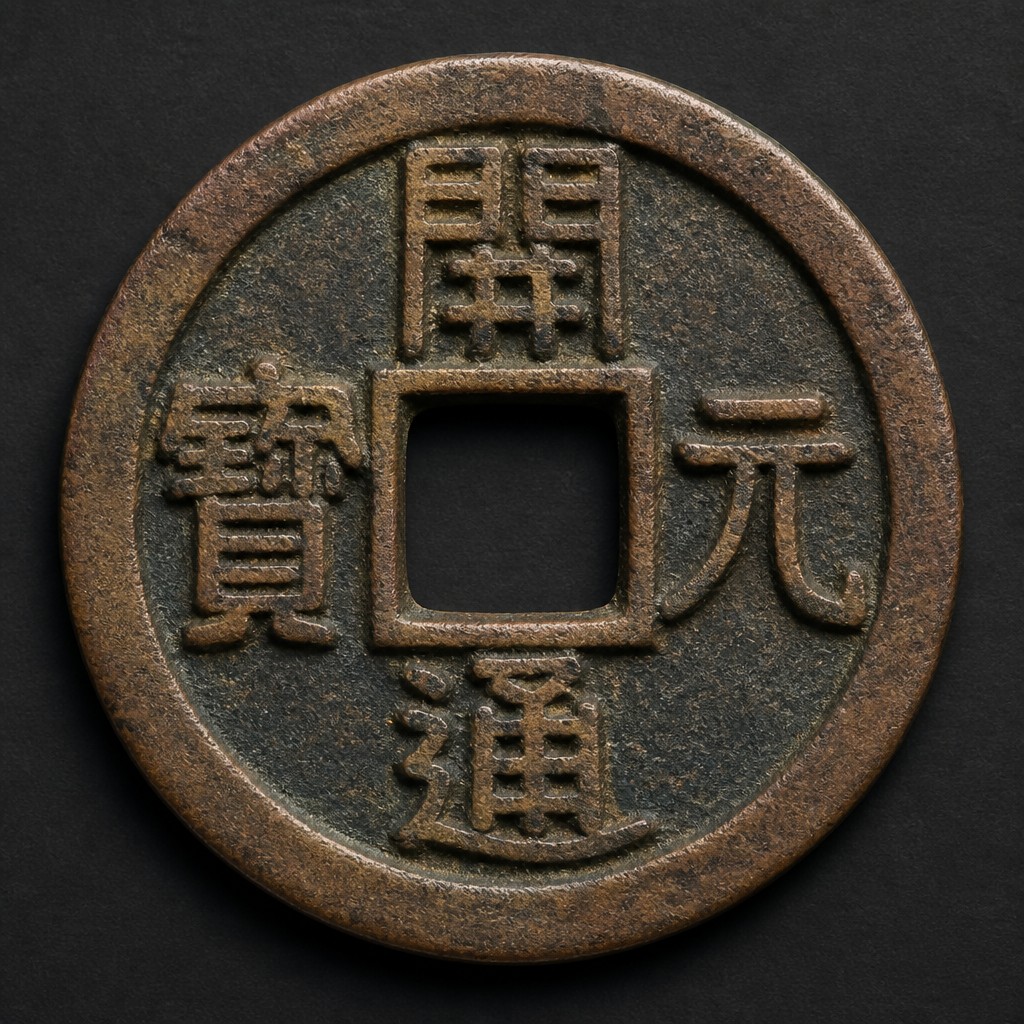
What It Is
Introduced in 621 AD under the Tang dynasty, the Kai Yuan Tong Bao (開元通寶, roughly "inaugurating a new era, circulating treasure") replaced the long-running Wu Zhu cash and established the four-character round coin with a square hole as the dominant format across China, Japan, Korea, and Vietnam for over a millennium afterward.
Obverse Design
The four characters "開元通寶" are arranged around the central square hole, conventionally read in the order top, bottom, right, left. This reading order and four-character layout became the standard template that nearly all subsequent Chinese dynastic cash coins (and many neighboring countries' coinages) followed.
Reverse Design
Most Kai Yuan Tong Bao reverses are plain, though some variants carry a small crescent-shaped mark, a dot, or a star near the rim or hole; these subtle mint or workshop marks are of particular interest to specialists trying to sort issues by casting location or period within the Tang dynasty's long production run.
Size, Weight, and Metal
Cast in bronze, a standard example measures about 24-25mm in diameter and weighs close to 3.6-4.2 grams depending on period and mint. As a cast coin it lacks a machine-milled edge; genuine pieces show the slightly irregular, hand-finished rim typical of mold-cast cash, sometimes with a visible trace of the sprue that was filed off after casting.
Mint Marks
Rather than a mint name in text, most identifying marks on Kai Yuan Tong Bao cash are small symbols (crescents, dots) placed near the hole on the reverse. Later imitative issues from Japan, Vietnam, and other regions that copied this coin's design sometimes show distinguishable differences in character style or metal color that help separate them from Tang-China originals.
Telling It Apart From Similar Coins
The reading order of "top-bottom-right-left" for the four characters is the identifying convention introduced by this coin and followed by later types such as the Song-dynasty Song Yuan Tong Bao; comparing the specific characters used is the main way to tell Kai Yuan Tong Bao apart from later, superficially similar four-character cash coins with different names.
Judging Condition at a Glance
Assess how sharp and complete the four cast characters are, and check the rim for chips or excess flashing (leftover casting metal) that was not properly filed down. A coin with clean, legible characters and a well-finished rim represents better casting quality, though wear patterns vary enormously given the coin's centuries of continued circulation and reissue.
Authenticity Red Flags
Because this coin type was produced in enormous quantities over a very long period, and later imitated by other countries and eras, look out for character styles that do not match documented Tang-period calligraphy, unusually bright or chemically treated surfaces meant to mimic old patina, and weight or diameter noticeably outside the normal 24-25mm, 3.6-4.2 gram range for genuine period issues.
Frequently asked questions
How should the four characters be read?
In the traditional order: top character first, then bottom, then right, then left, rather than left to right as in most modern text.
What replaced the Wu Zhu cash with this coin?
In 621 AD, the Tang dynasty introduced the Kai Yuan Tong Bao to replace the centuries-old Wu Zhu design, launching the four-character cash coin format used across East Asia for over a thousand years afterward.
What do the small crescent or dot marks on some coins mean?
These subtle reverse marks are thought to relate to specific mints, casting workshops, or production batches within the Tang dynasty, and specialists use them to help classify variants.
Were similar coins made outside China?
Yes, this format directly inspired similar-looking cash coins in Japan, Korea, and Vietnam, though those issues use different inscriptions and can usually be told apart by their specific characters and metal composition.
How can I judge the casting quality of one of these coins?
Look for crisp, fully formed characters, a clean rim without leftover casting flash, and a naturally aged patina consistent with a bronze coin many centuries old.