
How to Identify the Julian II Bull Bronze
A distinctive bronze coin of Emperor Julian the Apostate, easily spotted by its unusual reverse showing a bull standing beneath two stars.
Read the full Julian II Bull Bronze encyclopedia entry →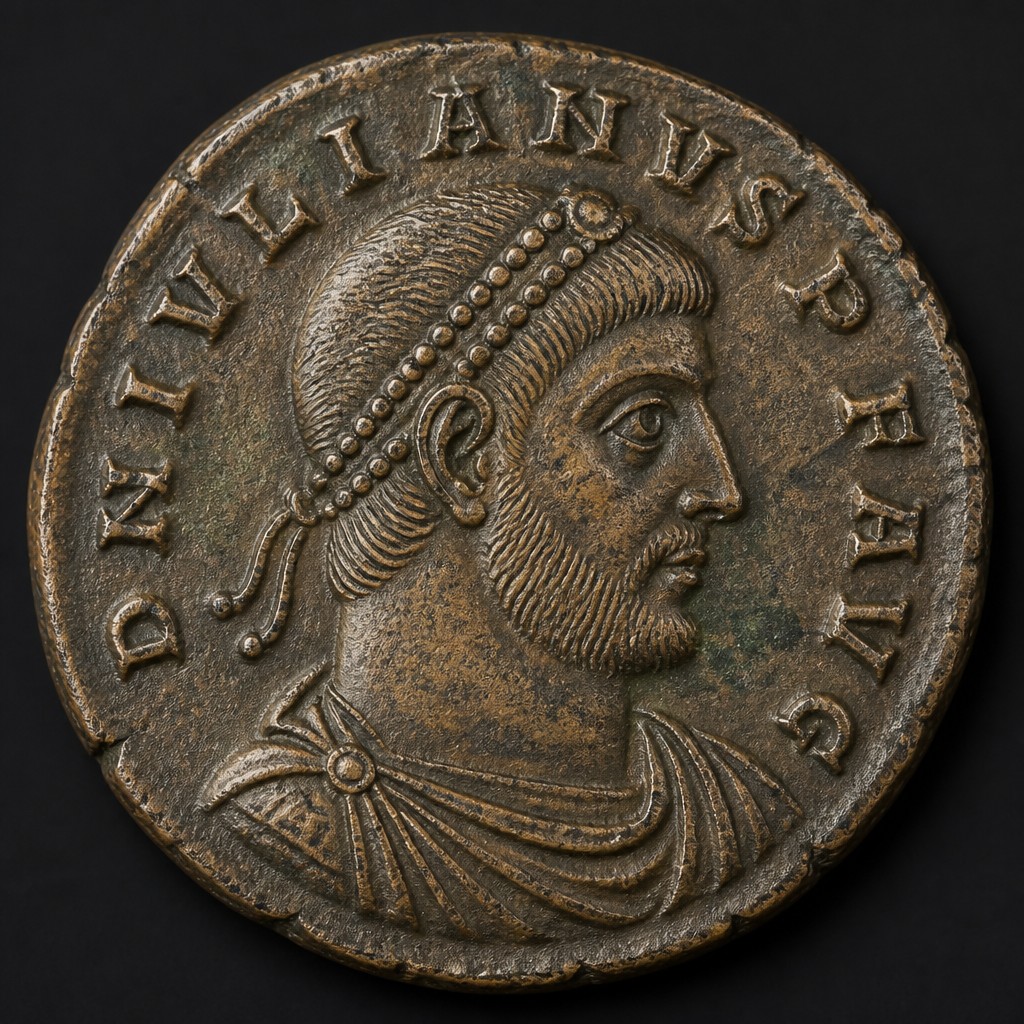
What This Coin Is
This bronze coin, often called an AE1 or "double maiorina" by collectors, was struck under Julian II, remembered as "the Apostate" for his attempt to revive traditional pagan worship after decades of Christian imperial policy. Struck mainly in the early 360s AD, its bull reverse is one of the most instantly recognizable designs in the later Roman bronze series.
Obverse Design & Inscriptions
The obverse shows a bearded, diademed bust of Julian facing right, a notable departure from the clean-shaven portraits of his immediate predecessors, reflecting his personal embrace of philosophical and pagan imagery. The legend reads D N FL CL IVLIANVS P F AVG or a similar abbreviated form of his full imperial titles.
Reverse Design & Inscriptions
The reverse depicts a bull standing right (occasionally left, depending on the mint), with two stars above its back. The surrounding legend reads SECVRITAS REI PVB ("the security of the state"). The bull's exact meaning has been debated by historians, with theories ranging from a reference to Apis-worship style solar symbolism to a simple continuation of the era's animal imagery.
Size, Weight, Metal, and Edge
Struck in bronze, this larger-module coin typically measures around 25-30mm in diameter and weighs roughly 8-9 grams, making it noticeably larger and heavier than the smaller centenionales common just before and after Julian's reign. The edge is plain.
Mint Marks and Where to Find Them
Look in the exergue for mint abbreviations such as CONSPB (Constantinople), ANT (Antioch), SIRM (Sirmium), or LVGPS (Lyon), typically followed by an officina letter identifying the specific workshop.
Telling It Apart From Similar Coins
The bearded portrait alone is a strong clue, since very few Roman emperors of this era are shown with a full beard; this makes the coin relatively easy to distinguish from the clean-shaven busts of Constantius II, Constans, or Valentinian I. The bull-and-stars reverse is unique to this issue and not shared with any other contemporary type, so a confirmed sighting of both features together makes attribution straightforward.
Judging Condition at a Glance
Because of its larger flan, detail on the bull's musculature, horns, and the stars above are often well preserved even on moderately worn examples. Look for a full beard outline on the portrait and a complete SECVRITAS REI PVB legend as signs of a higher-grade piece; flatly worn coins may reduce the bull to a smooth silhouette.
Authenticity Red Flags
Given the coin's fame and relatively higher demand among collectors, watch for cast copies showing a grainy or pitted surface texture, a raised seam around the edge, or overly soft, low-relief details on the bull and portrait compared to the sharp die-struck lines typical of genuine examples. Also be cautious of a beard that looks added or altered on an otherwise smooth-faced Constantinian-style portrait, which would indicate tampering rather than an original die.
Frequently asked questions
Why does Julian have a beard when other emperors of this era do not?
Julian deliberately grew a philosopher's beard as part of his personal embrace of classical Greek philosophy and traditional pagan values, and this is reflected in his coin portraits.
What does the bull on the reverse symbolize?
Its exact meaning is debated among historians, with theories connecting it to solar or bull-cult imagery tied to Julian's pagan revival, though no single interpretation is universally agreed upon.
How large is this coin compared to other bronzes of the period?
It is notably larger and heavier, typically 25-30mm and about 8-9 grams, compared to the smaller centenionales struck just before and after Julian's reign.
Is the bearded portrait alone enough to identify this coin?
It is a strong clue since beards are rare on coins of this era, but confirming the SECVRITAS REI PVB bull reverse alongside the portrait gives certain identification.