
How to Identify the Julia Domna Denarius
A silver denarius of Julia Domna, wife of Septimius Severus, identified by her distinctive waved 'helmet' hairstyle and matronly reverse themes tied to family and the military.
Read the full Julia Domna Denarius encyclopedia entry →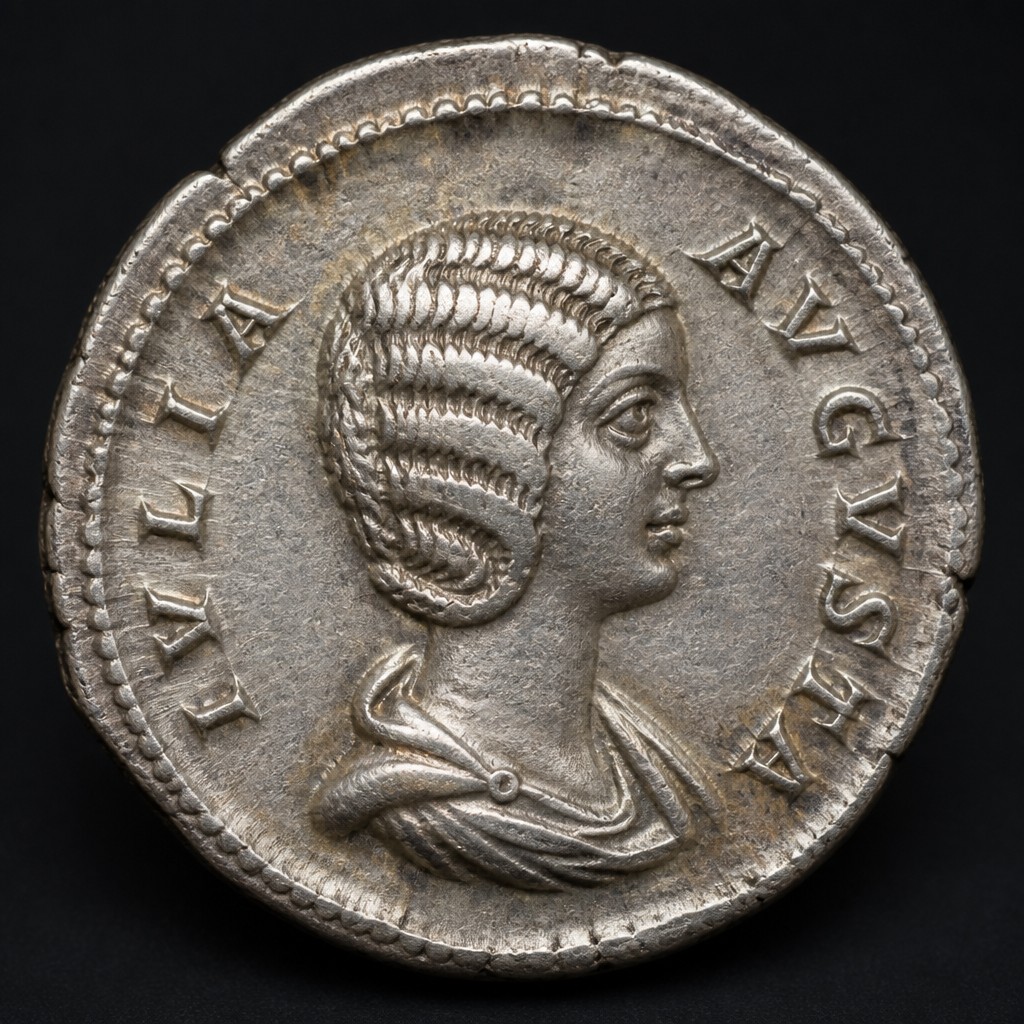
What the Coin Is
Julia Domna, born in Syria, was the wife of Septimius Severus and mother of Caracalla and Geta. Coins in her name were struck continuously from her husband's reign through those of her sons, making her one of the most prolifically commemorated women in Roman imperial coinage.
Obverse Design & Inscriptions
The obverse shows a draped bust of Julia Domna right, most often with a distinctive wavy hairstyle combed tightly back from the face and gathered into a low bun or plait at the nape of the neck, an arrangement sometimes informally described as a "helmet" style due to its close, structured look. The legend generally reads IVLIA AVGVSTA or IVLIA DOMNA AVG.
Reverse Design & Inscriptions
Reverse themes emphasize domestic virtue and family stability: Pietas, Vesta, and Fecunditas with children appear frequently, along with Cybele (Mater Deum) enthroned between two lions, Diana Lucifera, and Venus Genetrix. A notable and unusual honorific, Mater Castrorum ("Mother of the Camp"), appears on some reverses reflecting her close association with the military during her husband's and sons' campaigns.
Size, Weight, Metal & Edge
The coin measures roughly 17-18mm across and weighs about 2.8-3.2 grams, with silver fineness debased similarly to the denarii of Septimius Severus and his sons from the same period. The edge is plain.
Mint Marks & Where to Find Them
Coins were struck at both Rome and Eastern mints; Eastern issues often show a flatter, more linear engraving style compared to the rounder, more naturalistic Rome mint portraits, which can help suggest a coin's origin even without a formal mint-letter.
Telling It Apart from Similar Coins
Compare her hairstyle and legend to other Severan-era women: Plautilla, Caracalla's short-lived wife, is shown with tighter ringlet curls and the legend PLAVTILLA AVGVSTA, while later relatives such as Julia Maesa or Julia Soaemias under Elagabalus show somewhat different portrait conventions and their own distinct legends. Julia Domna's long career means her coinage spans a wide date range, so subtle hairstyle and legend variations can help place a given coin earlier or later within that span.
Judging Condition & Grade at a Glance
Check the definition of the hair waves and the coiled bun at the nape, along with the clarity of drapery folds at the neckline, since these are the most detailed and quickly worn parts of the design.
Authenticity Red Flags
Because Julia Domna is one of the most commonly encountered empresses in the ancient coin trade, both genuine low-grade coins and undisclosed modern reproductions circulate widely. Check the coin's weight against the expected denarius standard, and examine the edge closely for casting bubbles or a raised seam line, either of which would indicate a cast forgery rather than a struck original.
Frequently asked questions
How do I recognize Julia Domna's hairstyle?
Look for hair combed tightly back from the face and gathered into a low, structured bun or plait at the nape of the neck, a style distinctive enough to be nicknamed a 'helmet' hairstyle by collectors.
What does Mater Castrorum mean?
It translates to 'Mother of the Camp,' an unusual honorific reflecting Julia Domna's close association with the Roman military during her husband's and sons' reigns, and it appears on certain reverse legends.
How do I tell her apart from Plautilla or other Severan women?
Check both the legend, which names each woman specifically, and the hairstyle; Plautilla, for example, wears tighter ringlet curls rather than Julia Domna's smoother waved-back style.
Why does her coinage span such a long period?
She remained a prominent imperial woman through her husband's reign and the subsequent reigns of both her sons, so mints continued striking coins in her name for many years.
What should I check to avoid buying a fake?
Confirm the coin's weight matches the expected denarius standard and inspect the edge closely for casting bubbles or a seam line, both signs of a cast rather than genuinely struck coin.