
How to Identify the Japanese Trade Dollar
A Meiji-era silver coin issued briefly in the 1870s to compete with other large trade dollars circulating in Asian commerce, featuring a coiled dragon design.
Read the full Japanese Trade Dollar encyclopedia entry →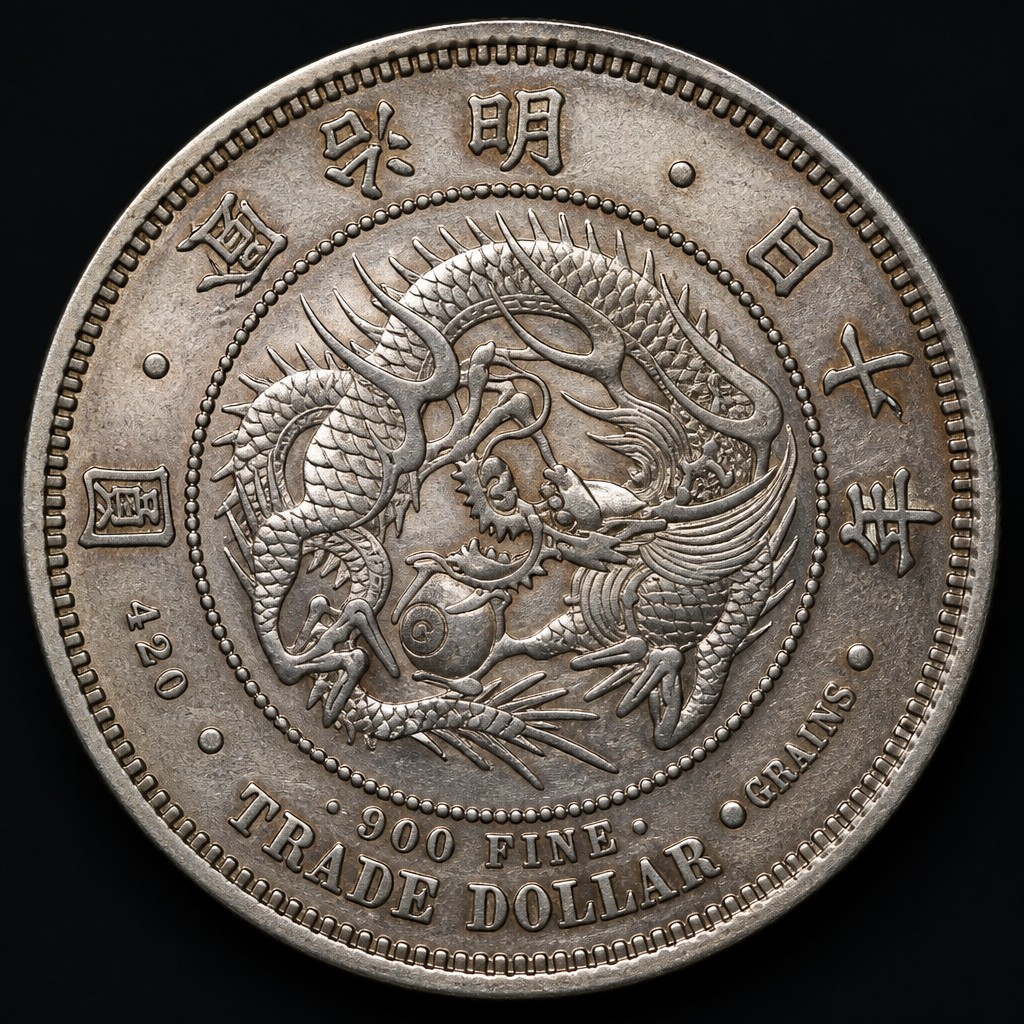
What the Coin Is
Japan issued its own Trade Dollar in the mid-1870s during the Meiji era, made to the same general weight standard as the United States and Mexican trade dollars so it could compete on equal terms in Asian commercial markets, which favored large, recognizable silver coins of consistent fineness.
Obverse Design & Inscriptions
The obverse features a coiled dragon, a design element shared with Japan's standard silver Yen coinage of the period, surrounded by Japanese text identifying the issuing authority and the era year in the Japanese calendar.
Reverse Design & Inscriptions
The reverse displays a sunburst design with a wreath encircling the denomination, along with English-language text spelling out TRADE DOLLAR and the coin's weight and fineness, a feature aimed specifically at foreign merchants who needed to verify silver content at a glance.
Size, Weight, Metal & Edge
The Japanese Trade Dollar was struck to match the international trade dollar weight standard of 420 grains (about 27.22 grams) at .900 fine silver, with a diameter and reeded edge comparable to other large silver trade coins of the period.
Mint Marks & Where to Find Them
These coins were produced at Japan's Osaka mint; identification relies primarily on the era date rendered in Japanese characters rather than a separate mint mark letter, since Japan operated a single mint for this coinage.
Telling It Apart From Similar Coins
The clearest way to distinguish the Japanese Trade Dollar from Japan's regular silver Yen is the English wording TRADE DOLLAR along with the explicit weight and fineness statement on the reverse, which the standard Yen does not carry. Compare the dragon style and border details closely, since both coins share a similar dragon theme.
Judging Condition at a Glance
Look at the dragon's raised scales and the sunburst rays on the reverse for smoothing or flattening, since these fine details wear down first with circulation. A well-struck coin will show individual dragon scales clearly and crisp lettering in the English inscription.
Authenticity Red Flags
Because trade dollars from this era circulated heavily and were sometimes counterfeited even in their own time, check for correct weight, sharp design details consistent with a genuinely struck coin, and legible, properly formed English lettering. Cast or struck counterfeits often show soft details, incorrect proportions in the dragon design, or a surface texture that differs from genuine mint output.
Frequently asked questions
How is the Japanese Trade Dollar different from Japan's regular Yen?
The Trade Dollar carries English wording stating TRADE DOLLAR along with its weight and fineness, a feature the standard silver Yen does not include.
Why did Japan issue a special trade dollar?
It was created to compete with other large silver trade coins, like the United States and Mexican trade dollars, that dominated commercial circulation in Asia at the time.
What is the coin's approximate weight and fineness?
It matches the international trade dollar standard of about 420 grains (27.22 grams) at .900 fine silver.
Where was this coin minted?
It was produced at Japan's Osaka mint during the Meiji era.