
How to Identify the Japanese Oban
The Japanese Oban is a large, hand-hammered gold plate coin from feudal Japan, oval in shape and stamped with ink calligraphy, representing one of the most visually unique denominations in world numismatics.
Read the full Japanese Oban encyclopedia entry →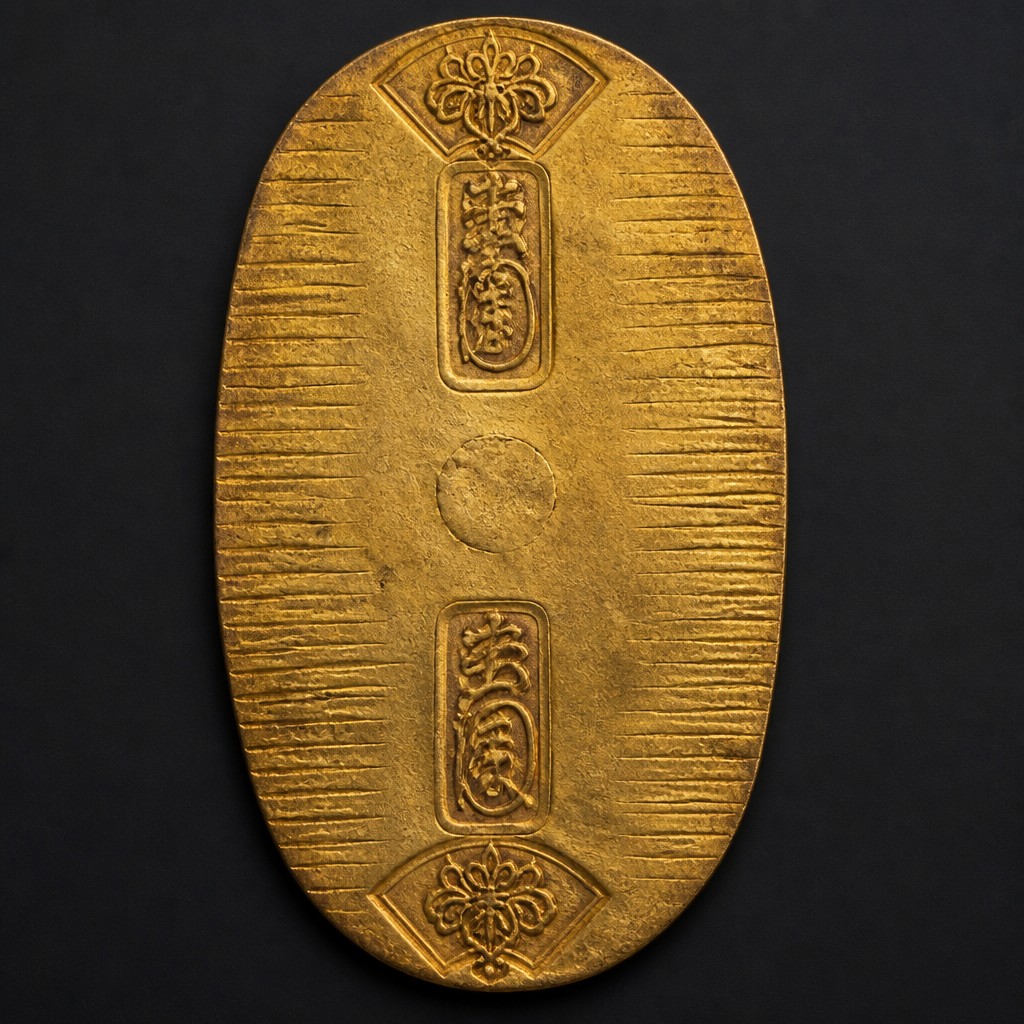
What It Is
The Oban is a large gold coin produced in feudal Japan from the late 16th through the mid-19th century, primarily as a high-value ceremonial and gift coinage rather than everyday circulating money. It was used mainly for large transactions, rewards, and formal gifts among the ruling and merchant classes rather than for routine daily purchases. Unlike most struck coins, each Oban was individually hand-hammered into shape from a gold plate and then hand-inscribed, making every surviving piece somewhat unique in its details.
Obverse Design
The obverse surface bears hand-brushed ink calligraphy (sumi) applied by an official inspector, typically stating the coin's assigned value in traditional units (ryo) along with a signature or seal confirming its authenticity at the time of issue. This ink signature is a defining and highly distinctive feature not found on typical struck coinage.
Reverse and Surface Marks
The coin's surface, both obverse and reverse, is stamped with multiple small hallmark punches, most notably the paulownia crest (kiri mon), a stylized floral emblem associated with the ruling authority that issued and guaranteed the coin's gold content. These small stamped marks are scattered across the coin's face rather than confined to a single central design.
Size, Weight & Metal
The Oban is famous for its large, distinctive oval or elongated egg-like shape, considerably larger than any typical circular world coin — full-size examples can measure roughly 15 centimeters in length. It is made of gold alloyed with silver, with the precise gold content varying by the specific historical period of issue, generally in the range of roughly two-thirds to just over four-fifths gold.
Identifying Marks and Where to Find Them
Because there was no fixed "mint mark" location in the modern sense, identification instead relies on examining the specific paulownia crest stamps, the style and content of the ink inscription, and the coin's precise weight and dimensions, all of which shifted across different historical reissues and eras.
Telling It Apart from Similar Coins
The Oban's combination of a large hand-hammered oval shape, ink calligraphy, and multiple stamped crests is unlike any other world coinage, making it hard to confuse with genuine coins from other traditions once its key features are known. It should not be confused with its smaller cousin, the Koban, which follows a similar concept but at a much smaller size, or with modern souvenir replicas sold as decorative items.
Judging Condition at a Glance
Because the ink calligraphy can fade, smear, or be re-applied over time, its clarity and apparent age are important condition factors, alongside the crispness of the stamped crests and the overall integrity of the gold plate's surface, edges, and shape.
Authenticity Red Flags
Given the Oban's high value and fame, reproductions and modern replicas are common, especially inexpensive souvenir versions clearly marked or sized differently from historical originals. Genuine antique examples should be evaluated by a specialist experienced with Japanese numismatics, since factors like ink authenticity, crest stamp accuracy, correct alloy composition, and proper weight are difficult to assess without expert reference knowledge and equipment.
Frequently asked questions
Why does the Oban have ink writing instead of a stamped design?
Officials hand-applied ink calligraphy to state the coin's value and confirm its authenticity, since the Oban was individually hand-hammered rather than mass-produced with a struck design.
What is the paulownia crest found on Oban coins?
It is a stylized floral emblem, known as the kiri mon, stamped onto the coin's surface as an official hallmark associated with the issuing authority.
How is the Oban different from the Koban?
Both are historical Japanese gold coins with a similar oval concept, but the Oban is significantly larger and was used mainly for ceremonial and high-value purposes, while the Koban was a smaller, more widely circulated denomination.
Are most Oban coins found today genuine antiques?
Many items sold as Oban coins are modern decorative replicas rather than historical originals, so any piece believed to be a genuine antique should be evaluated carefully by someone experienced with Japanese numismatic history.