
How to Identify the Japanese Nishu-kin (gold coin)
A tiny Edo-period Japanese gold plate coin valued at two shu, recognized by its stamped paulownia crest and denomination characters.
Read the full Japanese Nishu-kin (gold coin) encyclopedia entry →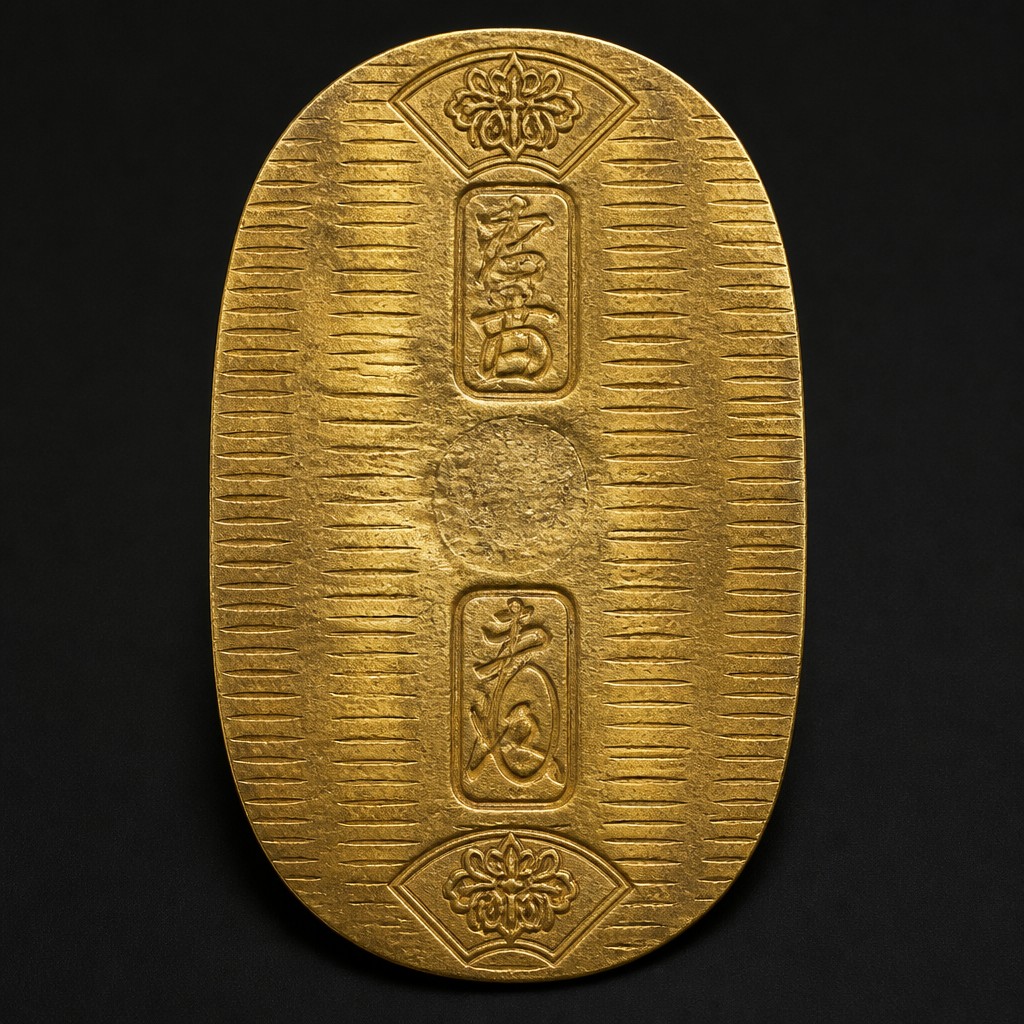
What It Is
Nishu Kin was a small rectangular gold currency issued during Japan's Edo period, valued at two shu (one-eighth of a ryo) within the Tokugawa shogunate's gold-standard system. Multiple issues were struck across different eras, including Genbun, Bunsei, Ansei, and Man'en period types, each with somewhat different gold content. Denominations like this fit into a broader family of small rectangular gold plates used for everyday transactions, since carrying large gold ryo pieces for small purchases was impractical, making fractional denominations like the Nishu Kin essential to daily commerce.
Obverse Design & Inscriptions
The small gold plate is stamped with the Tokugawa paulownia crest, the character "定" (fixed value), and the denomination "二朱" (ni shu), all within a raised rim border.
Reverse Design & Inscriptions
The reverse is typically plain or carries a small inspector's or assayer's stamp confirming the piece was checked by mint officials.
Size, Weight, Metal & Edge
It is a very small rectangle, roughly 15 x 9mm, made of gold alloy weighing about 1.5-3 grams depending on the issue. Gold fineness varies significantly between issues; later 19th-century Nishu Kin, struck amid currency reforms tied to Japan's opening to foreign trade, tend to have reduced gold content compared to earlier issues. Edges are plain-cut.
Mint Marks & Where to Find Them
There is no separate numeral mint mark; identification relies on the stamped crest style and denomination characters, along with minor die variations recorded in specialist reference catalogs for each issue period. Because so many successive Nishu Kin issues exist, specialists often need to compare the exact proportions and spacing of the stamped characters, rather than relying on the design alone, to confidently place a given piece into its correct era.
Telling It Apart from Similar Coins
Distinguish Nishu Kin from the larger Isshu Kin (one shu) or Nibu Kin (two bu) gold plates mainly by overall size and by the denomination characters stamped on the face, since all these Edo-period gold plates share a similar general appearance.
Judging Condition at a Glance
Check the sharpness of the stamped crest and denomination characters; genuine pieces typically show slight wear or light doming on raised areas consistent with historical handling. Because the plate is so thin and small, look also for bending or creasing, which reduces both eye appeal and value even when the stamped design itself remains legible.
Authenticity Red Flags
Given its small size and gold content, this denomination has attracted forgeries over the years. Compare weight and the color of the gold — later, more debased issues appear visibly paler — and look for crisply struck rather than soft or blurred characters, which would suggest a cast reproduction.
Frequently asked questions
What does "Nishu" mean?
It refers to a denomination worth two shu, equal to one-eighth of a ryo under the Edo-period Japanese currency system.
Why do different Nishu Kin coins have different gold content?
The shogunate periodically re-issued this denomination across different eras, and later 19th-century issues tied to currency reforms generally used less gold than earlier versions.
How is Nishu Kin different from Nibu Kin?
Nibu Kin was valued at two bu (a higher denomination) and is correspondingly larger; the stamped denomination characters and overall size are the clearest way to distinguish them.
What should I check for authenticity?
Verify the weight and gold color against known standards for the specific issue, and look for crisp, clearly struck crest and character details rather than soft or blurred stamping.
Does it have a legend in a Western sense?
No, it only carries stamped Japanese characters and the shogunate's paulownia crest rather than a continuous legend like Western coins.