
How to Identify the Japanese Meiji Gold 20 Yen
The Japanese Meiji Gold 20 Yen is a high-denomination gold coin from Japan's Meiji era, featuring a sunburst design and the Imperial chrysanthemum crest, reflecting Japan's modernized gold standard currency system.
Read the full Japanese Meiji Gold 20 Yen encyclopedia entry →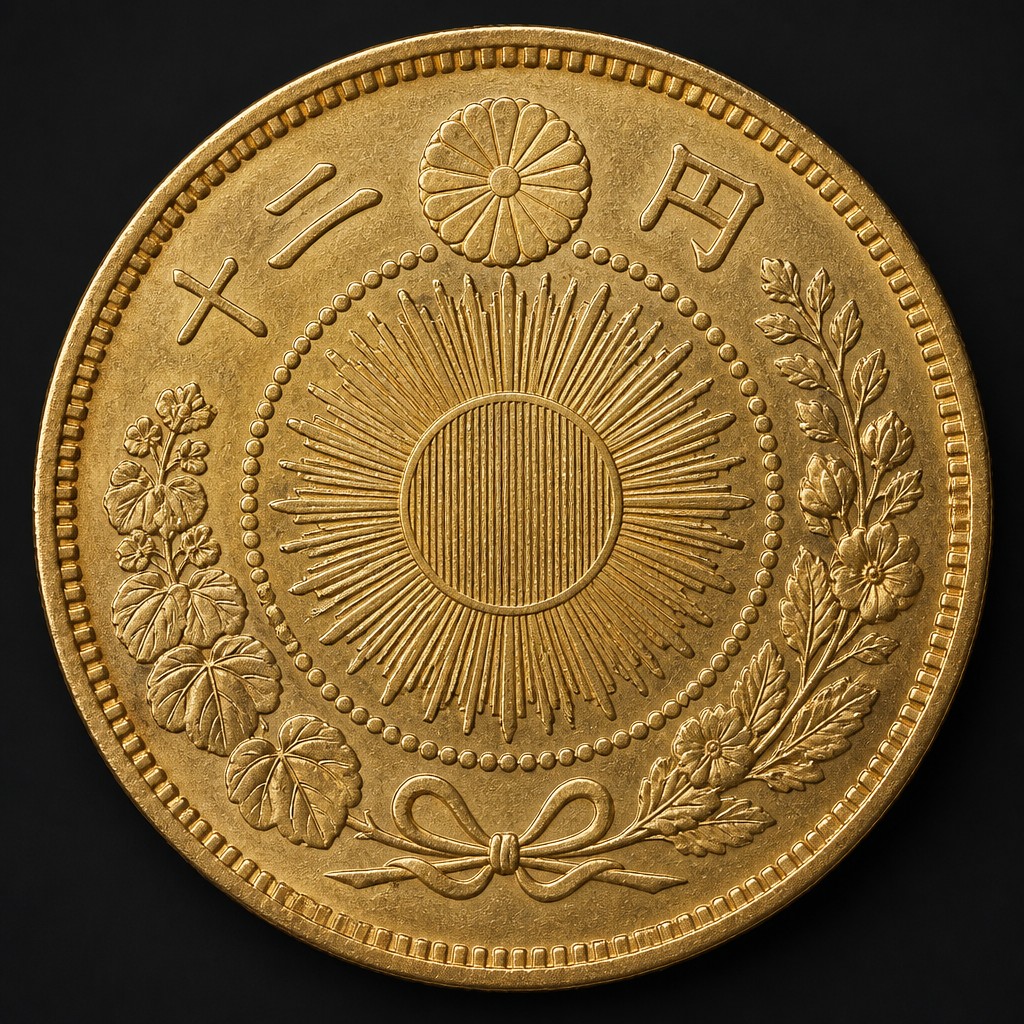
What It Is
Issued during the Meiji era, the gold 20 yen was one of Japan's highest-denomination gold coins, produced as part of the country's modernized currency system following Western monetary conventions. Production spanned different weight standards over the era's decades, reflecting a currency reform partway through the period that adjusted the gold content of Japan's coinage. As the top of the era's gold coin lineup, it represented Japan's commitment to a credible, internationally comparable gold standard currency.
Obverse Design
The obverse typically features a sunburst pattern with rays radiating outward, paired with the denomination expressed in Japanese characters and numerals, reflecting the rising-sun imagery closely associated with Japan's national identity.
Reverse Design
The reverse displays the Imperial chrysanthemum crest at the top, accompanied by paulownia flower sprays and, on many issues, a dragon design, arranged around the coin's field in a layout distinct from the coin's obverse sunburst motif.
Size, Weight & Metal
Later Meiji-era 20 yen gold coins, struck after the currency reform that reduced the gold standard weight, measure approximately 28.8mm in diameter and weigh about 16.66 grams, struck in .900 fine gold. Earlier pre-reform issues from the beginning of the Meiji period were struck to a different, heavier weight standard, so size and weight can vary depending on the specific dated series.
Mint Marks and Where to Find Them
Look for small identifying marks or engraver initials near the base of the design elements, along with the clearly stated Japanese era date (expressed in the Japanese imperial year-counting system rather than the Western calendar), which is essential for pinpointing exactly which sub-series and weight standard a specific coin belongs to.
Telling It Apart from Similar Coins
Because Meiji gold coinage was issued in multiple denominations (5, 10, and 20 yen) sharing a similar overall design language, careful attention to the denomination characters and the coin's specific diameter and weight is necessary to confirm which value is in hand. Comparing the coin against known pre-reform and post-reform weight standards also helps identify which historical sub-type a given example represents.
Judging Condition at a Glance
Examine the fine rays of the sunburst and the delicate petals of the paulownia flowers and chrysanthemum crest for flatness, since these intricate raised elements are the first points to show wear. Sharp, well-defined lettering and numerals around the rim indicate a higher-grade example.
Authenticity Red Flags
As a historically significant and valuable gold denomination, this coin has been targeted by counterfeiters over the years. Watch for coins with incorrect weight or diameter for the specific pre- or post-reform standard, muddled chrysanthemum or dragon details, an unnatural gold color, or a date expressed in a format inconsistent with genuine Meiji-era numbering conventions.
Frequently asked questions
Why do some Meiji gold 20 yen coins weigh different amounts?
Japan adjusted its gold standard partway through the Meiji era, so earlier coins were struck to a heavier weight standard than later coins issued after the currency reform.
What symbols appear on the reverse of this coin?
The reverse typically shows the Imperial chrysanthemum crest, paulownia flower sprays, and on many issues a dragon design, arranged around the coin's field.
How is the date expressed on this coin?
Dates are given using the Japanese imperial year-counting system tied to the Meiji era rather than the Western calendar, so identifying the correct year requires converting from that system.
How can I tell this coin apart from the 5 or 10 yen gold denominations?
Compare the denomination characters, along with the specific diameter and weight, since all three gold denominations share a similar design language but differ in size and stated value.