
How to Identify the Japanese Koban
A guide to recognizing the oval gold koban of feudal Japan, covering its hand-stamped surface, ink inscriptions, official seals, and the differences between Edo-period issues.
Read the full Japanese Koban encyclopedia entry →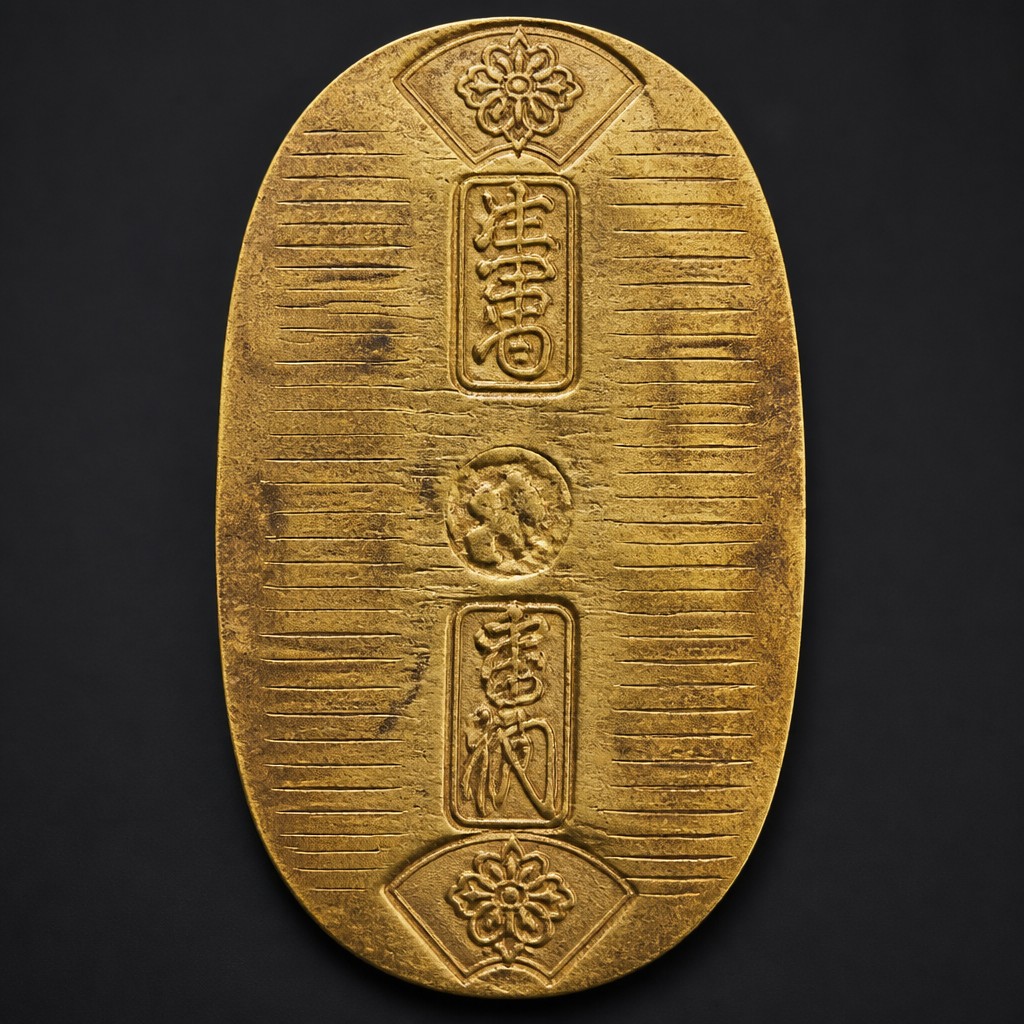
What Is a Koban?
The koban was an oval gold coin used in Japan from the late 16th century through the mid-19th century, primarily during the Edo (Tokugawa) period. It functioned as a high-value denomination, roughly equal to one ryo, and was produced by hand rather than struck with dies the way Western coins are, giving each piece a distinctly irregular, hammered look.
Obverse Features
The obverse (front) is covered in a pattern of small punched circles or "cherry blossom" style stamps arranged across the surface, applied with a specialized punch called a kigasuzuri. Above and below this stamped field, black ink calligraphy states the denomination (often "Ichi Ryo," meaning "one ryo") along with issuing authority information. Because the ink was applied by hand, the calligraphy varies between pieces even within the same series.
Reverse Features
The reverse typically carries one or more small stamped seals (kao or hallmark-style punches) belonging to the goldsmith house responsible for casting and finishing the coin, most famously the Gotō family workshop. These seals were used to certify weight and purity at the time of issue and are one of the most useful identification points.
Size, Weight, Metal, and Shape
Koban are oval, roughly 7 cm long and 4 cm wide, though dimensions shifted across the many issues minted from the 1580s to the 1860s. Weight and gold fineness also changed repeatedly as shogunate governments debased the coinage; some later issues contain much less gold than earlier ones. The metal is a gold-silver alloy, with color ranging from deep yellow-gold to a paler, more silvery tone depending on the era.
Identifying Series and Marks
Because koban were reissued and re-stamped across many decades, the specific series is identified by the style of the ink inscription, the shape and number of the stamped circles, and the wording of the seals. Collectors and reference catalogs group koban by era name (such as Keicho, Genroku, Kyoho, or Manen), each with characteristic size, color, and stamp layout.
Telling It Apart from Similar Pieces
The koban is easily confused with the smaller oval ichibuban and nibuban gold coins, which are companion denominations from the same monetary system but noticeably smaller and rectangular rather than the koban's elongated oval shape. It should not be confused with cast Chinese or Vietnamese coinage, which uses square center holes and cast (not stamped) surfaces.
Judging Condition
Because koban were hand-finished, "grade" is judged mainly by how legible the ink calligraphy remains, how sharp the stamped seals appear, and whether the coin retains its original oval form without bending, creasing, or test cuts. Original ink surviving intact is considered a significant condition factor since ink wears or fades faster than the metal itself.
Authenticity Considerations
Because koban carry high gold value, reproductions and later-made souvenir or decorative pieces are common. Genuine examples show hand-applied, slightly irregular stamp patterns and ink that has aged and bonded to the metal surface, while modern fantasy pieces often show mechanically uniform stamping or printed rather than brushed lettering. Weight and specific gravity testing by a qualified specialist is the most reliable way to confirm gold content on any piece under consideration.
Frequently asked questions
What does the ink writing on a koban say?
It typically states the denomination, such as 'Ichi Ryo' (one ryo), along with text identifying the issuing mint authority; exact wording varies by era.
Why is the koban oval instead of round?
Japanese gold and silver coinage of the period was hand-hammered into oval or rectangular shapes rather than struck round like Western coins, reflecting a distinct minting tradition.
What are the small stamped circles on the surface?
They are punch marks applied during finishing to texture and certify the coin's surface; their pattern and count help identify the specific issue.
How can I tell an old koban from a modern replica?
Genuine pieces show hand-brushed ink that has aged into the metal and slightly irregular hand-punched marks, while replicas often have printed lettering or overly uniform stamping.