
How to Identify the Japanese Bu / Ichibu-gin (silver bar coin)
An Edo-period rectangular Japanese silver plate currency valued at one bu, identified by its stamped crest and denomination characters rather than a round shape.
Read the full Japanese Bu / Ichibu-gin (silver bar coin) encyclopedia entry →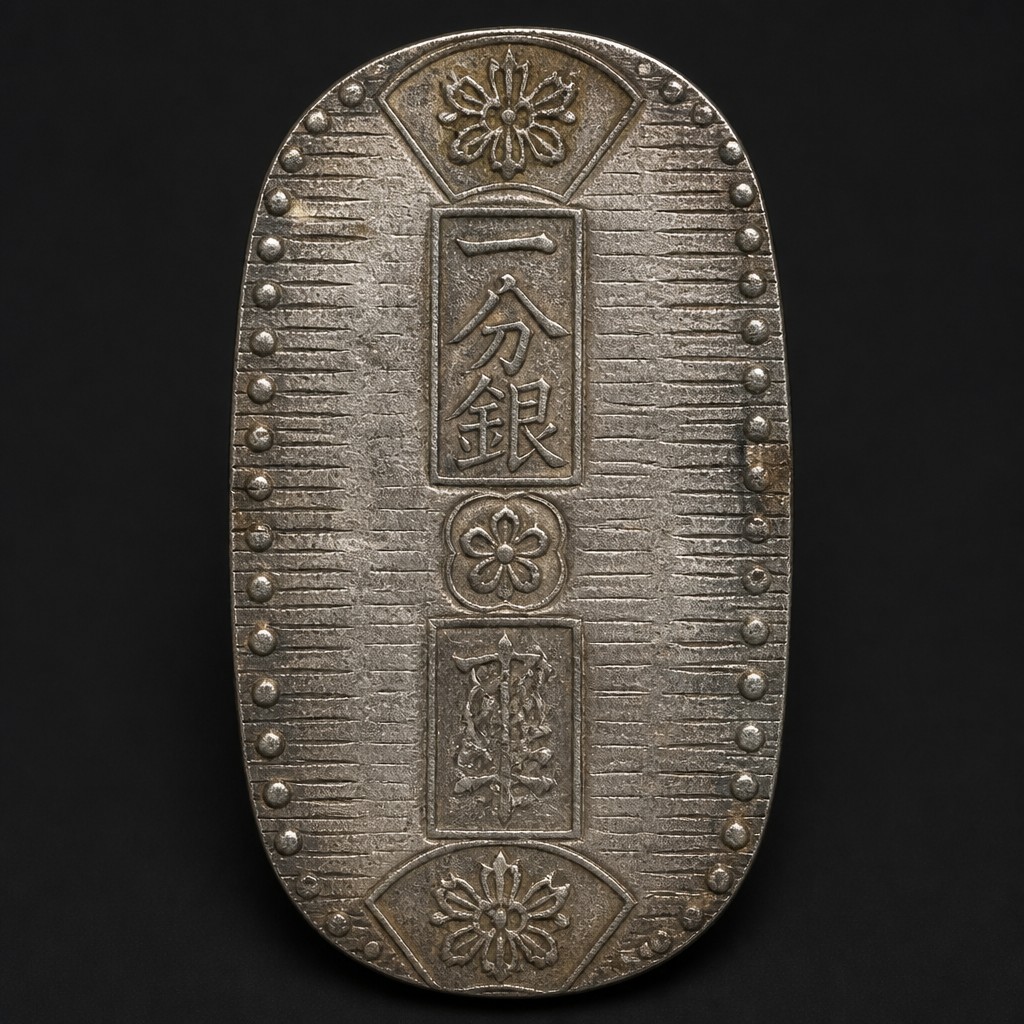
What It Is
Ichibu Gin was a rectangular silver plate currency used in Japan during the Edo period, valued at one bu (one-quarter ryo) within the Tokugawa shogunate's gold-based monetary system. Several successive issues (including the Tenpo, Ansei, and Meiji-era types) were struck between the 1830s and 1860s as the government periodically adjusted silver content. Because it was pegged directly to the gold-based bu/ryo system rather than valued purely by its own silver weight, it functioned more like a fixed-value token coinage than typical Western silver coins, which is why the government's official stamps guaranteeing its value were so central to the design.
Obverse Design & Inscriptions
The plate is stamped with the paulownia (kiri) crest used by the Edo mint authority (Ginza), along with the character "定" (meaning "fixed" or "set value") and the denomination "一分" (ichi bu), all within a raised border.
Reverse Design & Inscriptions
The reverse is often plain or carries additional small stamps added by silver assayers or mint inspectors (sometimes called kiritsuke), confirming the piece had been checked and approved.
Size, Weight, Metal & Edge
Unlike round coins, Ichibu Gin is rectangular, roughly 25 x 15mm. It is a silver alloy, with weight and fineness varying by issue — generally in the range of 8.6 to 11 grams — with later issues typically more debased than earlier ones. Edges are plain-cut rather than milled.
Mint Marks & Where to Find Them
Identification relies on the stamped crest and characters applied by the Edo Ginza (silver mint) rather than a modern numeral mint mark. Comparing the exact style of the crest and additional inspector stamps helps narrow down the specific issue period. Reference catalogs of Edo-period silver currency list the subtle character-font and border differences that distinguish, for example, a Tenpo-era Ichibu Gin from a later Ansei or Meiji-era piece.
Telling It Apart from Similar Coins
Distinguish Ichibu Gin from other Edo-period silver denominations, such as Isshu Gin (valued at one-sixteenth ryo), primarily by size and by the denomination character stamped on the face — "一分" identifies this specific bu value.
Judging Condition at a Glance
Look at how crisply the stamped crest and characters were struck, and check that the raised border rim is intact and not excessively worn or bent. Because these plates were carried loose in purses and often clipped together with other denominations, minor edge nicks and light surface scratches are common even on otherwise well-preserved examples.
Authenticity Red Flags
Collector reproductions of Ichibu Gin exist, particularly for souvenir markets. Genuine pieces show crisp, punch-stamped (not cast) lettering, correct weight for the specific issue, and wear patterns consistent with handling on the high points of the stamps. Cast copies often display soft, blurred lettering and an incorrect thickness or weight.
Frequently asked questions
Why is this coin rectangular instead of round?
Edo-period Japanese silver currency like Ichibu Gin was cast and stamped as flat rectangular plates rather than round coins, a format distinct from the round cash coins used elsewhere in East Asia.
What does "Ichibu" mean?
It refers to the denomination of one bu, equal to one-quarter of a ryo under the Tokugawa shogunate's currency system.
How can I tell which issue period a piece is from?
Comparing the exact style of the stamped crest, characters, and any additional assayer stamps against reference catalogs of Tenpo, Ansei, and Meiji-era issues helps identify the specific period.
Is the silver content the same on every Ichibu Gin?
No, fineness and weight varied between issues, generally becoming more debased in later 19th-century reforms compared to earlier issues.
What should I check to avoid a modern reproduction?
Look for crisp, hand-stamped lettering rather than soft or blurred characters, and verify the weight and thickness match known genuine examples for that issue.