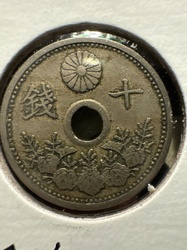
How to Identify the Japanese 50 Sen Silver (Meiji Phoenix)
A Meiji-era Japanese silver coin featuring a phoenix design on the reverse, identified by its sunburst motif, chrysanthemum crest, and Japanese denomination lettering.
Read the full Japanese 50 Sen Silver (Meiji Phoenix) encyclopedia entry →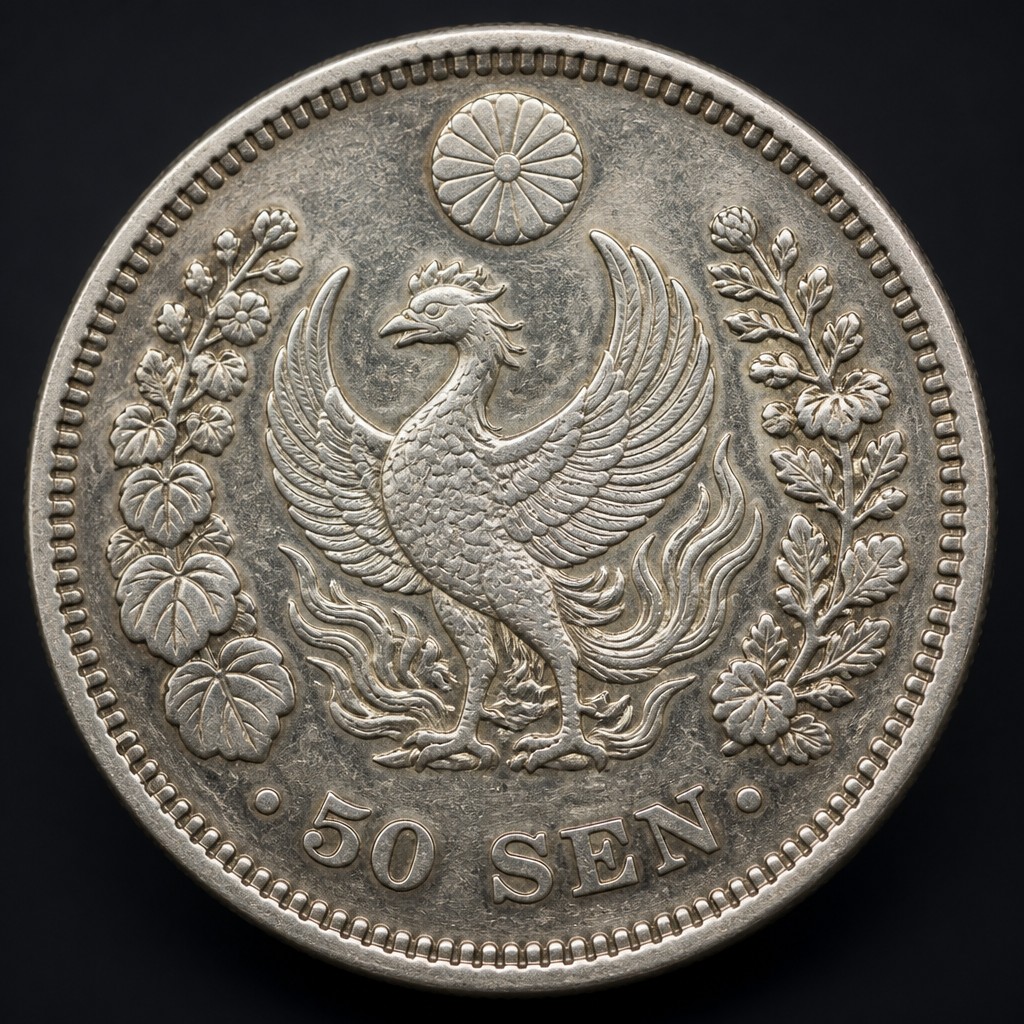
What It Is
This 50 sen coin was struck during the Meiji era as part of Japan's modernized, Western-style decimal coinage system introduced following the Meiji Restoration. It belongs to a design family commonly referred to by collectors as the "Phoenix" type due to its distinctive reverse motif, and it circulated as a subsidiary silver denomination within Japan's broader yen-based currency system.
Obverse Design & Inscriptions
The obverse is centered on a sunburst design, with a chrysanthemum crest — the imperial seal of Japan — positioned above, along with the issuing date rendered according to the Japanese imperial reign-year calendar system used at the time.
Reverse Design & Inscriptions
The reverse features the coin's namesake phoenix, a mythical bird associated with imperial and auspicious symbolism, shown in a dynamic pose, along with the denomination "50 SEN" or its Japanese-language equivalent and surrounding decorative border elements.
Size, Weight & Metal
The coin was struck in silver at a fineness typical of Meiji-era subsidiary silver coinage, with a moderate diameter and weight appropriate to its 50 sen denomination — smaller than the larger yen-denominated trade coinage of the same era but larger than the smallest subsidiary silver pieces. The edge is reeded, consistent with contemporary machine-struck coinage.
Mint Marks & Where to Find Them
Japanese Meiji coinage was struck primarily at the Osaka mint; where a mint identifier appears, it is typically a small Japanese character positioned near the date rather than a large separate symbol, and collectors generally rely on the reign-year date itself as the primary means of pinpointing a specific issue within the broader Phoenix type run.
Telling It Apart from Similar Coins
Within Japanese coinage, the Phoenix 50 sen should be compared carefully against other Meiji-era silver denominations (such as the smaller 20 sen or larger 1 yen pieces) by checking the stated denomination lettering directly, since overall design language is similar across the family. It should also be distinguished from later Taisho and Showa era subsidiary coinage, which adopted different design motifs once the Phoenix type was eventually discontinued.
Judging Condition at a Glance
On sharply struck, lightly circulated examples, the phoenix's feather detail and the sunburst rays on the obverse remain crisp and well-defined. Circulated coins show smoothing across the phoenix's body and the highest sunburst rays, along with overall dulling of the silver surface from handling.
Authenticity Red Flags
Given the popularity of Meiji-era Japanese silver coinage among collectors, check weight and diameter against known specifications for the 50 sen denomination, and examine the phoenix and sunburst detail closely — genuine struck coins show fine, crisp separation in the feather and ray lines, while cast reproductions typically show softer, less distinct detail and an inconsistent surface texture.
Frequently asked questions
Why is this coin nicknamed the "Phoenix" type?
It gets its nickname from the mythical phoenix bird featured prominently on the reverse design.
How is the date shown on this coin?
The date follows the Japanese imperial reign-year calendar system used during the Meiji era rather than the Western calendar.
How can I tell this apart from a 20 sen or 1 yen coin of the same era?
Check the denomination lettering directly on the coin, since the 50 sen, 20 sen, and 1 yen Meiji silver coins share similar overall design language but differ in stated value and size.
What mint produced most of these coins?
Most Meiji-era Japanese coinage, including this type, was struck at the Osaka mint.
Japanese 50 Sen Silver (Meiji Phoenix) identified by the community
Recent Japanese 50 Sen Silver (Meiji Phoenix) coins identified with Coin Identifier.