How to Identify the Japanese 5 Yen
Collector checks for the Meiji gold 5 Yen: chrysanthemum crest, regnal-year date, floral reverse, gold color and small size, and fake warnings.
Read the full Japanese 5 Yen encyclopedia entry →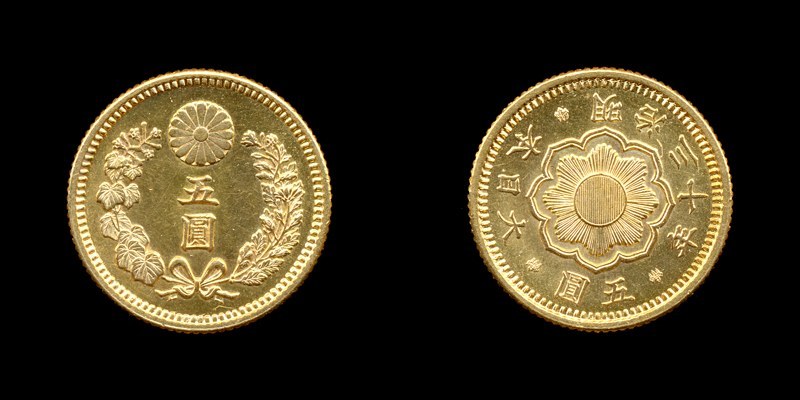
Start with metal and size. This 5 Yen is a small gold coin, dense for its diameter and clearly gold-yellow. If your piece is silver-gray, light, or much larger, it is a different denomination or a non-gold yen coin, not the Meiji gold 5 Yen.
Read the obverse. The imperial chrysanthemum crest is the key marker, surrounded by Japanese characters naming the country and the 5 Yen value, usually with a paulownia or floral ornament. The chrysanthemum's petals should be crisp and evenly struck on a genuine coin.
Decode the date. The year is written in Japanese characters as a Meiji reign year, not a Western number. The pictured coin reads Meiji 30, equal to 1897, the year Japan adopted the gold standard and shrank the smaller gold coins. Different Meiji dates and the earlier, larger 5 Yen type read as other reign years, so confirm both the era and the exact number.
Check the reverse and look-alikes. The reverse shows the "5 Yen" value inside a wreath of stylized flowers and ribbon. Do not confuse this gold coin with later base-metal or holed 5 Yen coins of the Showa and modern eras, which look completely different and are not gold. Larger early Meiji gold 5 Yen coins exist as a separate, heavier type.
Authenticate carefully. Meiji gold is among the most heavily counterfeited world coinage, including cast fakes and gold-plated copies. Weigh and measure the coin, watch for a greasy or soft cast surface, seams, or wrong color, and for any coin of real value seek third-party certification or an experienced dealer rather than relying on appearance alone.
Frequently asked questions
How do I convert the date to a Western year?
Add the Meiji reign year to 1867. Meiji 30 gives 1897. The characters on the coin state the reign year rather than a Western date.
How is this different from a modern 5 Yen coin?
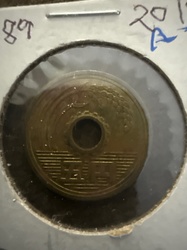
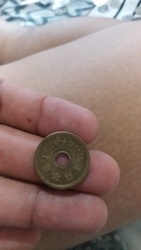
Modern circulating 5 Yen coins are brass with a center hole and rice-ear design. The Meiji 5 Yen is solid gold with a chrysanthemum crest and no hole.
Is there more than one gold 5 Yen type?
Yes. Early Meiji produced a larger, heavier gold 5 Yen, and from 1897 a smaller, reduced-size type. Check size and date to tell which one you have.
How can I be sure mine is authentic?
Verify weight, diameter, and color against reference data and inspect for casting flaws. For meaningful value, use a professional grading service or trusted dealer, since fakes are common.
Japanese 5 Yen identified by the community
Recent Japanese 5 Yen coins identified with Coin Identifier.