
How to Identify the Japanese 20 Yen
Collector checks for the Meiji gold 20 yen: dragon and floral designs, era-year dating, gold weight, and authentication cautions.
Read the full Japanese 20 Yen encyclopedia entry →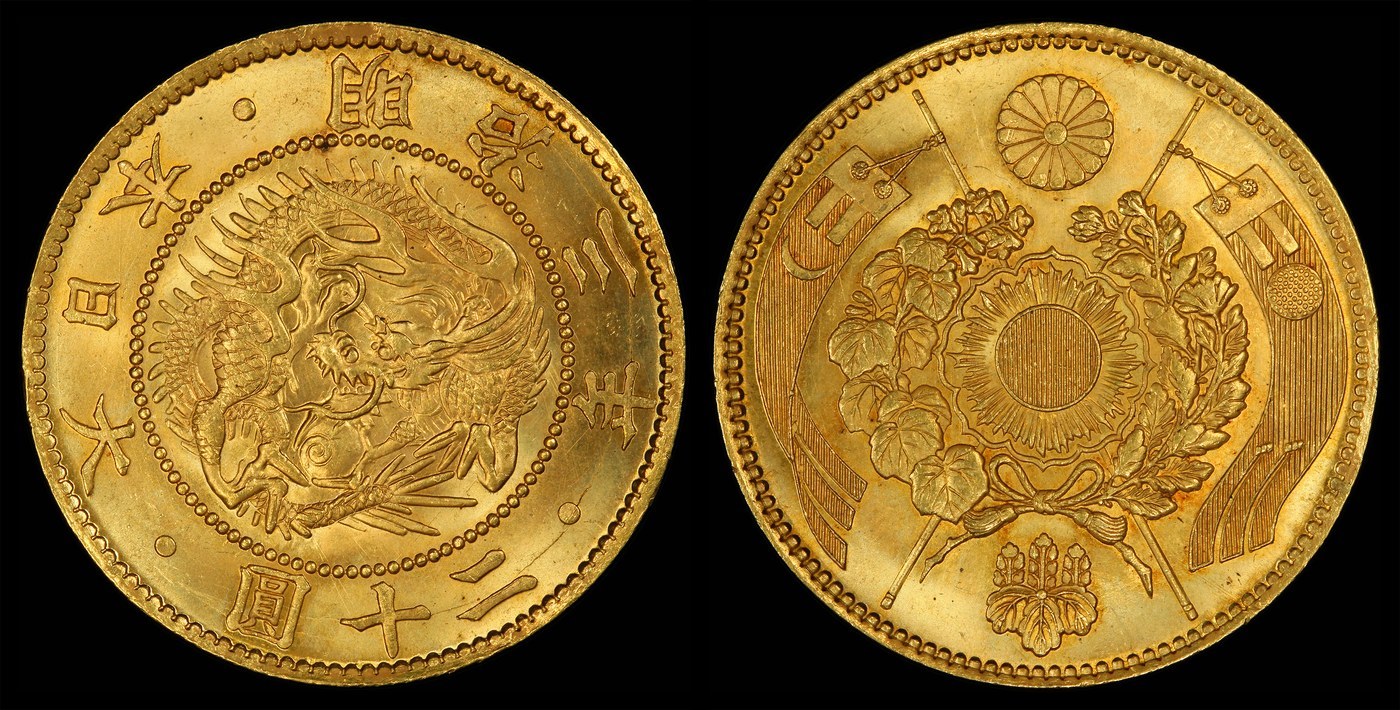
Begin with the two main designs. One face shows a dragon coiled among clouds with fine scale and border detail, surrounded by Japanese inscriptions; the other shows a large sunburst and floral arrangement with banners and paulownia or chrysanthemum emblems framing the value. If your coin lacks the dragon, or the value reads something other than 20 yen, you have a different denomination or type.
Read the date in the Japanese era system. Meiji-period coins express the year as the reign name plus a number of characters, counted forward from the start of the reign; the 1870 example corresponds to Meiji year 3. Learning to read these characters is the single most useful skill for pinning down the exact issue, because the same overall design spans several years and includes an early 'old type' and later revised versions.
Confirm size and metal. The 20 yen is a heavy gold coin, larger and weightier than the 10, 5, 2, and 1 yen gold pieces that share similar dragon-and-floral styling. Weighing and measuring the coin and comparing against published specifications for the specific year helps separate the genuine denomination from smaller pieces and from gilt or underweight fakes.
Watch for look-alikes. The lower Meiji gold denominations use the same visual language of dragon and floral emblems, so the denomination characters and the coin's diameter are the reliable separators. Modern replicas, souvenir pieces, and outright counterfeits of this valuable type also exist, sometimes with slightly soft dragon detail, wrong weight, or incorrect era characters.
Authenticate before you trust a value. Given the high worth of genuine early 20 yen gold, examine the coin for casting seams, solder marks from former mounting, tooling, or a greasy cast surface, and verify the weight precisely. When any real money is involved, submit the coin to a reputable third-party grading service rather than relying on visual inspection alone.
Frequently asked questions
How do I read the date on the coin?
The year is written in the Japanese era system as the reign name followed by number characters. This coin's Meiji year 3 equals 1870. The era-year characters are the most reliable way to identify the exact issue.
Which side is which?
One side carries the dragon among clouds with surrounding inscriptions; the other shows the large floral and sunburst design framing the 20 yen value. Both are needed to confirm the type and denomination.
How is the 20 yen different from smaller gold yen?
The 10, 5, 2, and 1 yen gold coins share similar dragon-and-floral styling but are smaller and lighter and read different denominations. Diameter, weight, and the value characters distinguish the 20 yen.
Should I get it authenticated?
Yes. Early 20 yen gold is valuable and frequently faked, so professional third-party grading is strongly advised. Check weight, era characters, and dragon detail against verified references first.