
How to Identify the Japanese 1 Yen Silver 'Dragon' Trade Dollar
The Japanese 1 Yen Silver Dragon coin is a Meiji-era silver dollar featuring a coiling dragon on one side and a sunburst-and-wreath design on the other, used both domestically and in East Asian trade.
Read the full Japanese 1 Yen Silver 'Dragon' Trade Dollar encyclopedia entry →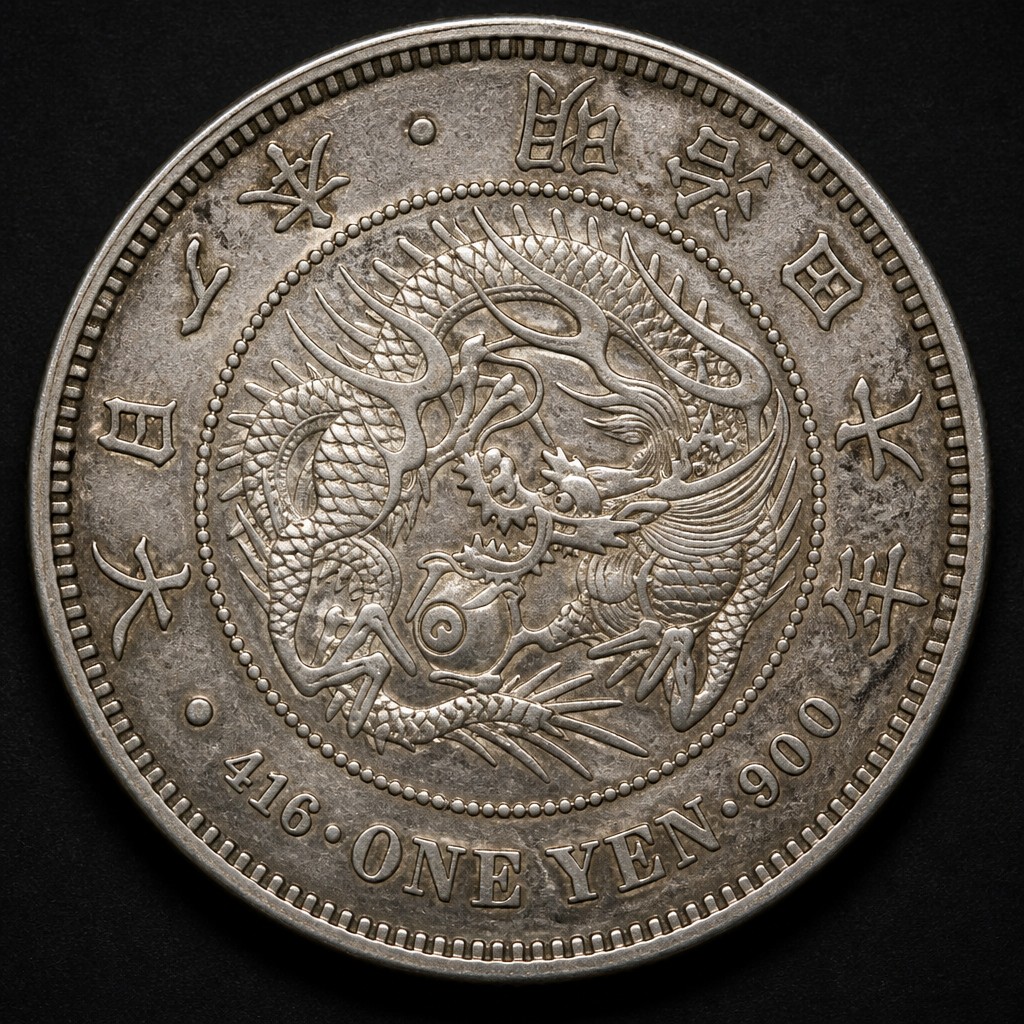
What It Is
Issued during the Meiji era beginning in the 1870s, this silver yen coin was part of Japan's effort to modernize its currency system along Western lines and to compete with the widely used Mexican and other trade dollars circulating in East Asian commerce at the time. A closely related "trade dollar" variant was struck specifically for overseas commercial use. This period marked Japan's rapid transition from a feudal coinage system to a modern, internationally recognized currency structure.
Obverse Design
The obverse features a detailed coiling or rising dragon amid clouds, a design chosen to convey imperial authority and echo dragon motifs found on other East Asian coinage of the period, with Japanese characters identifying the denomination and issuing authority arranged around the design.
Reverse Design
The reverse shows a sunburst design radiating from the center, combined with a wreath and the denomination "ONE YEN" in English along with Japanese numerals for the value, reflecting the coin's dual role in both domestic circulation and international trade contexts.
Size, Weight & Metal
The coin measures about 38.1mm in diameter and weighs approximately 26.96 grams, struck in .900 fine silver, closely matching the weight standard of other major world trade dollars of the era to facilitate easy exchange in regional commerce.
Mint Marks and Chop Marks
Beyond any standard mint identifiers in the design, many surviving examples carry small "chop marks" — punched Chinese characters applied by merchants and money changers who verified the coin's silver content as it circulated through Asian trade networks. Genuine trade dollar variants recalled into circulation sometimes also show an official counter-stamp reading "GIN" (meaning silver), applied by Japanese authorities.
Telling It Apart from Similar Coins
This coin's dragon-and-sunburst combination is distinct from Chinese provincial dragon dollars, which use different obverse legends and design proportions, and from later Japanese yen coins that adopted different, non-dragon designs after subsequent currency reforms. Comparing the specific arrangement of the dragon, sunburst, and wreath elements helps confirm this particular type.
Judging Condition at a Glance
Check the dragon's scales, whiskers, and surrounding cloud details for sharpness, since fine engraved elements wear down relatively quickly. On the reverse, look at the individual rays of the sunburst and the wreath's leaf detail for crispness as an indicator of grade.
Authenticity Red Flags
Given this coin's historical significance and trade-dollar status, counterfeits and later-era fantasy pieces exist. Be cautious of coins with muddled or indistinct dragon scales, incorrect weight or diameter, chop marks that look artificially or crudely applied, or a "GIN" counter-stamp that appears inconsistent in style with genuine period examples.
Frequently asked questions
Why does this coin have a dragon on it?
The coiling dragon design was chosen during the Meiji era to convey imperial authority and align visually with other East Asian coinage circulating in regional trade at the time.
What are the small punched characters sometimes seen on this coin?
These are 'chop marks,' stamped by merchants and money changers across Asia to verify the coin's silver content as it passed through trade networks, and their presence does not necessarily indicate a fake.
What does a 'GIN' stamp mean on this coin?
It is an official Japanese counter-stamp meaning 'silver,' applied to certain trade dollar variants when they were reintroduced into circulation.
How heavy is this coin compared to other world trade dollars?
At roughly 26.96 grams and .900 fine silver, it closely matches the weight standard of other major trade dollars of its era, which helped it circulate interchangeably in regional commerce.