
How to Identify the Jamaica Half Penny
A collector's guide to recognizing the 1871 copper-nickel Jamaica halfpenny of Queen Victoria and telling it from the penny and other colonial coins.
Read the full Jamaica Half Penny encyclopedia entry →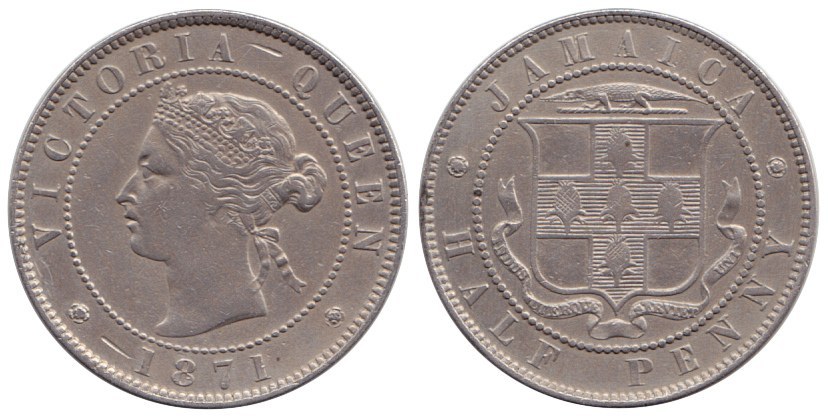
Begin with the colour and feel of the metal. The Jamaica halfpenny is copper-nickel, so it has a pale, silvery-grey appearance rather than the reddish-brown of British bronze. A dark, coppery half-penny is likely a coin from a different colony or country; the light alloy is one of the first things that flags a genuine early Jamaican piece.
Read the obverse portrait. You should see Queen Victoria facing left in the young-head style, framed by a Latin legend naming her as queen. The direction she faces and the style of the bust help place the coin within Victoria's reign; a differently posed or crowned effigy points to a later monarch or a reworked portrait, not this early 1871 issue.
Use the reverse to confirm both the country and the denomination. Look for the crowned Jamaican shield of arms, the name of the colony, the half-penny denomination and the 1871 date. This is decisive: because the Jamaican penny and halfpenny use the same portrait and the same crowned-shield motif, the denomination wording—not the design—is what separates them. The larger, heavier coin is the penny; the smaller is the halfpenny.
Cross-check size and weight against published specifications for the Victorian Jamaica halfpenny. A coin that is markedly too large, too heavy, or that reads as ordinary bronze rather than copper-nickel should be treated with caution. Watch too for corrosion, verdigris-like spotting or harsh cleaning, which copper-nickel can show and which affects both attribution confidence and value.
Finally, beware of look-alikes and altered pieces: other British colonial halfpennies of similar layout, worn coins with unclear legends, and cleaned or damaged examples. When the legend is weak, rely on the crowned Jamaican shield and the word "Jamaica" to anchor the identification, and for valuable higher-grade coins consider comparison against trusted reference images or third-party grading before concluding.
Frequently asked questions
How can I tell the halfpenny from the Jamaican penny?
They share the Victoria portrait and crowned-shield reverse, so read the denomination wording on the reverse. The halfpenny is also the smaller and lighter of the two coins.
What quickly distinguishes a Jamaican coin from a British one?
Colour and legend. The pale copper-nickel alloy differs from British bronze, and the reverse names "Jamaica" alongside the crowned island shield, unlike British coins of the same period.
Which way does Victoria face on this coin?
She faces left in a young-head portrait. A portrait facing the other way or with a different crown or veil belongs to a later effigy or monarch, not the early 1871 issue.
Should I clean a dull or spotted copper-nickel halfpenny?
No. Cleaning removes original surface and lowers collector value. Copper-nickel can spot or tone unevenly, but harsh cleaning is more damaging than the honest wear or patina it tries to remove.