
How to Identify the J. Shaw & Co. Hardware Token
Collector checks for the Shaw hardware merchant token: reading the advertising legend, copper halfpenny size, and authentication cautions.
Read the full J. Shaw & Co. Hardware Token encyclopedia entry →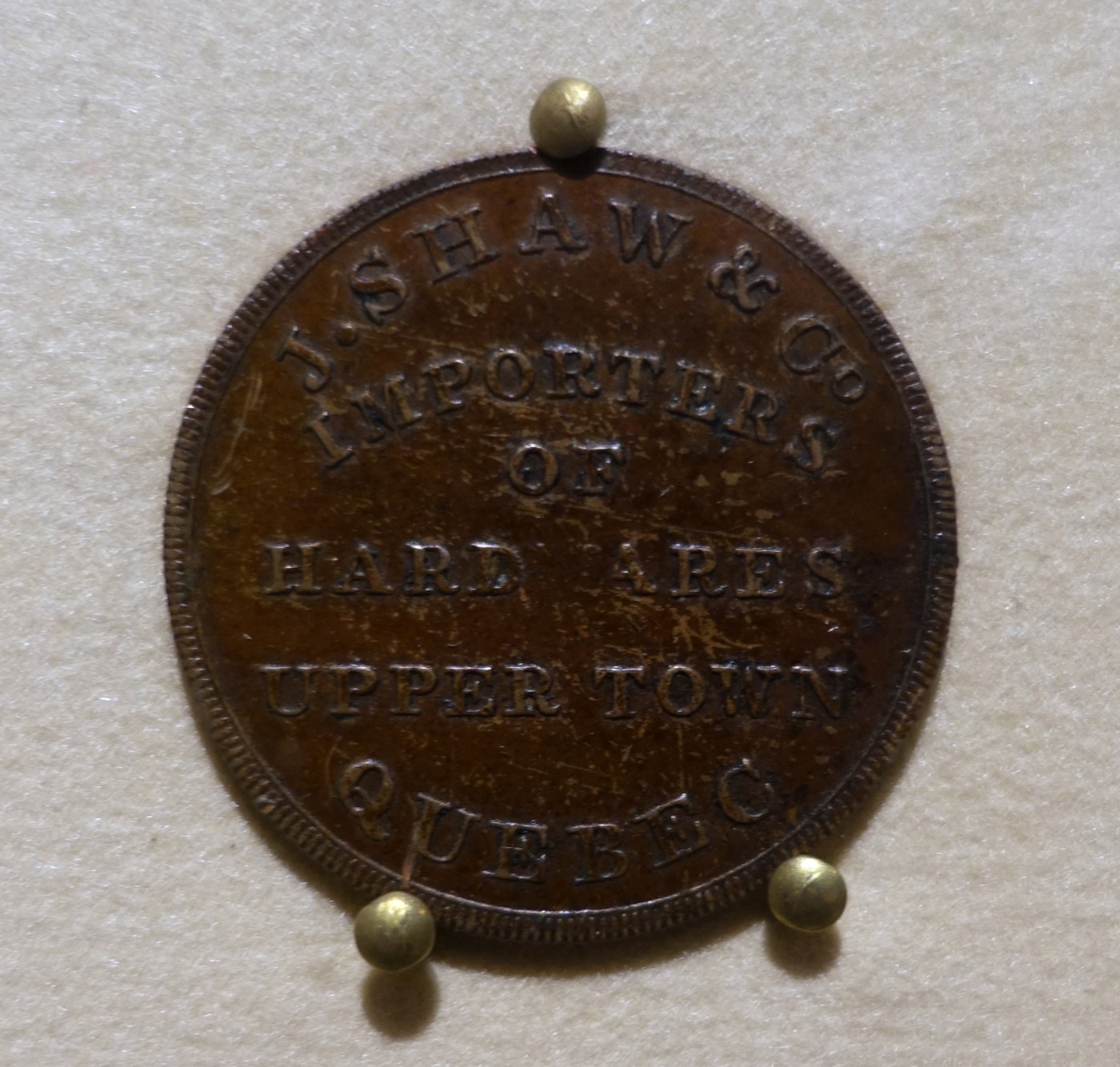
Start with the inscription, because on a merchant token the wording is the identification. Look on the obverse for the legend J. SHAW & CO IMPORTERS OF HARDWARES UPPER TOWN. A named firm, a stated trade (hardware importing), and a district (Upper Town) together mark this as a private tradesman's token rather than a regal coin. If you instead find a monarch's portrait or the royal arms, you are holding a different kind of piece.
Turn to the reverse and read what is there. This type carries text and merchant marks rather than a pictorial design or a sovereign's bust. Note the exact wording, any device, and how the lettering is arranged, and record the full legend from both sides with a loupe. The precise spelling and punctuation are what separate this issuer from the many other merchant tokens of the period.
Check the physical standard as a cross-test. The piece should be copper, showing a brown to reddish-brown tone, and be non-magnetic. It sits in the halfpenny size class, comparable to the anonymous and bank halfpenny tokens of the era. Measure the diameter and weigh the coin; a piece that is the wrong size, magnetic, or made of a bright white metal is a warning sign for a modern copy or an unrelated item.
Mind the look-alikes. Nineteenth-century Canadian and provincial coppers include a large number of merchant, bank, and anonymous halfpenny tokens with similar diameters and lettering styles. Do not assign a date or catalogue attribution from the general appearance alone; the only reliable route is to match the complete J. Shaw & Co. legend against a token reference. A circa-1850s dating for this type is contextual, so avoid reading a specific year into the piece unless one is actually inscribed.
Approach authentication with normal caution. Examine the surfaces for casting bubbles, seams, or a soft mushy strike that can indicate a cast reproduction, and check for filed edges or an added hole that would affect both authenticity and value. For any piece you believe to be a scarce merchant issuer, have it reviewed by a specialist in Canadian tokens before relying on the identification.
Frequently asked questions
How do I know this is a merchant token and not a regular coin?
Read the legend. A named business, a trade such as importers of hardware, and a place like Upper Town identify a private merchant token. Regal coins show a monarch's portrait and the royal arms instead.
What size and metal should it be?
It is copper, brown to reddish-brown and non-magnetic, in the halfpenny size class alongside other period tokens. A wrong size, magnetic response, or white metal points to a copy or unrelated piece.
Can I date it from the design?
Only loosely. A circa-1850s dating is contextual for this token era. Unless an actual year is inscribed, treat the date as approximate and confirm attribution against a token reference.
Should I have it authenticated?
For a common example, careful checks of legend, size, and metal are usually enough. For a scarce merchant issuer or a high-grade piece, have it reviewed by a Canadian-token specialist.