
How to Identify the Italian Scudo (Papal States)
A large silver coin issued by the Papal States before Italian unification, typically bearing a reigning Pope's portrait or arms alongside religious imagery.
Read the full Italian Scudo (Papal States) encyclopedia entry →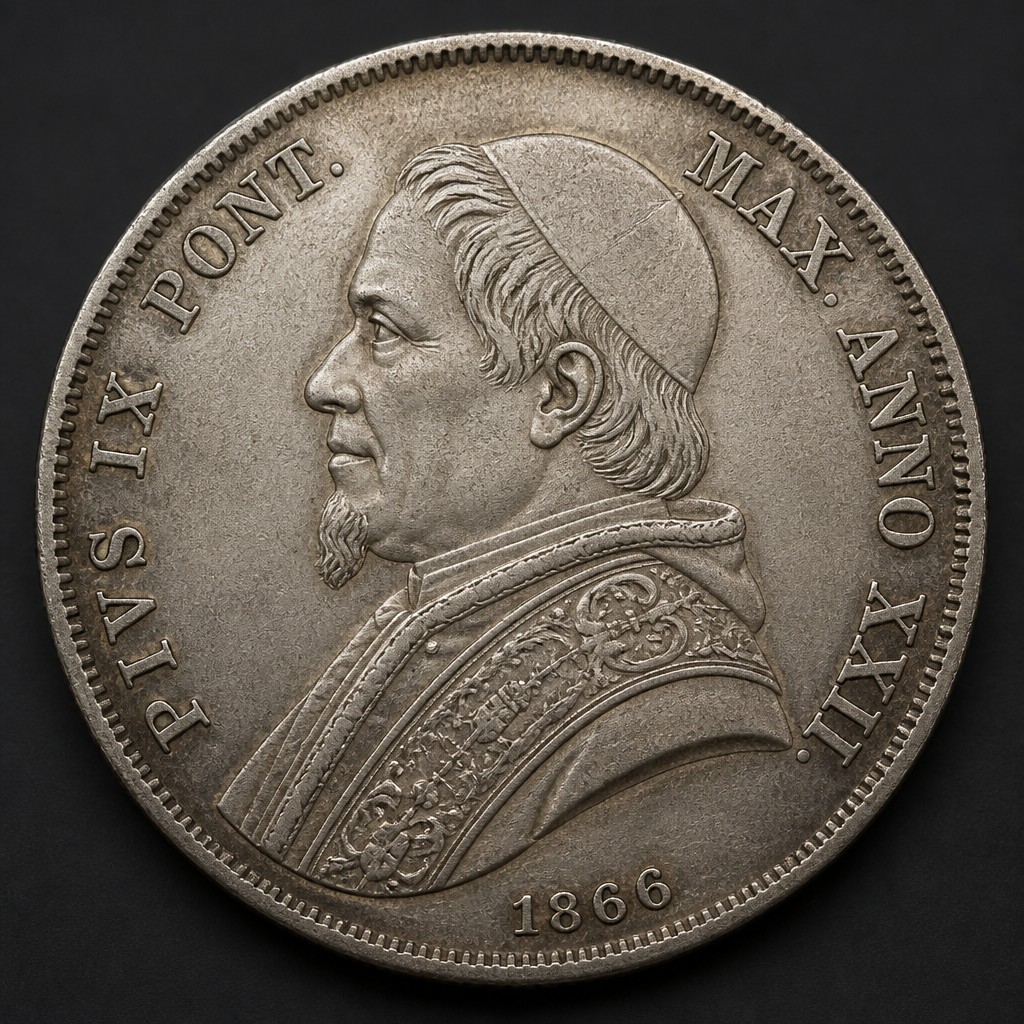
What It Is
The scudo was a large silver denomination struck by the Papal States, the territory ruled directly by the Pope in central Italy, before the region was absorbed into the unified Kingdom of Italy in the 19th century. These coins were produced under various popes and combine religious and heraldic imagery distinct from secular European coinage of the same era.
Obverse Design
The obverse commonly shows either a portrait bust of the reigning Pope or, more often on many types, his coat of arms topped with the papal tiara (triple crown) and crossed keys of Saint Peter, along with his name and papal title in the Latin legend, such as "PIVS IX PONT MAX."
Reverse Design
The reverse frequently depicts a religious scene or saintly figure appropriate to the Papal States, such as an image of a patron saint, a biblical scene, or an allegorical figure, along with the denomination and mint information in the surrounding legend.
Size, Weight, and Metal
Papal scudi are large, crown-sized silver coins, generally in the range of 37 to 40 mm in diameter, with weight and fineness varying somewhat by pope and period, but broadly consistent with other large European silver crowns of the 18th and 19th centuries.
Mint Marks and Where to Find Them
Check near the rim or at the base of the design for a mint mark identifying the specific city where it was struck, such as Rome or Bologna, since the Papal States operated more than one mint at various points in their history.
Telling It Apart from Similar Coins
Papal scudi can be distinguished from other Italian regional coinage of the period (such as issues from Naples, Tuscany, or the various Italian duchies) by the distinctive papal tiara and crossed-keys emblem, along with the Latin papal titles rather than a king's name. Comparing the specific pope's name and dates helps pin down the exact issue.
Judging Condition at a Glance
Examine the finer details of the papal arms, tiara, and any facial portrait for wear, along with the legend lettering for sharpness. A well-preserved scudo shows crisp tiara bands and clearly defined crossed keys, while a worn example shows these details smoothed and flattened.
Authenticity Red Flags
As with other historic silver crowns, be alert to cast copies showing a seam line, pitted or grainy surfaces, and soft, indistinct lettering. Confirm that the pope's name, dates, and papal arms style are consistent with genuine issues from that specific pontificate, since mismatched combinations can indicate a fantasy piece or later reproduction.
Frequently asked questions
What makes a Papal States scudo different from other Italian coins of the era?
It features the papal tiara and crossed keys emblem along with the reigning pope's Latin title, rather than a king's name or a secular coat of arms.
Which popes appear on these coins?
Various popes who ruled the Papal States before Italian unification appear depending on the coin's date, each identified by name in the Latin legend.
Where were Papal States coins minted?
Primary mints included Rome and, at various times, other cities such as Bologna within Papal territory.
How large is a typical Papal scudo?
It is a large silver crown-sized coin, generally in the 37 to 40 mm diameter range, comparable to other major European silver crowns of the period.