
How to Identify the Italian 5 Lire
A Kingdom of Italy silver crown bearing the reigning king's portrait and a crowned shield or eagle reverse, identified by its "L. 5" denomination and royal legends.
Read the full Italian 5 Lire encyclopedia entry →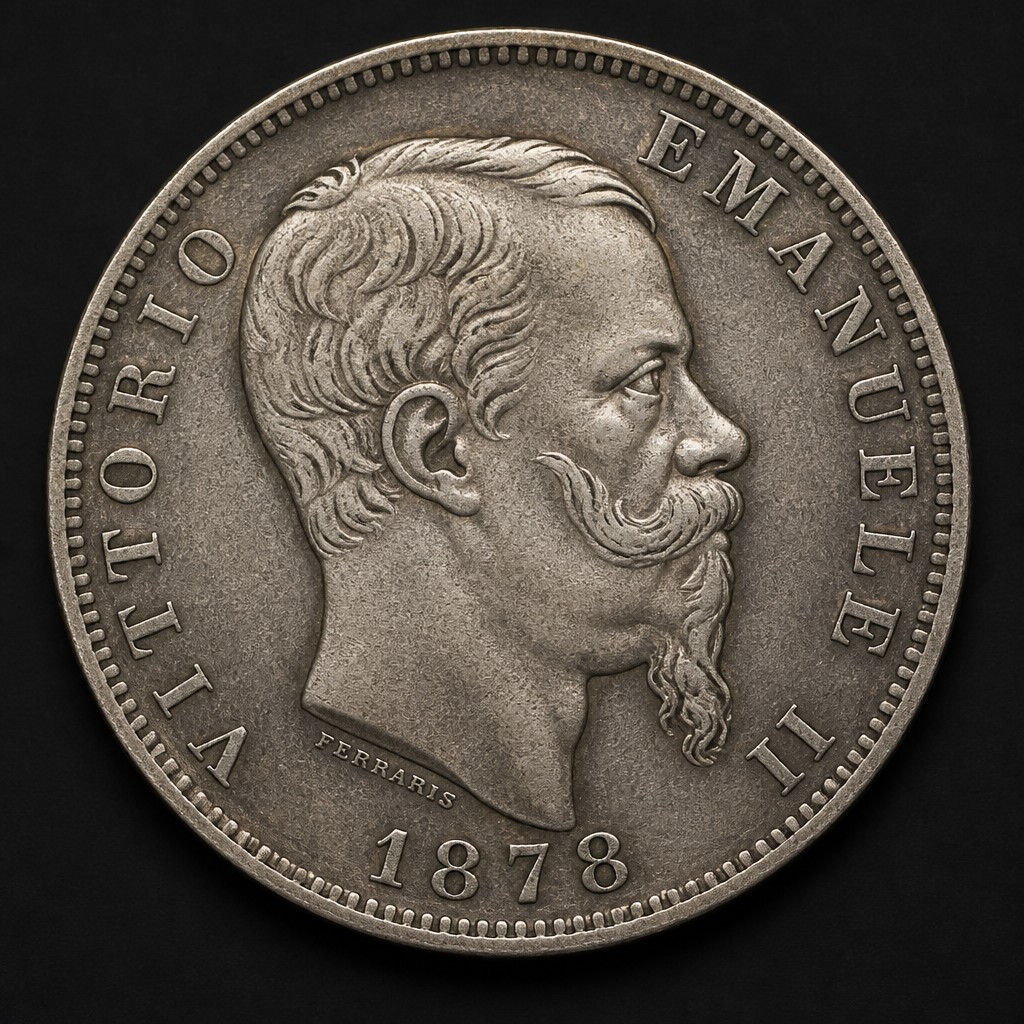
What It Is
The Italian 5 Lire is a silver coin issued by the Kingdom of Italy from the 19th century into the early 20th century, spanning the reigns of Vittorio Emanuele II, Umberto I, and Vittorio Emanuele III. It served as one of the standard large silver denominations of the newly unified Italian state and shares design conventions with other Latin Monetary Union coinage of the era.
Obverse Design and Inscriptions
The obverse shows a profile portrait of the reigning king, with his name and title in Latin-influenced Italian, such as "VITTORIO EMANUELE II RE D'ITALIA" (Victor Emmanuel II, King of Italy). The engraver's name or initials sometimes appear in small letters near the truncation of the bust.
Reverse Design and Inscriptions
The reverse typically bears the crowned arms of Savoy or a crowned eagle, depending on the specific type and date, encircled by a wreath, with the denomination "L. 5" or "LIRE 5" and the date positioned around the design. Some earlier types instead show a value spelled out within a wreath without a full heraldic device.
Size, Weight, Metal, and Edge
The coin is crown-sized, approximately 37 mm in diameter, struck in .900 fine silver and weighing about 25 grams, matching the Latin Monetary Union's standard silver crown specification shared with French, Belgian, and Swiss 5-unit coins of the same period. The edge is reeded.
Mint Marks and Where to Find Them
Italian coinage of this era was primarily struck at the Rome mint, indicated by a small "R" mint mark near the date, though earlier issues from before unification (or the Papal States and other Italian states) can carry different mint identifiers; always check the small lettering near the date for the mint letter and engraver initials.
Telling It Apart from Similar Coins
The Italian 5 Lire closely resembles other Latin Monetary Union 5-unit silver coins, such as the French 5 Francs or Belgian 5 Francs, since they share the same size, weight, and fineness standard. The clearest way to distinguish them is the portrait and legend: the Italian coin always names the king and "ITALIA," while French and Belgian coins carry their own national rulers or republican symbols.
Judging Condition at a Glance
Check the king's hair and mustache detail and the fine lines of the crown or eagle feathers on the reverse. Sharp, well-defined curls and crisp wreath leaves indicate a lightly circulated coin, while a smooth, featureless profile and a flattened wreath suggest heavy wear.
Authenticity Red Flags
Be alert for coins with an incorrect weight or diameter for the .900 silver crown standard, a soft or indistinct strike compared to the normally sharp Italian royal mint work, or portrait styles that do not match the documented bust changes across a king's reign. A grainy, pitted surface or a visible casting seam suggests a cast counterfeit rather than a genuine struck coin.
Frequently asked questions
Which kings appear on the Italian 5 Lire?
Vittorio Emanuele II, Umberto I, and Vittorio Emanuele III each issued 5 Lire coins during their reigns, each with a distinct portrait style and legend.
How is the Italian 5 Lire different from the French 5 Francs?
Both share the same Latin Monetary Union size, weight, and silver fineness, but the Italian coin names the king and 'ITALIA' rather than French symbols or rulers.
What is the standard weight and silver content?
About 25 grams at .900 fine silver, matching the standard Latin Monetary Union silver crown specification.
Where is the mint mark located?
Near the date, typically a small 'R' for the Rome mint, alongside small engraver initials near the portrait truncation.