
How to Identify the Italian 5 Lire Silver
The Kingdom of Italy's silver 5 Lire coin showcased the reigning king's portrait and heraldic reverse designs, minted across the late 19th and early 20th centuries.
Read the full Italian 5 Lire Silver encyclopedia entry →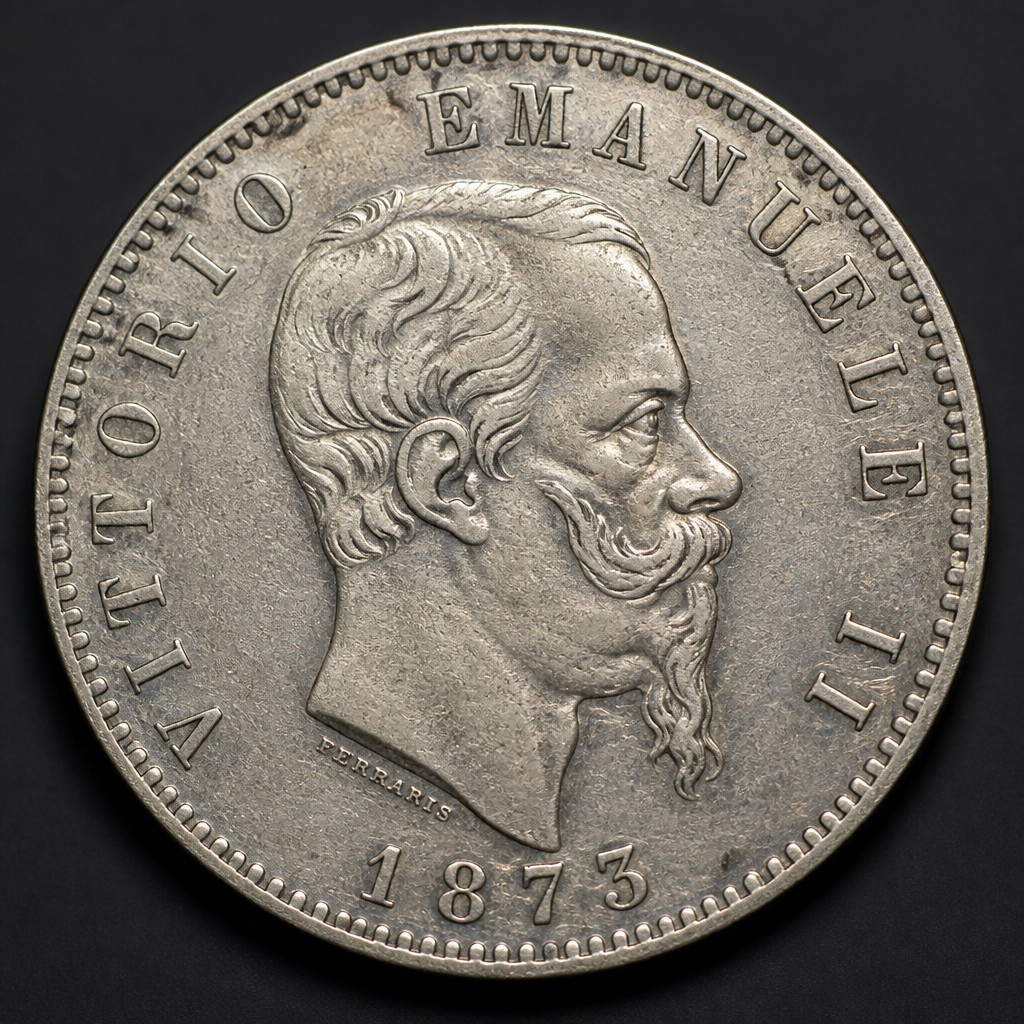
What Is the Italian 5 Lire Silver Coin
This silver coin of the unified Kingdom of Italy was struck from the 1860s, following Italian unification, through the early 20th century, as part of the Latin Monetary Union standard shared with France, Belgium, and Switzerland. It represented Italy's highest-value regularly issued silver coin for much of this period, used for larger everyday transactions in the newly unified nation.
Obverse Design and Inscriptions
The obverse shows a profile portrait of the reigning King of Italy — Vittorio Emanuele II or Vittorio Emanuele III depending on the date — with a legend naming the king, such as "VITTORIO EMANUELE II RE D'ITALIA" (Victor Emmanuel II, King of Italy).
Reverse Design and Inscriptions
The reverse shows the crowned Savoy coat of arms or an eagle design depending on the specific type, with the denomination "L. 5" or "5 LIRE" and the date, sometimes within a wreath.
Size, Weight, Metal, and Edge
The coin was struck in .900 fine silver, approximately 37mm in diameter and 25 grams, matching the Latin Monetary Union's shared specification for its 5-unit silver coin.
Mint Marks and Where to Find Them
A mint mark — R for the Rome mint being primary — appears near the date on the reverse, often alongside an engraver's or mint director's initials as a smaller symbol nearby. Earlier issues struck shortly after unification may show mint letters from other Italian cities before minting was consolidated in Rome.
Telling It Apart From Similar Coins
Because the Latin Monetary Union standardized weight and fineness, an Italian 5 Lire is nearly identical in size and silver content to a French 5 Franc or Swiss 5 Franc of the same era. The king's portrait and Italian-language legend are the clearest ways to confirm Italian origin, since simply weighing or measuring the coin will not distinguish it from its foreign counterparts.
Judging Condition at a Glance
Examine the king's beard, hair, and mustache details plus the crown and shield engraving for wear. Sharper, more defined lines in these areas indicate a higher-grade, less-circulated coin. Also check the rim and legend text, since a well-preserved example keeps every letter fully readable, while a heavily worn coin may show flattened or partially missing lettering near the edge.
Authenticity Red Flags
Verify the coin's weight and diameter against the 25 gram, 37mm standard. Watch for softened or doubled lettering, incorrect portrait proportions, or a mint mark inconsistent with known Italian mint practice, all of which suggest a counterfeit or altered piece.
Frequently asked questions
Why does this coin look similar to French and Swiss silver coins?
Italy was part of the Latin Monetary Union, which standardized coin weight, size, and silver fineness across several European countries in the mid-1800s.
How can I tell which king is on the coin?
The legend around the portrait spells out the king's full name and title, distinguishing Vittorio Emanuele II from his successor Vittorio Emanuele III.
What is the silver purity of this coin?
It was struck in .900 fine silver.
Where is the mint mark located?
Near the date on the reverse, typically a single letter such as R for the Rome mint.
What does 'RE D'ITALIA' mean?
It means 'King of Italy' in Italian, confirming the coin's national origin.