
How to Identify the Italian 20 Lire Gold (Vittorio Emanuele)
Italy's 20 Lire gold coin, struck under Kings Vittorio Emanuele II and Vittorio Emanuele III, follows the Latin Monetary Union standard, showing the king's portrait on the obverse and the Italian arms on the reverse.
Read the full Italian 20 Lire Gold (Vittorio Emanuele) encyclopedia entry →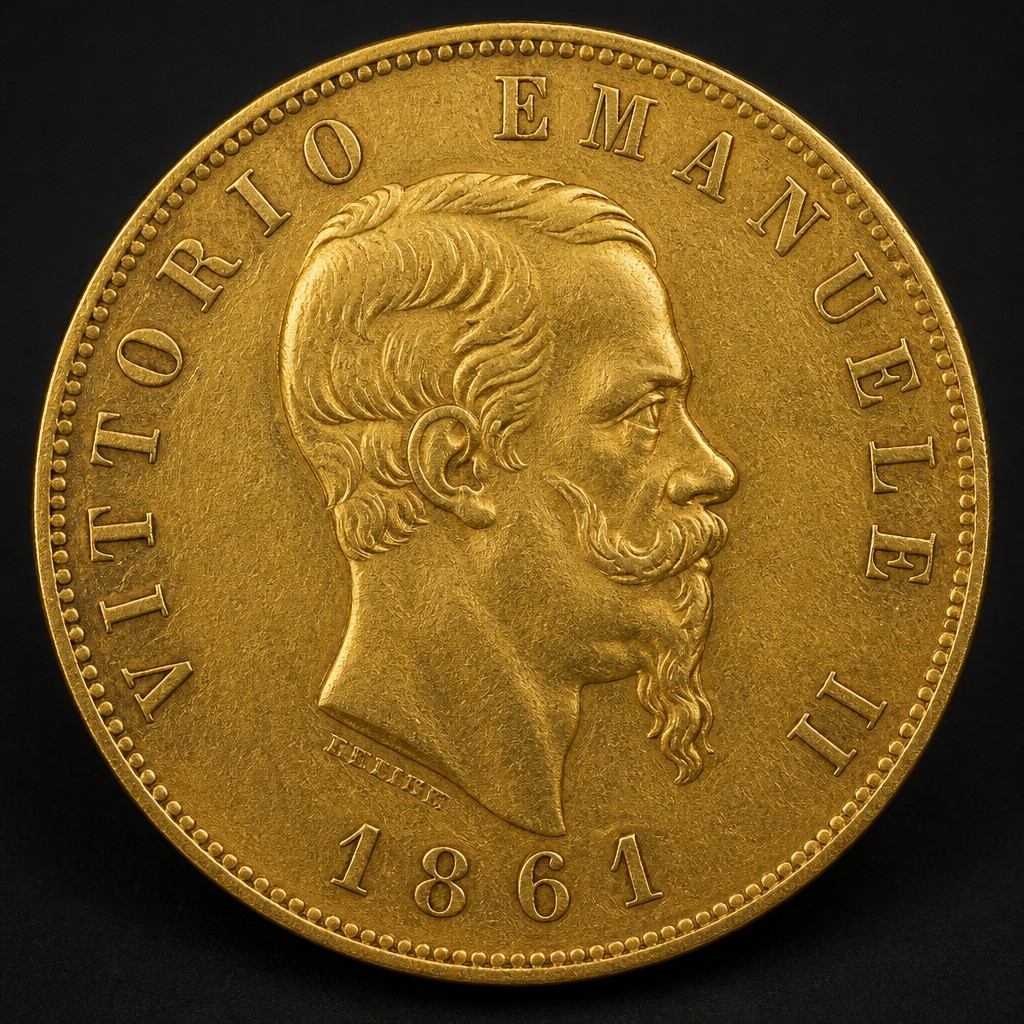
What It Is
The Italian 20 Lire gold coin was struck as part of Italy's participation in the Latin Monetary Union, a 19th-century agreement standardizing gold and silver coinage weights and fineness among several European countries. Coins were issued under multiple Italian kings, most notably Vittorio Emanuele II following Italian unification, and later Vittorio Emanuele III in the early 20th century, with each king's issues distinguishable by portrait and date range.
Obverse Design
The obverse shows the king's portrait in profile: Vittorio Emanuele II typically bare-headed with a full beard and mustache, and Vittorio Emanuele III shown as a younger man in later issues. The surrounding legend names the king, such as "VITTORIO EMANUELE II RE D'ITALIA" (King of Italy).
Reverse Design
The reverse displays the Italian coat of arms, specifically the House of Savoy shield topped with a crown, surrounded by wreaths, along with "20 LIRE" and the date. Some earlier Vittorio Emanuele II issues instead show a simpler wreath-and-value arrangement depending on the specific year and mint.
Size, Weight & Metal
Matching the Latin Monetary Union standard shared with the French Napoleon and Swiss Vreneli, the coin is struck in 90% gold, weighing 6.45 grams with a diameter of about 21 mm.
Mint Marks & Where to Find Them
A mint mark, typically a letter or small symbol, appears near the date on the reverse, identifying mints such as Rome, Turin, Milan, or Naples depending on the period, alongside the engraver's initials which may also appear as small letters near the truncation of the king's neck on the obverse.
Telling It Apart from Similar Coins
Because the coin shares its weight and diameter with the French 20 Francs and Swiss 20 Francs, the king's portrait and the Italian arms reverse are the clearest ways to confirm Italian origin at a glance. Within Italian issues themselves, comparing the specific portrait style and beard or hair detail helps distinguish Vittorio Emanuele II from Vittorio Emanuele III coins.
Judging Condition at a Glance
Wear shows first on the king's cheek, beard, or hair, and on the raised elements of the crowned shield on the reverse. As with other Latin Monetary Union gold coins, many surviving examples were preserved as bullion rather than heavily circulated, so higher-grade pieces are relatively available alongside more heavily worn circulated examples.
Authenticity Red Flags
Check weight and diameter against the established Latin Monetary Union standard, since deviations point to a counterfeit or a differently sized, unrelated coin. Examine the sharpness of the portrait and crowned shield detail, since soft or blurred features often indicate a cast copy, and verify that the portrait style is consistent with the stated king and date, since a mismatch suggests an altered or fabricated piece.
Frequently asked questions
Which kings appear on the Italian 20 Lire gold coin?
Most commonly Vittorio Emanuele II following Italian unification, and later Vittorio Emanuele III in early 20th century issues.
What is the gold content of the coin?
It follows the Latin Monetary Union standard of 90% gold, weighing 6.45 grams with a diameter of about 21 mm.
How do I tell this coin apart from a French or Swiss gold coin of the same size?
Look at the design: the Italian king's portrait and the House of Savoy crowned shield on the reverse are distinct from the French and Swiss designs, even though the weight and diameter match.
Where can I find the mint mark?
Near the date on the reverse, typically a letter or small symbol identifying the specific Italian mint that struck the coin.
How can I distinguish Vittorio Emanuele II from Vittorio Emanuele III on this coin?
Compare the portrait style, hair, and beard detail alongside the date and accompanying royal title, since the two kings' likenesses and issue periods differ.