
How to Identify the Italian 100 Lire Gold
A substantial gold coin from the Kingdom of Italy, identified by its royal portrait obverse and crowned Italian arms or wreathed value reverse.
Read the full Italian 100 Lire Gold encyclopedia entry →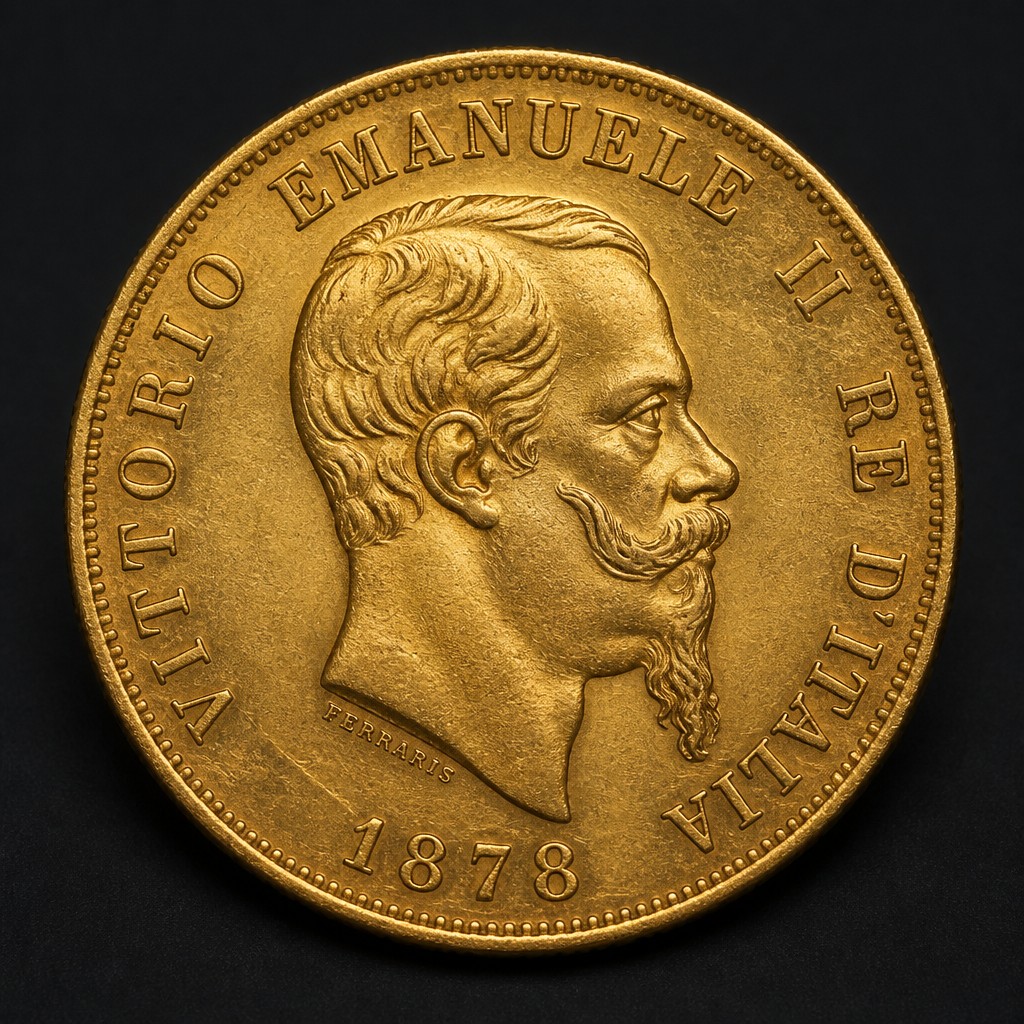
What Is the Italian 100 Lire Gold?
The 100 Lire gold coin represents one of the highest denominations struck during the Kingdom of Italy, following the gold standard shared by members of the Latin Monetary Union established in 1865. Issues appear under different 19th-century Italian kings, making this a scarcer and more substantial coin than the common circulating silver Lire denominations.
Obverse Design
The obverse shows a profile portrait of the reigning king — for example Vittorio Emanuele II or, on some issues, Umberto I — typically bare-headed or laureate, with a Latin or Italian legend stating the king's name and title, such as "VITTORIO EMANUELE II RE D'ITALIA."
Reverse Design
The reverse generally displays the crowned Italian coat of arms within a wreath, or in some designs the denomination "100" together with "LIRE" surrounded by ornamental branches, along with the date and small mint or engraver initials.
Size, Weight & Metal
Following the Latin Monetary Union gold standard, the coin is struck in .900 fine gold, weighs approximately 32.26 grams, and measures around 35 millimeters in diameter — a large, substantial gold coin comparable in size to the French 100 Francs and other equivalent Union member coins.
Mint Marks
Italian gold coinage of this era was produced at mints such as Rome, Turin, or Milan depending on the specific period, each identified with a distinguishing letter or symbol near the date. Engraver initials also appear in small lettering close to the portrait truncation.
Telling It Apart from Similar Coins
Because Latin Monetary Union member states agreed on shared weight and fineness standards, the Italian 100 Lire is very close in size and gold content to the French 100 Francs, Belgian 100 Francs, and Swiss equivalents. The clearest way to distinguish them is the portrait and the national legend — always confirm the ruler's name and the word "ITALIA" or the king's specific Italian title before assuming the coin's origin.
Judging Condition at a Glance
Examine the king's hair, moustache, and facial features, along with the fine details of the crown and wreath on the reverse. A well-preserved coin shows crisp, well-separated detail throughout, while a circulated example shows a smoothed portrait and softened crown or wreath elements.
Authenticity Red Flags
Given its high gold content and collector value, this is a coin where careful verification matters. Weigh it against the 32.26-gram standard, check that the diameter measures close to 35 millimeters, and confirm the edge reeding pattern matches known genuine examples. A coin that feels underweight, has a dull or uneven strike, or shows mismatched mint and engraver initials for its stated date should be examined further before being accepted as genuine.
Frequently asked questions
What gold standard does the Italian 100 Lire follow?
It follows the Latin Monetary Union standard of .900 fine gold, shared with France, Belgium, Switzerland, and other member states.
Who appears on the obverse?
The reigning King of Italy at the time of issue, such as Vittorio Emanuele II or Umberto I.
How heavy is the coin?
It weighs approximately 32.26 grams and measures about 35 millimeters in diameter.
How do I tell it apart from a French or Belgian 100 Francs gold coin?
All three share similar size and gold content under the Latin Monetary Union, so check the portrait and national legend to confirm the Italian origin.
What should I check for authenticity?
Verify the weight and diameter against known standards, and confirm the mint and engraver initials are consistent with the stated date.